



How to Travel India with Elderly Parents: Grand Guide (2026 )
How to Travel India with Elderly Parents
Grand Guide 2026
India is one of the most rewarding and most overwhelming countries to Travel India with Elderly Parents or senior family members. Between the Taj Mahal, the backwaters of Kerala, the palaces of Rajasthan, and the spiritual ghats of Varanasi, there's a version of India that suits almost every pace and interest. But a trip that works beautifully for a 25-year-old backpacker can be exhausting for a parent in their 60s or 70s. This guide walks through everything you need to plan a safe, comfortable, and genuinely enjoyable India trip with elderly parents from choosing destinations to handling health, transport, and pacing.
1. Choose Destinations That Are Naturally Senior-Friendly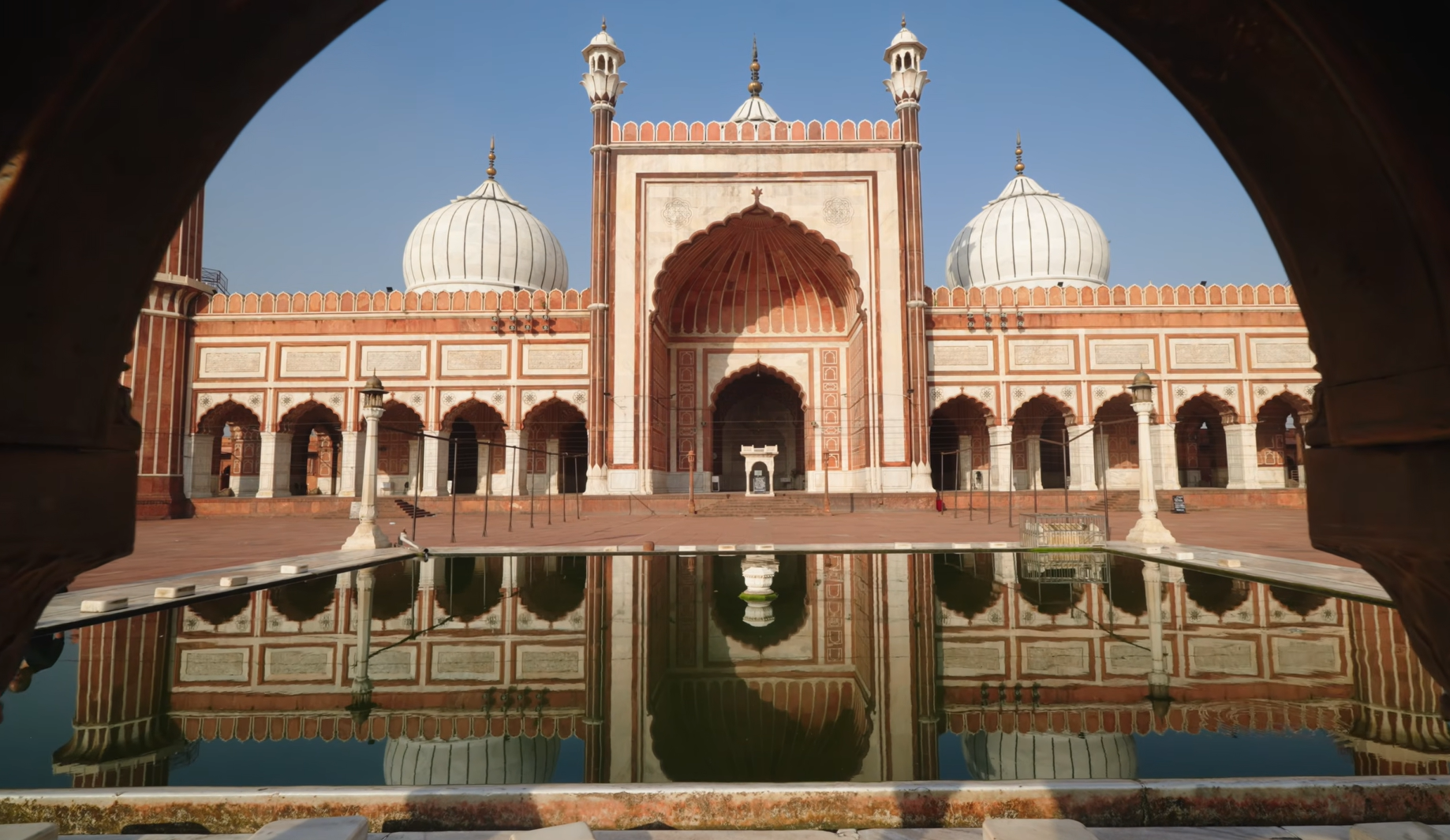
Not every region of India suits older travelers equally. Some places involve less walking, better infrastructure, and more accessible sightseeing.
- The Golden Triangle – Delhi, Agra, and Jaipur form a compact, well-connected circuit with short travel times between cities, making it ideal for a first India trip with parents.
- Kerala's backwaters – Houseboat cruises through Alleppey offer scenic, low-exertion travel you sit back and let the boat do the work.
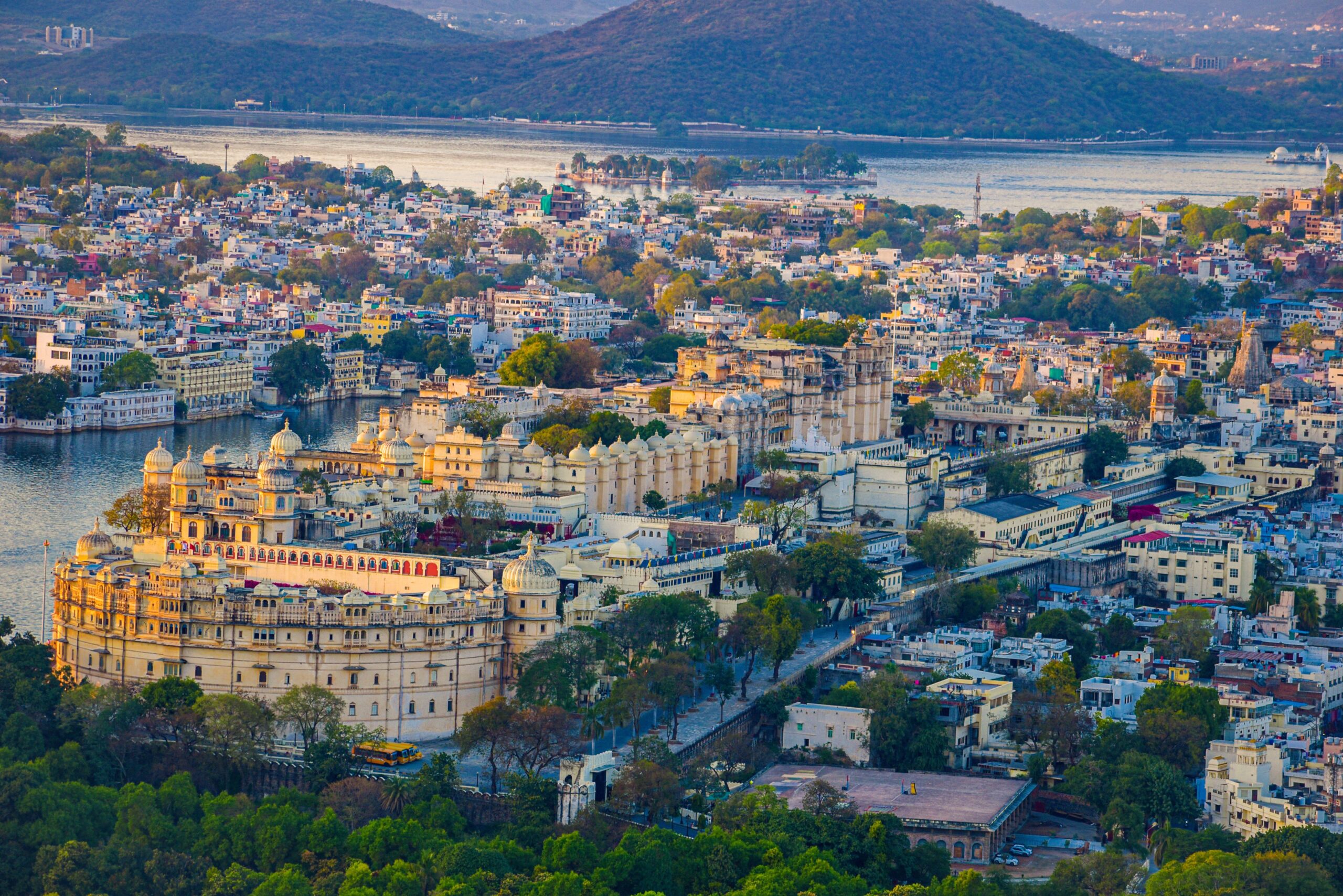
- Udaipur – Known as the "City of Lakes," Udaipur is compact, walkable in short bursts, and full of lakeside views that don't require much physical effort to enjoy.
- Goa – For parents who enjoy a relaxed beach vacation with good medical infrastructure nearby, Goa is an easy, low-stress choice.
Avoid packing high-altitude treks (like parts of Ladakh) or dense, chaotic markets into the same day as major sightseeing altitude and crowd fatigue affect older travelers far more.
2. Slow Down the Itinerary
The single biggest mistake families make is trying to see too much, too fast. A rule of thumb for senior travelers:
- Plan one major activity per day, not two or three.
- Build in a rest afternoon every 3–4 days.
- Avoid long overnight trains or back-to-back early flights.
- Choose hotels centrally located near key sights to cut down on commute time.
A custom-paced itinerary rather than a fixed group tour schedule is almost always the better choice for elderly travelers, since it can flex around energy levels day to day.
3. Prioritize Health and Medical Preparedness
- Travel insurance: Confirm the policy explicitly covers pre-existing conditions and emergency evacuation.
- Medication: Carry a printed prescription list and enough medication for the full trip plus a buffer, split across two bags in case one is lost.
- Hydration and food: Stick to bottled or filtered water, and introduce spicy food gradually rather than all at once.
- Hospitals on route: Choose tour operators or itineraries that keep you within reach of good hospitals cities like Delhi, Mumbai, Jaipur, and Chennai have strong private healthcare options.
- Altitude and heat: If visiting hill stations like Shimla or Darjeeling, build in acclimatization days.
4. Transport: Comfort Over Speed
- Private car with driver is generally the most comfortable option for elderly travelers no navigating stations, no standing in lines.
- Trains: If using rail, book AC First or Second Class, and pick daytime trains over overnight journeys where possible.
- Airports: Request wheelchair assistance in advance Indian airports provide this as standard, but it needs pre-booking.
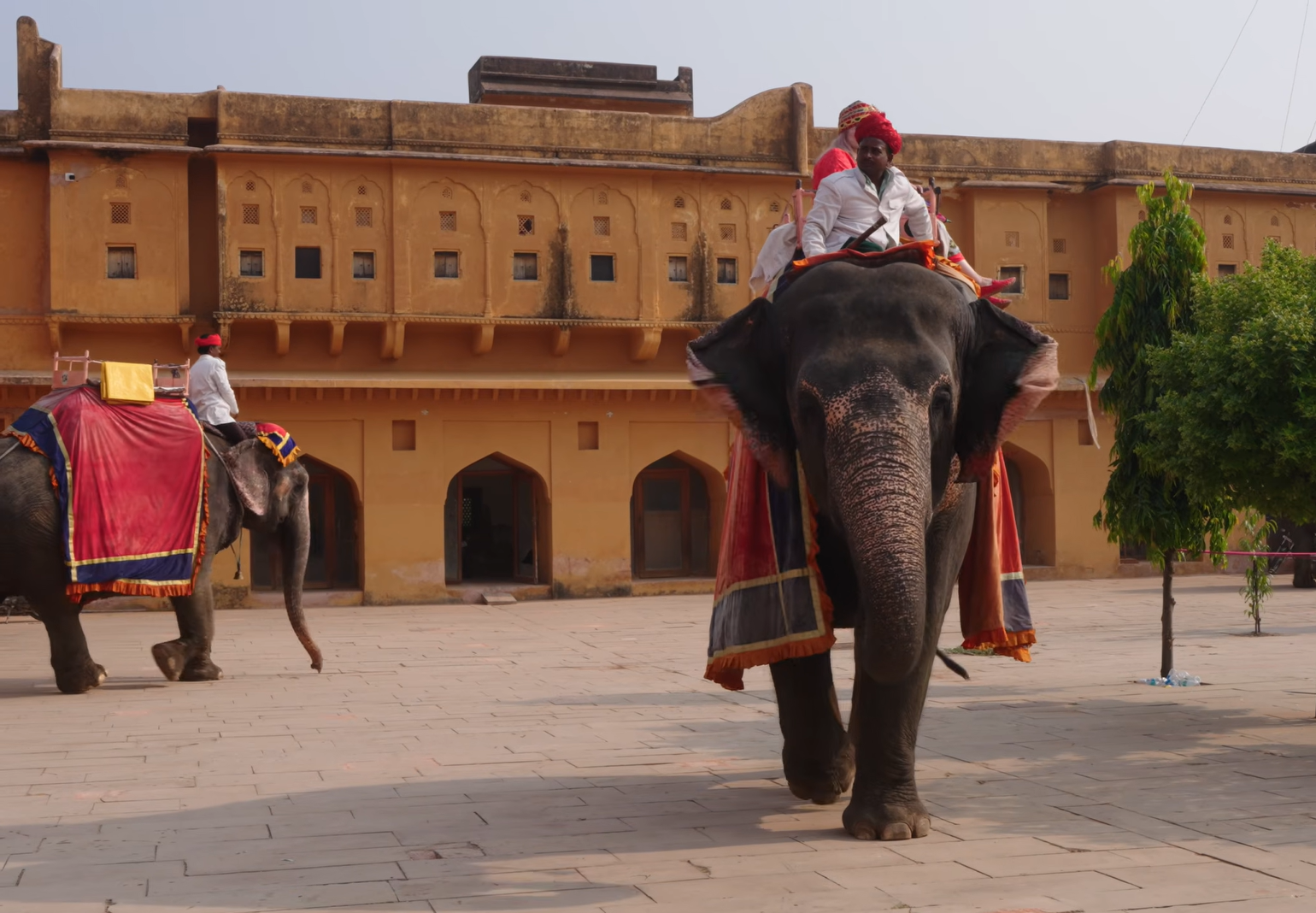
- Walking: At major sites like the Amber Fort in Jaipur, ask about golf-cart or palanquin options instead of long uphill walks.
5. Accommodation Checklist
When booking hotels for elderly parents,on your Travel India with Elderly Parents, we can promise:
- Ground-floor or elevator access (not all budget hotels in smaller towns have functioning elevators)
- Western-style bathrooms with grab bars where possible
- Proximity to the day's main sightseeing
- 24-hour front desk and in-house doctor-on-call service
6. Respect Cultural and Physical Limits
- Many temples, like the Golden Temple in Amritsar, require walking barefoot on stone bring socks for hot pavement, and check accessibility for those with mobility issues.
- Crowded festivals (like sections of Varanasi's ghats during Ganga Aarti) can be overwhelming arrive early or watch from a boat rather than standing in the crowd.
- Uneven, centuries-old stairs are common at forts and palaces a walking stick or trekking pole is genuinely useful, even for parents who don't normally need one.
7. Sample 10-Day Itinerary to travel India with Elderly Parents
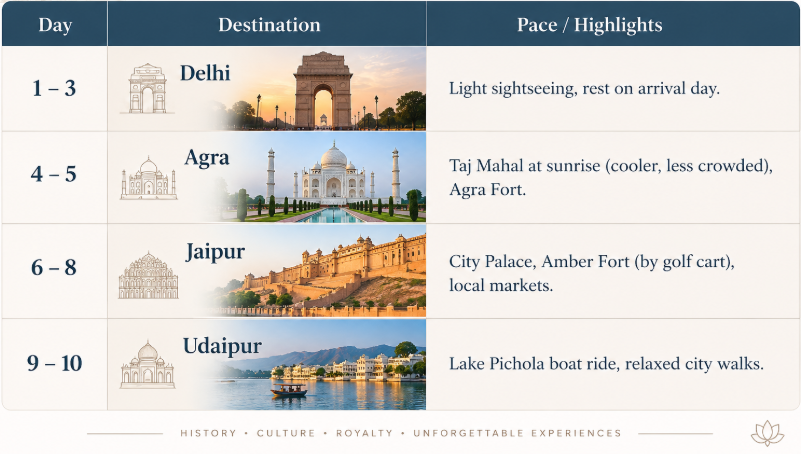
This keeps travel days to a minimum and avoids long-distance transfers on consecutive days.
8. We Provide Custom, Private Tour Over a Fixed Group Tour
Standard group tours are built around the average traveler's pace which is rarely the right pace for parents in their 60s, 70s, or 80s. A private, custom-built itinerary lets you control:
- How much walking happens each day
- Which sites to skip if energy runs low
- Rest days built in exactly where needed
- A private vehicle and driver instead of shared group transport
If you'd like help building a fully customized, senior-friendly India itinerary with the right pacing, accessible hotels, and a private driver throughout you can get in touch with our team here and we'll plan it around your parents' comfort, not a fixed group schedule.
Frequently Asked Questions
Is India safe to Travel India with Elderly Parents?
Yes, with the right planning. Choosing well-reviewed hotels, private transport, and a paced itinerary makes India very manageable for senior travelers.
What's the best time of year to Travel India with Elderly Parents?
October to March, when temperatures are cooler across most of the country and easier on those sensitive to heat.
Do elderly travelers need special vaccinations for India?
Requirements vary by traveler and region check with a travel medicine clinic 4–6 weeks before departure for personalized guidance.
Should we hire a private guide?
For elderly parents, a private guide is highly recommended it removes the stress of navigation and allows the day to move at their pace.
Best Time to Visit India: Month-by-Month Guide 2026-27
Best Time to Visit India: Month-by-Month Travel Guide
The best time to visit India is October to March, when most of the country has dry, sunny and comfortable weather. But India is huge. While Rajasthan bakes in June, Ladakh is just opening up. While Kerala is drenched in July, the high Himalayas are at their best. So the real answer to "when to visit India" depends on where you're going. This guide breaks down India weather by month, showing which regions shine, what festivals to expect, and what to avoid. Whether you want palaces, backwaters, mountain passes or the Ganges, you'll find the best month to travel to India for your route.
Quick Answer: When Is the Best Time to Visit India?
- Best overall: October to March (cool, dry, ideal for most routes)
- Best for the Golden Triangle (Delhi-Agra-Jaipur): October to March, with February the sweet spot
- Best for Rajasthan: November to March
- Best for Kerala: October to March for beaches and backwaters; June to September for monsoon Ayurveda retreats
- Best for Himachal Pradesh: March to June and September to November (snow season December to February)
- Best for Ladakh: June to September
- Cheapest time: June to September (monsoon low season)
- Most crowded and expensive: Mid-December to early January
India Travel Season at a Glance
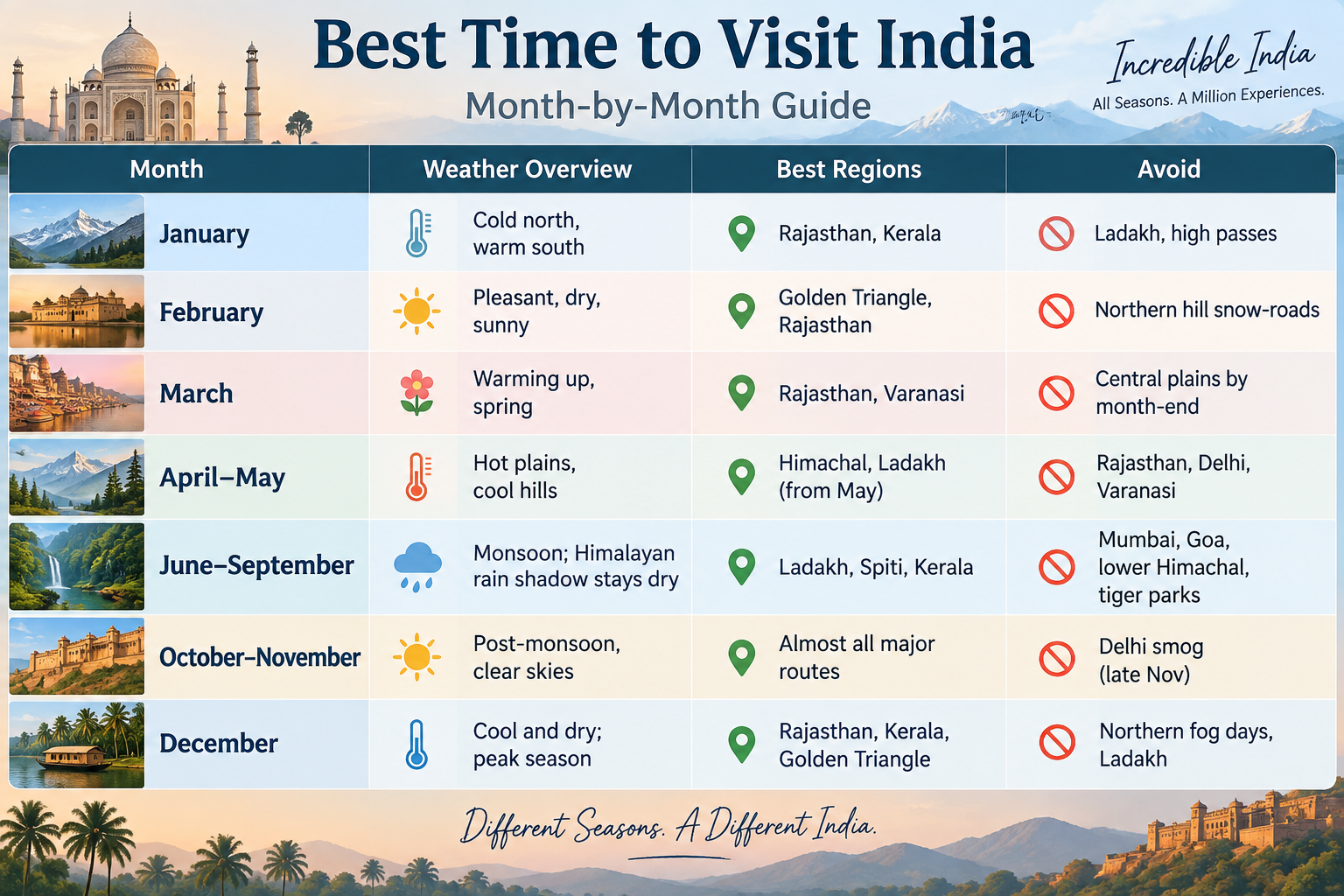
Temperatures below are typical ranges and vary year to year and by altitude.
Understanding India's Travel Seasons
Before the month-by-month breakdown, it helps to know the four broad seasons:
- Winter (November-February): Cool to cold in the north, warm and dry in the south. This is peak tourist season.
- Summer (March-June): Very hot in the plains, with temperatures of 35-45°C. Hill stations and high-altitude regions become the place to be.
- Monsoon (June-September): Heavy rain arrives in Kerala around early June and moves north. It's lush, green and cheaper, but rain can disrupt travel in many regions.
- Post-monsoon (October-November): Clear skies, green landscapes, cooler air and major festivals like Dussehra and Diwali.
Best Time to Visit India Month by Month
January: Rajasthan and Kerala
Weather: Delhi and Rajasthan see cool days of around 18-24°C and cold nights that can drop to 4-8°C. Kerala is warm and dry at around 23-32°C. Northern India can have morning fog.
January is the best time to visit India, with pleasant weather across many popular destinations. Rajasthan’s Jaipur, Udaipur, Jodhpur and Jaisalmer are ideal for sightseeing, while camel safaris in the Thar Desert are especially enjoyable. In Kerala, explore the peaceful backwaters of Alleppey, tea plantations in Munnar and beaches in Kovalam.
January also brings colorful celebrations, including Makar Sankranti, when the skies fill with kites in Jaipur and Gujarat. The Jaipur Literature Festival is usually held later in the month. Northern India can experience fog and travel delays, while desert nights can be very cold, so pack warm layers. Ladakh remains extremely cold and largely inaccessible by road, though the Chadar Trek offers a unique winter adventure.
February: Golden Triangle and Rajasthan
February is one of the most comfortable months and best time to visit India to travel in India, with sunny days and temperatures around 20–26°C in Delhi, Agra and Jaipur as the winter fog begins to fade. The Golden Triangle is particularly appealing at this time, offering ideal conditions for visiting the Taj Mahal, Amber Fort and Old Delhi. Rajasthan is also worth exploring, with opportunities for tiger safaris in Ranthambore and visits to Jodhpur, Udaipur and Jaisalmer. February also brings cultural events such as the Jaisalmer Desert Festival, known for folk music, camel events and traditional celebrations, while the Khajuraho Dance Festival is usually held during the month. With pleasant weather, fewer crowds than December and often better prices, February is an excellent time to visit India.
March: Rajasthan and Varanasi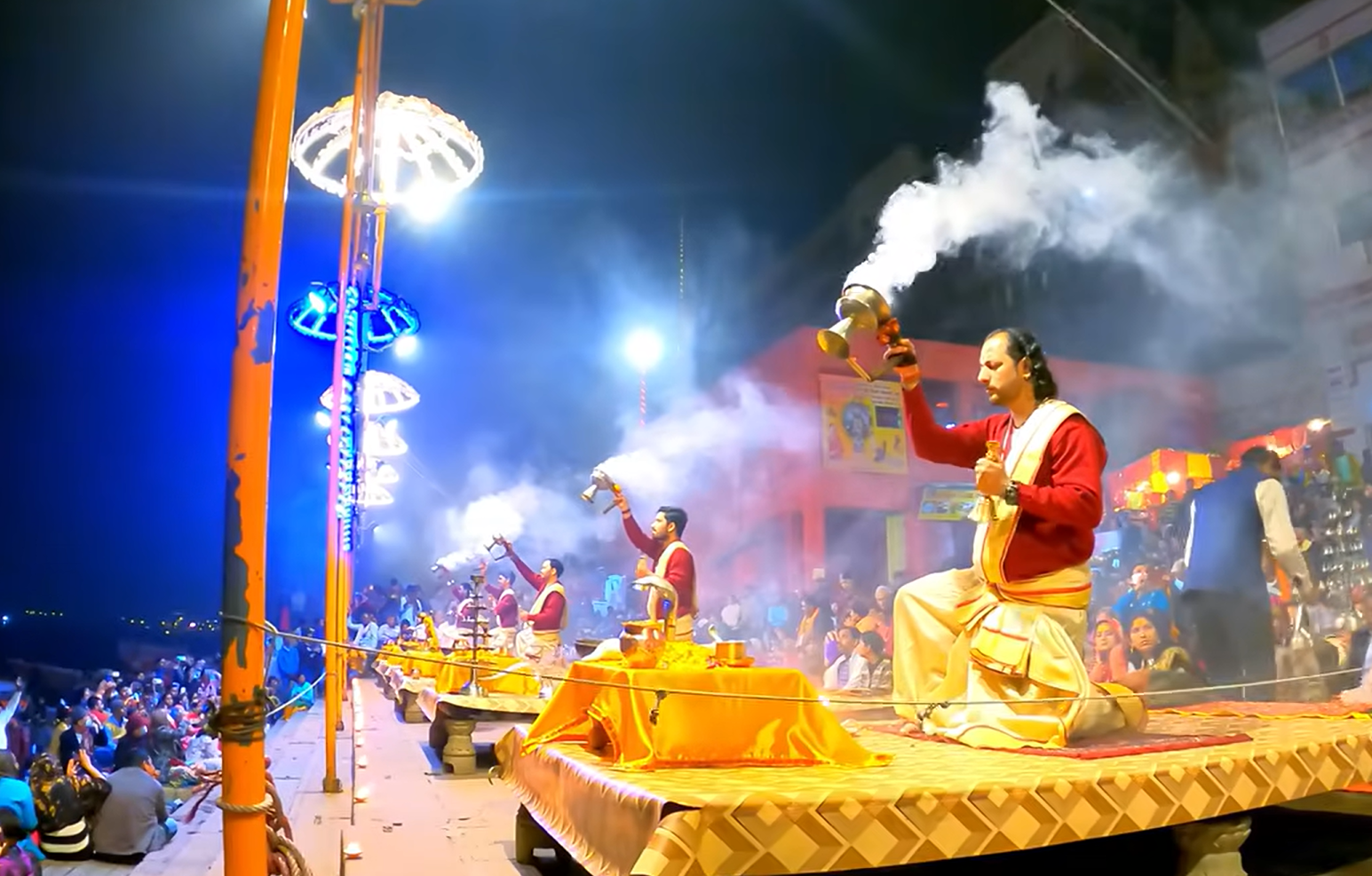
Weather: Temperatures climb. Rajasthan sees around 15-33°C and Varanasi is warm at 17-33°C. Evenings are still pleasant early in the month.
March is a great time to explore northern India, especially during the first half of the month before temperatures begin to rise. Rajasthan is ideal for sightseeing, while Varanasi offers a comfortable experience of its ghats, Ganga Aarti and historic old lanes. March also brings Holi, the famous festival of colors, which can be celebrated in Jaipur, Mathura-Vrindavan or Varanasi. Expect lively crowds, bright colors and plenty of water during the celebrations. As the weather gets hotter, consider traveling north first and then heading south or toward the hill regions. Kerala can become increasingly hot and humid by late March.
April-May: Himachal and Ladakh
Weather: The plains are extremely hot at 38-45°C, so skip Delhi, Rajasthan and Varanasi unless you love heat. The mountains are in their prime.
April is a great month to escape the rising heat, with Himachal Pradesh offering pleasant temperatures of around 10–25°C in Shimla, Manali, Dharamshala and Kasol. Ladakh also begins to open up from late April, with flights to Leh operating year-round and road routes typically reopening from May onward. Early-season visits offer snowy landscapes and fewer tourists, but allow at least two days to acclimatize after arriving in Leh. In Kashmir, Srinagar’s famous tulip gardens usually bloom in April, adding a colorful highlight to the season. Spring festivals in Kullu and Manali and the blooming rhododendrons across the Himalayas bring extra charm to the month. Popular Himachal destinations can get busy from May, so booking accommodation early is recommended.
June-September: Ladakh, Himachal and Kerala
The monsoon changes everything. Much of India gets heavy rain, but some regions actually peak now.
Ladakh and Spiti (June-September): These high-altitude deserts sit in the Himalayan "rain shadow," so they stay largely dry. Daytime temperatures are around 15-28°C, roads are open and monasteries, lakes like Pangong Tso and Nubra Valley are at their best. This is the best time to visit Ladakh.
Himachal Pradesh: Upper Himachal, including Lahaul and Spiti, is a great choice. Lower Himachal (Shimla, Manali) can see landslides and road closures, especially in July and August. Check conditions before you go.
Kerala: The monsoon brings lush green landscapes, misty hills in Munnar and reduced prices. It's peak season for Ayurvedic treatments, since the cooler, humid weather is considered ideal. Expect heavy rain spells, but many travelers love the atmosphere. The Nehru Trophy Boat Race takes place around August, and Onam falls in late August or September.
Valley of Flowers National Park in Uttarakhand (July-September) and Rajasthan for green, uncrowded lakes in Udaipur. Mumbai and Goa in peak rain, Kaziranga and most tiger reserves (core zones are generally closed from July to September) and Meghalaya's heavy-rain zones if you have limited flexibility, and June to September is India's cheapest travel season.
October-November: Almost All Major Routes
This is the best month to travel to India if you want flexibility. The rains retreat, skies are clear and temperatures drop. Days of roughly 25-32°C in the north, cooling through November. Kerala and the south can get some retreating-monsoon showers, especially in October.
Where to go:
- Golden Triangle and Rajasthan: Perfect from late October. Tiger reserves like Ranthambore reopen around October 1.
- Kerala, Tamil Nadu and Goa: Comfortable and greener; Goa's season begins around November.
- Varanasi: Ideal weather and Dev Deepawali (around November) is unforgettable.
- Himalayas: Autumn colors in Kashmir, crisp views in Sikkim and Darjeeling. Ladakh becomes cold and roads begin closing from mid-October.
- Northeast India: Kaziranga opens in November.
Events: Dussehra, Diwali, Pushkar Camel Fair (Kartik Purnima, usually November) and Kullu Dussehra, Delhi's air quality worsens from late October through winter. Consider spending less time there or bringing a good mask. Diwali weeks are busy, so book early.
December: Rajasthan, Kerala and the Golden Triangle
Weather: Cool and dry across most of India. Delhi and Rajasthan see roughly 8-22°C with cold mornings. Kerala and Goa are warm and sunny at 24-32°C.
Where to go:
- Rajasthan: Comfortable days and starry desert nights. Camp in Jaisalmer or Pushkar.
- Kerala: Ideal for backwaters, beaches and spice plantations.
- Golden Triangle: Good, but expect fog and lower air quality in Delhi.
- Goa: Christmas and New Year parties.
- Kutch, Gujarat: The Rann Utsav white-desert festival usually runs from November to February.
Events: Christmas in Goa, Kochi and Mumbai, and New Year celebrations across the country, This is peak season. Flights and hotels are most expensive between about December 20 and January 5, so book 2-3 months ahead.
Best Time to Visit India by Region
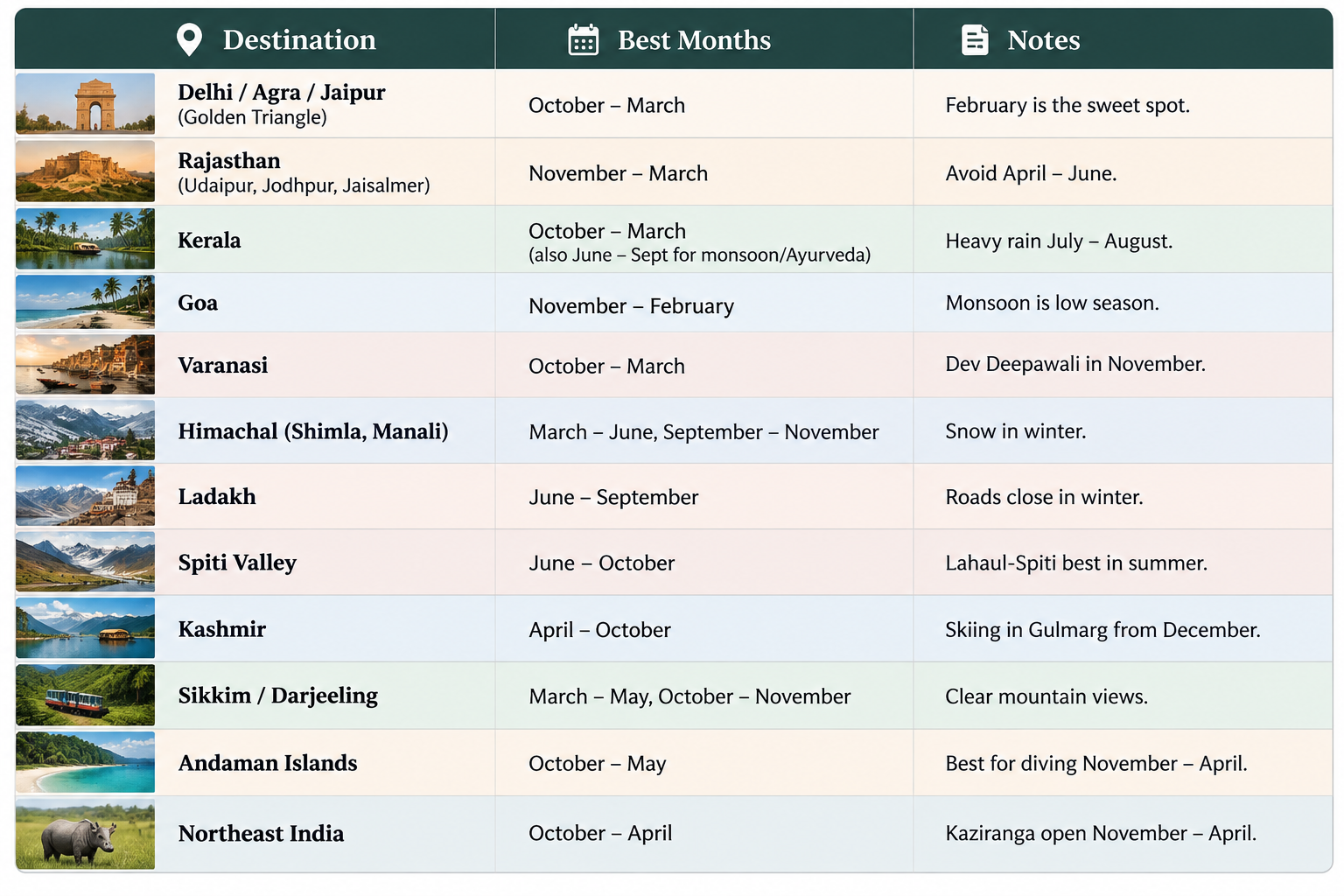
The Worst Time to Visit India
If you're looking for the least comfortable time, it's late April to June for the northern and central plains (Delhi, Rajasthan, Varanasi, Agra), when temperatures often exceed 40°C. Also difficult is July-August for coastal areas and flood-prone regions, though these months are ideal for Ladakh and monsoon Kerala. Every "bad" month in one part of India is a good month somewhere else.
Tips for Planning Your India Trip by Season
- Plan by region, not by country. Pick your route first, then the month.
- Book early for peak season. Trains, domestic flights and boutique hotels sell out for December-January and Diwali.
- Acclimatize in the mountains. Spend at least 48 hours in Leh before doing anything strenuous.
- Pack for the season. Layers for northern winters, breathable cotton for summer, and rain gear for the monsoon.
- Check road and pass status. Himalayan routes can change quickly with weather.
- Build in flexibility. A spare day helps with fog delays or monsoon disruptions.
Frequently Asked Questions
What is the best month to visit India?
October, November and February are widely considered the best months, offering pleasant weather, clear skies and access to most regions. If you can choose only one, February is excellent for the Golden Triangle and Rajasthan.
What is the best time to visit India for first-time travelers?
October to March, and especially November to February, because you can combine Delhi, Agra, Jaipur, Varanasi and Kerala in comfortable weather.
When should I avoid visiting India?
Avoid the northern and central plains during April-June because of extreme heat, and avoid landslide-prone hill areas and coastal cities during peak monsoon (July-August). Also avoid Ladakh in winter unless you're on a specialist trek.
Is India worth visiting in monsoon season?
Yes, if you choose your destinations wisely. Ladakh, Spiti and Kerala are excellent in the monsoon months, and you'll enjoy lower prices and fewer crowds.
When is the cheapest time to travel to India?
June to September offers the lowest prices for flights and hotels. Peak prices happen in mid-December to early January.
What is the best time to visit the Taj Mahal?
October to March, especially from late October to February. Visit at sunrise to avoid crowds and haze, and note that it's closed on Fridays.
What is the best time to visit Kerala?
October to March is best for beaches and backwater cruises. June to September is the monsoon Ayurveda season, with lush landscapes and lower prices.
What is the best time to visit Ladakh?
June to September, when the roads are open and temperatures are moderate. For fewer crowds and dramatic landscapes, try late May or September.
Plan Your Perfect India Trip
Now that you know when to visit India, the next step is to design a route that fits your dates. At india custom tours, our local travel experts build customized itineraries for every season, from Rajasthan palace tours and Kerala backwater escapes to Ladakh road trips.
Get a free custom itinerary
Explore our India tour packages
Grand Gwalior Travel Guide 2026
Gwalior Travel Guide 2026
Best Places to Visit, Fort, Hotels, History & Itinerary
Perched on a sandstone plateau in the heart of Madhya Pradesh, Gwalior is one of those cities that quietly outclasses its own reputation. Ask most travellers what they know about it and you'll get a shrug maybe a vague memory of a fort from a history textbook. Ask someone who has actually stood at Man Mandir Palace at sunset, watching the blueand-yellow tilework catch the last light over the plains, and you'll get a very different answer.
Our travel specialists at India Custom Tours have organized private tours across North India for years, and Gwalior consistently surprises first-time visitors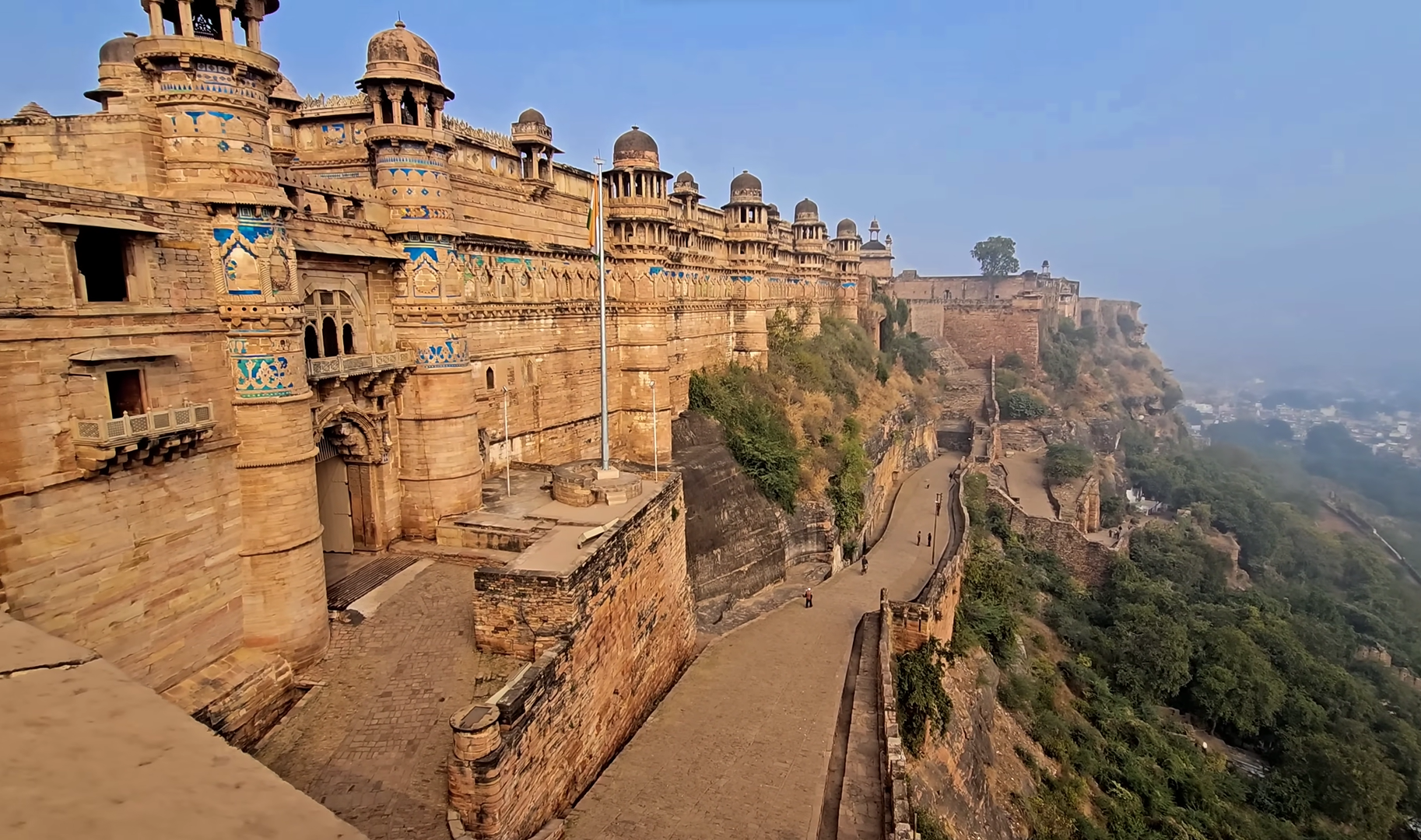 more than almost any other stop on the Delhi–Agra–Khajuraho circuit. This guide is built from firsthand route planning, repeated visits, and conversations with local guides, drivers, and hoteliers not a rehash of Wikipedia. Use it to plan everything from a rushed half-day stop to a slow, three-day exploration of the city and its surroundings.
Where Is Gwalior?
Gwalior sits in the northern part of Madhya Pradesh, close to the borders of Uttar Pradesh and Rajasthan, roughly 120 km south of Agra and about 320 km south of Delhi. Its location has always been its defining feature historically, whoever held Gwalior Fort effectively controlled the road between the Gangetic plains and central India, which is why so many dynasties fought over this one hill.
For travelers, that same location is a gift. Gwalior sits directly on the Delhi–Agra–Jhansi–Khajuraho rail and road corridor, which makes it one of the easiest historical cities in India to combine with an existing trip rather than a detour that eats a whole extra day.
Majestic History of Gwalior
The story of Gwalior is really the story of its fort. Legend traces the name to a sage called Gwalipa, who is said to have cured a local chieftain, Suraj Sen, of leprosy using water from a sacred pond on the hill the grateful king built the first fort here in gratitude, and the site has carried the sage's name ever since.
What's verifiable is that the hill has been fortified continuously for over a thousand years. Archaeological and historical evidence traces the fort's history back to at least the 5th century AD, with the hill recorded in ancient Sanskrit inscriptions under the names Gopadri and Gopagiri, meaning "Cowherds' Hill." Over the centuries it passed through the hands of the Guptas, the Hunas, the Kachhwahas, the Pratiharas, the Tomaras, the Pathans, the Mughals, the English, and finally the Marathas, each of whom left their mark on its walls and palaces.
The fort reached its architectural peak under the Tomar ruler Raja Man Singh Tomar in the 15th century, who built the stunning Man Mandir Palace that still dominates the fort's silhouette today. Later, Mughal emperors Babur, Jahangir, and Shah Jahan all added their own structures, and it was Babur no stranger to fortresses who famously called Gwalior "the pearl amongst the fortresses of Hind."
In the 18th century, the fort and city passed to the Scindia (Shinde) dynasty, Maratha rulers who transformed Gwalior into a princely state capital and built much of what defines the city today including the extraordinary Jai Vilas Palace. The Scindias remain connected to Gwalior; descendants of the family still occupy part of Jai Vilas Palace, and the family has produced prominent Indian politicians in the decades since independence.
Gwalior also carries deep musical heritage: it's the birthplace of the Gwalior gharana, one of the oldest schools of Hindustani classical music, and the final resting place of Tansen, the legendary 16th-century court musician of Akbar.
Best Time to Visit Gwalior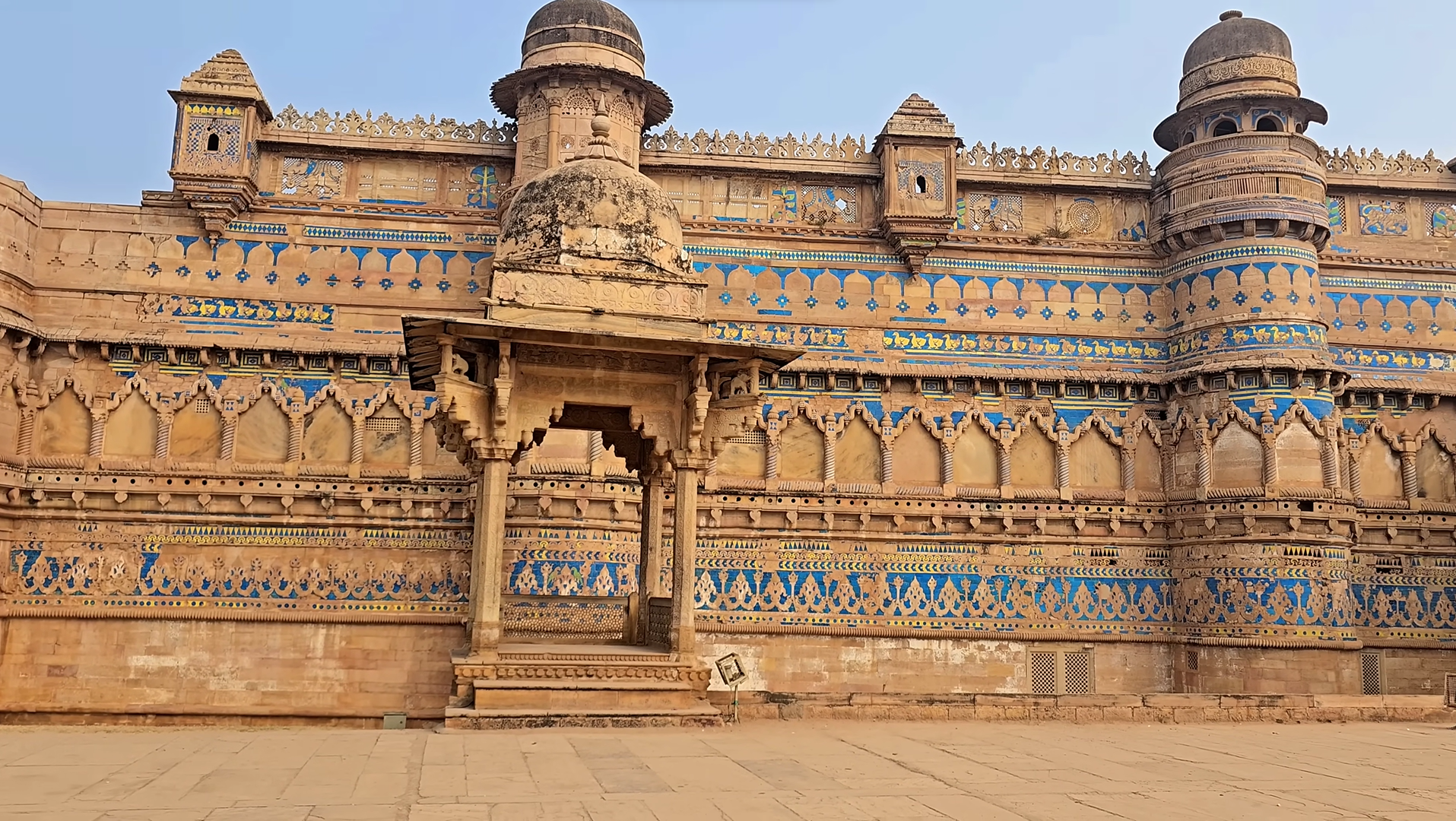
Like most of central India, Gwalior has three broad seasons, and they matter more here than in many cities because the fort itself is a fully exposed sandstone plateau with almost no shade.
October to March is the sweet spot. Days are warm and pleasant, nights turn pleasantly cool by December and January, and this is when the city's cultural calendar is busiest including the Tansen Music Festival, usually held in November or December, which draws classical musicians from across India to perform near Tansen's tomb.
April to June is genuinely harsh. Temperatures regularly climb past 40°C, and the fort's open sandstone surfaces can feel like a griddle by midday. If you must visit in summer, plan fort visits for early morning (right at opening) or the last two hours before closing.
July to September brings the monsoon. Gwalior isn't a heavy-rainfall city, but showers can be unpredictable, and the surrounding countryside turns a vivid green that's lovely for photography if you don't mind carrying an umbrella.
Bottom line: if your dates are flexible, aim for November through February. If you're passing through as part of a Delhi–Agra–Khajuraho itinerary at another time of year, Gwalior is still very doable just start early and carry water.
How to Reach Gwalior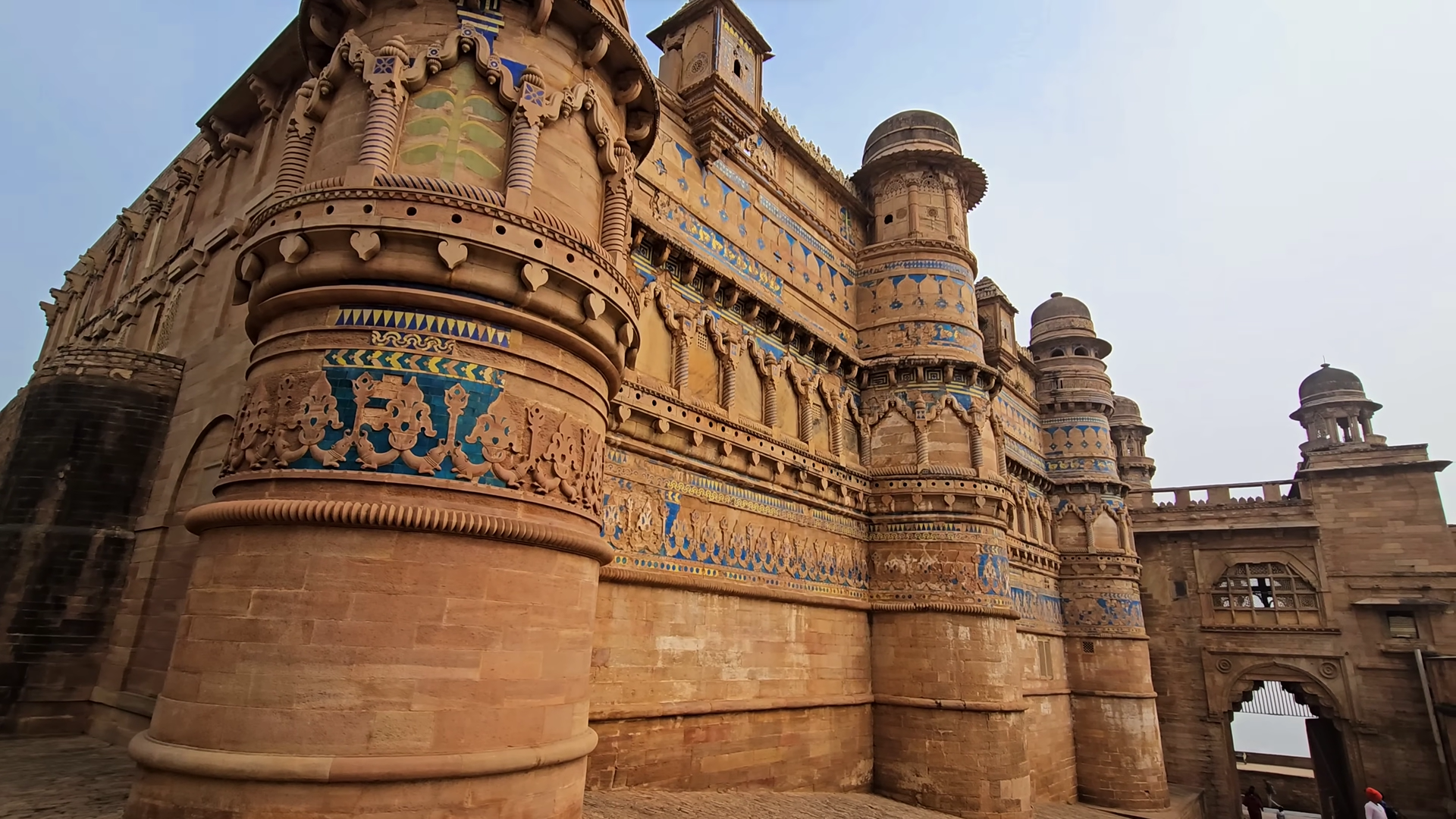
By Air: Gwalior has its own airport Rajmata Vijaya Raje Scindia Air Terminal at Maharajpura, about 8–10 km from the city center with regular domestic flights connecting to Delhi, Mumbai, Indore, and a handful of other cities. Flight frequency is lighter than what you'd find at a major metro, so check schedules in advance, especially if you're planning a tight itinerary.
By Train: This is by far the most popular way to reach Gwalior, and for good reason. Gwalior Junction sits directly on the main Delhi–Chennai and Delhi–Mumbai trunk lines, meaning dozens of trains pass through daily, including fast options like the Shatabdi and Gatimaan Express services connecting to Delhi and Agra in just a couple of hours. If you're already in Agra, the train to Gwalior is quick, comfortable, and arguably more relaxing than driving.
By Road: Gwalior sits on National Highway 44 (the old NH-3), making it an easy 3–4 hour drive from Agra and roughly 5–6 hours from Delhi in reasonable traffic. It also connects well southward to Shivpuri, Jhansi, and onward to Orchha and Khajuraho, which is exactly why so many multi-city North India itineraries route through here rather than around it.
Within the city, autos and app-based cabs cover most needs, but if you're visiting multiple far-flung sites in one day the fort, Jai Vilas Palace, Tansen's tomb, and a market run a hired car with driver for the day is genuinely the least stressful option and not expensive by international standards.
Top Attractions in Gwalior Fort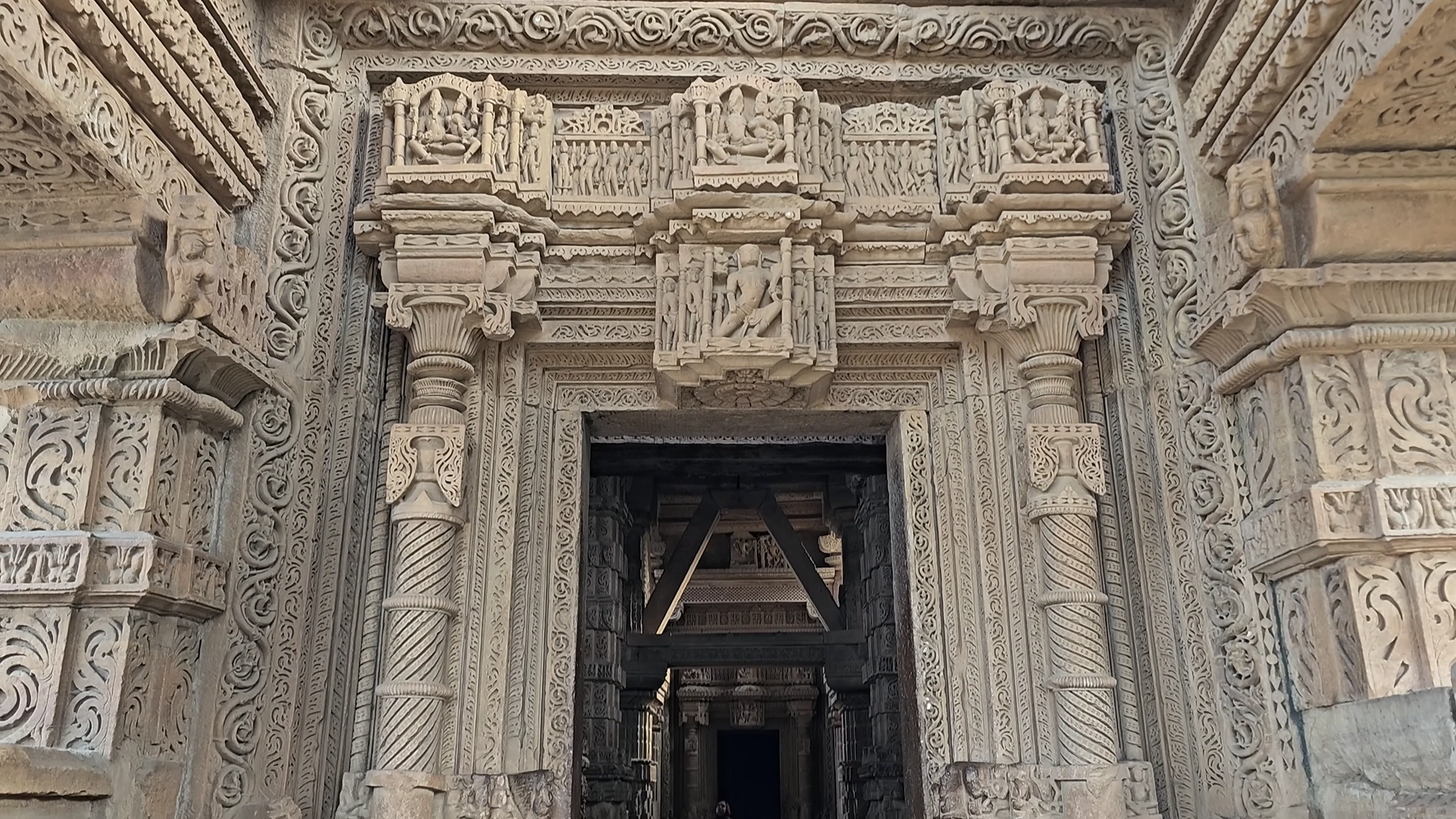
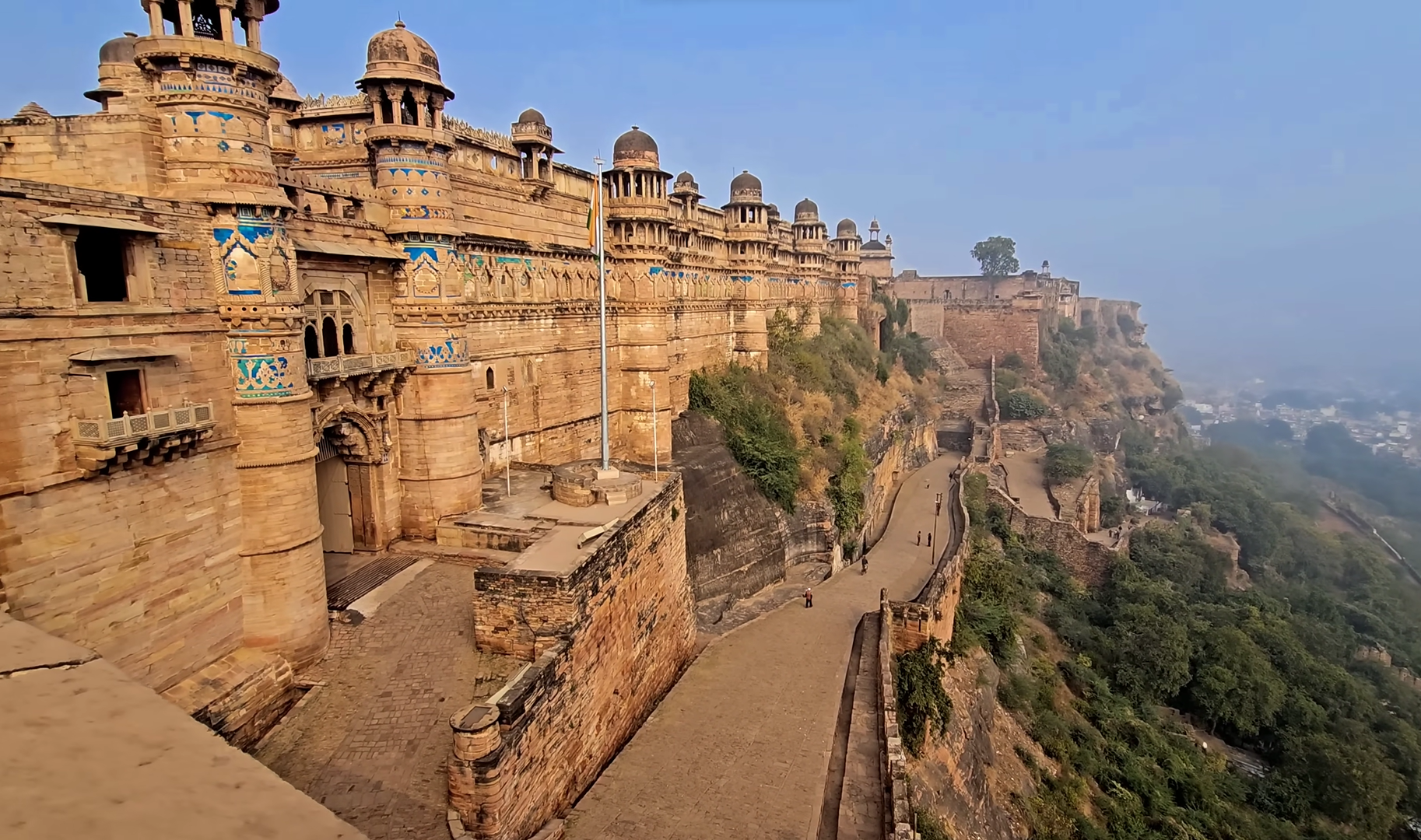
Everything in Gwalior radiates outward from this hill, and it deserves to be the anchor of any visit. Rising on an isolated, flat-topped hill roughly 300 feet above the city, the fort stretches about 3.2 km in length with outer walls around 35 meters high, built largely from red sandstone. It's often nicknamed the "Gibraltar of India" for how commandingly it sits above the plains a comparison that becomes obvious the moment you see it from the road below.
The fort is really a walled hilltop city rather than a single building. Inside its perimeter you'll find:
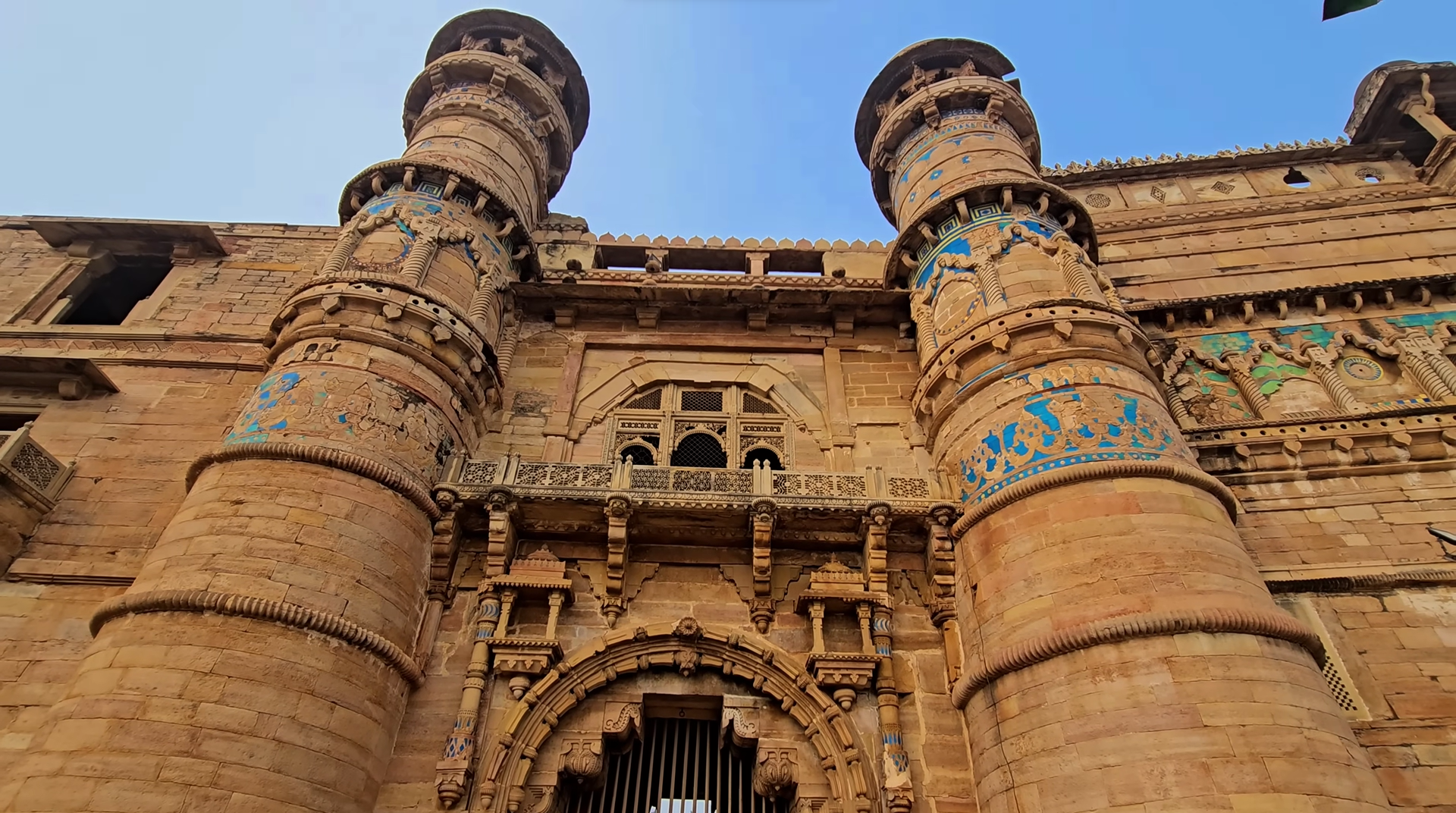
- Man Mandir Palace the fort's showpiece, built by Raja Man Singh Tomar in the late 15th century. Its exterior is covered in glazed blue, green, and yellow tilework depicting elephants, tigers, and banana trees a rare survival of medieval Indian tile art. Below it lie dungeon chambers once used to hold Mughal prisoners.
- Gujari Mahal built by Man Singh Tomar for his queen, Mrignayani, now converted into an archaeological museum housing sculptures recovered from around the region.
- Teli Ka Mandir the fort's tallest structure, an 8th–9th century temple whose architecture blends North Indian and South Indian (Dravidian) styles in a way found almost nowhere else in the country.
- Sas Bahu Temples a pair of ornately carved Vishnu temples built by King Mahipal of the Kachchhapaghata dynasty, popularly known as the Sas-Bahu (mother-in-law/daughter-in-law) temples due to local folklore about the differing deity preferences of the queen and her daughter-in-law.
- Gopachal Jain sculptures a remarkable series of Jain Tirthankara figures carved directly into the rock face along the fort's western approach road, some monumental in scale.
- Gurdwara Data Bandi Chhor a Sikh shrine within the fort marking the site where Guru Hargobind was once imprisoned; modest dress and head covering are expected here.
Practical details: The fort is generally open daily from 6:00 AM to 5:30 PM, and it typically takes 3 to 4 hours to see the main palaces, temples, and historic structures properly. Note that some sources list Friday as a weekly closure for certain sections, so it's worth confirming locally if your visit falls on that day. Entry fees have historically run around ₹75 for Indian visitors and ₹250 for foreign visitors, with children under 15 free, though ticket pricing at ASI-managed monuments is revised periodically, so treat this as an approximate guide and confirm current rates on arrival.
Don't skip the light and sound show in the evening a roughly 45-minute presentation held in Hindi and English on alternating time slots that narrates the fort's history against a backdrop of illuminated palace walls, and it's genuinely one of the better light shows of its kind in India.
Visitor tip: Wear proper walking shoes the stone surfaces are uneven and the site is large. There's minimal shade, so a hat and water are essential outside of winter.
Jai Vilas Palace & Scindia Museum
If Gwalior Fort represents the city's medieval and Rajput-Mughal past, Jai Vilas Palace represents its 19th-century Maratha grandeur, and the contrast between the two is part of what makes Gwalior such a satisfying stop you get two completely different architectural worlds in one city.
Commissioned by Maharaja Jayaji Rao Scindia and completed in 1874, the palace was built to give a suitably grand welcome to the Prince of Wales (later King Edward VII) during his 1875 visit to India. Designed by architect Sir Michael Filose, the three-storey palace blends Tuscan, Italian-Doric, and Corinthian architectural styles across its levels a deliberately European statement of Maratha royal wealth and taste.
The numbers alone are worth knowing before you go, because they explain why the palace still stuns visitors: the building covers over 1.2 million square feet and contains around 400 rooms. Only a portion is open to the public as the Jiwaji Rao Scindia Museum, but that portion includes the palace's two undisputed highlights:
- The Durbar Hall, whose ceiling holds two enormous chandeliers each about 12.5 metres tall and weighing 3.5 tonnes, fitted with 250 bulbs, and famously tested for structural safety before installation by having a group of elephants walked across the roof above the hall to confirm it could bear the weight.
- The silver train, a novelty dining-table centerpiece a model train with cut-glass carriages, built by the British firm Bassett-Lowke in 1906, that once circled the banquet table on rails to serve after-dinner drinks and cigars to guests.
Beyond these showpieces, the museum holds a genuinely eclectic collection: antique weapons, including the original shield (Dhal) of Rani Lakshmibai of Jhansi, Persian carpets, European furniture, and the Chitrangada Raje Art Gallery.
Practical details: Reported timings and ticket prices vary somewhat between sources and have clearly changed over recent years, so treat the following as a general range rather than a fixed number: expect the museum to be open roughly 10:00 AM to 5:00 or 6:00 PM, closed one day a week (commonly Monday or Wednesday depending on the source), with Indian entry fees somewhere in the ₹60–150 range and foreign visitor fees considerably higher, often ₹350–800. Photography inside the museum is typically restricted or charged separately, so don't count on getting interior shots without checking at the counter first. Given how much these figures shift, we'd genuinely recommend confirming current timings and pricing by phone or through the palace's official channels the day before your visit.
Teli Ka Mandir, Sas Bahu Temples & Gopachal Jain Sculptures
Covered above as part of the fort complex, but worth calling out separately if you're planning your time together these three sites alone can easily absorb an hour or more, especially if you enjoy temple architecture or rock-cut sculpture. Photographers in particular should budget extra time at the Gopachal sculptures in late afternoon light.
Tansen's Tomb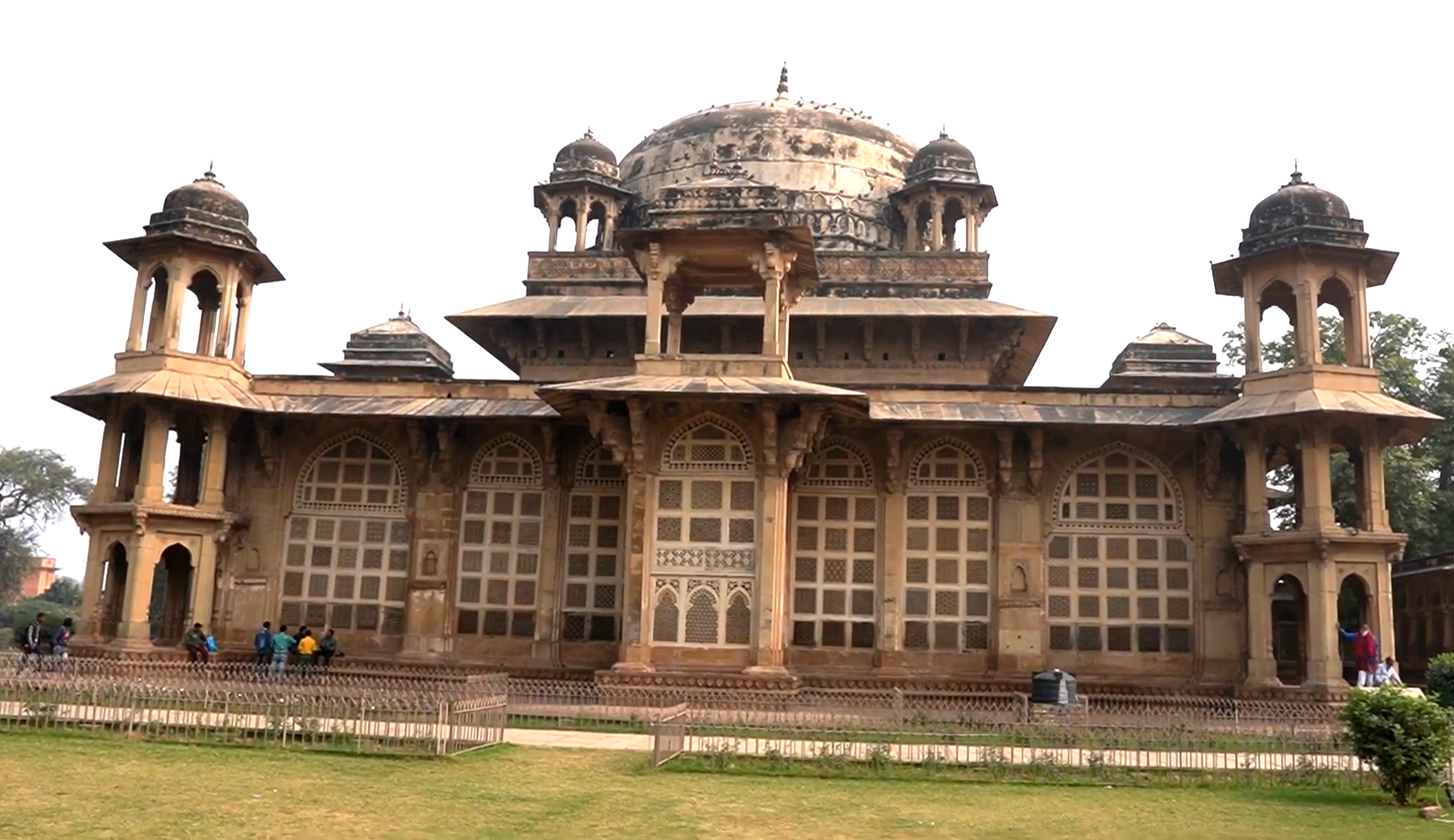
Tucked into a quiet, tree-shaded compound in the Hazira area of the city, this is the tomb of Mian Tansen, the celebrated musician who served in Emperor Akbar's court and is still regarded as one of the towering figures in the history of Hindustani classical music. The tomb sits alongside that of his spiritual teacher, Sufi saint Muhammad Ghaus, whose own mausoleum is architecturally significant in its own right, with an elaborate carved stone jali (lattice) exterior.
The site comes alive every winter during the Tansen Music Festival, when classical vocalists and instrumentalists from across India gather to perform in Tansen's honor if your visit lines up with the festival dates (typically late November or December), it's worth rearranging your schedule to attend even a single evening session.
Sun Temple (Surya Mandir)
A newer addition to Gwalior's landmark list, this modern Sun Temple was built by the Birla family in a style echoing the famous 13th-century Konark Sun Temple in Odisha, complete with the chariot-and-horses motif. It doesn't carry the historical weight of the fort, but it's a peaceful, well-maintained spot that photographs beautifully and makes an easy, low-effort addition to a half-day city tour.
Museums & Markets
Beyond Gujari Mahal and the Scindia Museum, culturally curious travelers can explore smaller regional museums showcasing archaeological finds from across Madhya Pradesh. For shopping, Sarafa Bazaar and the lanes around Bada (the old city center) are the places to look for Gwalior's traditional handicrafts, silk and cotton textiles, and the region's distinctive silver jewelry, alongside everyday bazaar energy that's worth wandering through even if you're not buying anything.
Where to Eat in Gwalior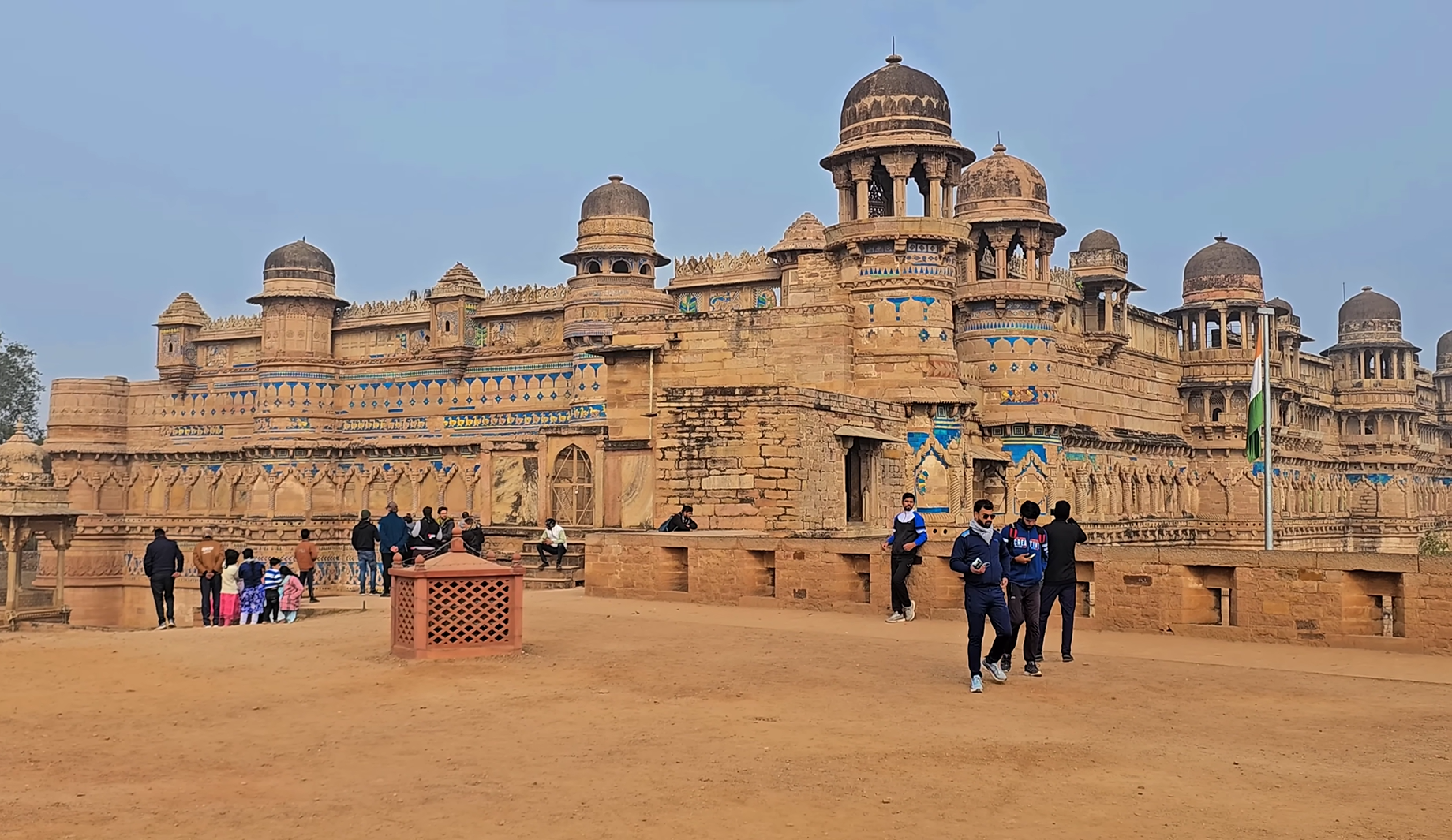
Gwalior's food culture sits squarely in the North Indian and Malwa culinary tradition, with a few specialties worth actively seeking out:
- Bedai and Kachori a Gwalior breakfast staple, deep-fried stuffed bread served with spicy potato curry, best found at old-city breakfast stalls rather than restaurants.
- Gajak and Chironji Gwalior is famous across Madhya Pradesh for its sesame-and-jaggery gajak, a winter sweet sold in dozens of varieties in shops around the old city; it makes an excellent, easily packable gift or souvenir.
- Poha-Jalebi the classic Madhya Pradesh breakfast combination, sold everywhere from street carts to proper restaurants.
- Regional Rajasthani and Mughlai-influenced dishes are common on restaurant menus given Gwalior's historical position between these two culinary worlds.
For sit-down meals, most mid-range and upscale hotels have solid multi-cuisine restaurants, while the old city's street-food lanes are where you'll find the most memorable, least touristy versions of local specialties.
Where to Stay in Gwalior
Luxury: Gwalior's standout luxury option is staying in or near a heritage property connected to the city's royal past the Scindia family's Usha Kiran Palace, now run as a luxury heritage hotel, is the obvious choice for travelers who want a genuinely palatial experience with Gwalior Fort views.
Mid-Range: Several well-regarded chain and independent hotels cluster around the City Centre and Lashkar areas, offering comfortable rooms, reliable Wi-Fi, and easy access to both the fort and Jai Vilas Palace a practical base for most travelers.
Budget: Near the railway station and in the older parts of the city, simple guesthouses and budget hotel chains offer clean, no-frills rooms well suited to travelers passing through for a night on a longer Delhi–Agra–Khajuraho route.
As a general rule, staying somewhere between the fort and the railway station minimizes backtracking, since most of Gwalior's key sights sit along that same general axis.
Best Itineraries One Day in Gwalior
- Morning: Arrive early and head straight to Gwalior Fort. Budget 3–4 hours to properly cover Man Mandir Palace, Gujari Mahal, Teli Ka Mandir, and the Sas Bahu temples.
- Afternoon: Lunch in the city, then visit Jai Vilas Palace and the Scindia Museum.
- Evening: A quick stop at Tansen's Tomb or the Sun Temple, followed by the fort's light and sound show after dark.
This is a full but genuinely satisfying single day, and it's how most travelers passing through on a Delhi–Agra–Khajuraho circuit experience Gwalior.
Two Days in Gwalior
- Day 1: Gwalior Fort in the morning (unhurried), lunch, Jai Vilas Palace in the afternoon, light and sound show in the evening.
- Day 2: Tansen's Tomb and Muhammad Ghaus's mausoleum in the morning, a wander through Sarafa Bazaar and the old city, the Sun Temple, and time set aside for shopping (gajak, textiles, silver jewelry) before departure.
Three Days in Gwalior (with a day trip)
- Days 1–2: As above.
- Day 3: A day trip to nearby Shivpuri or a further push toward Orchha, using Gwalior as a base before continuing your onward journey.
Nearby Destinations Worth Combining with Gwalior
One of Gwalior's biggest strengths as a destination is how well it slots into a longer itinerary. Consider pairing it with:
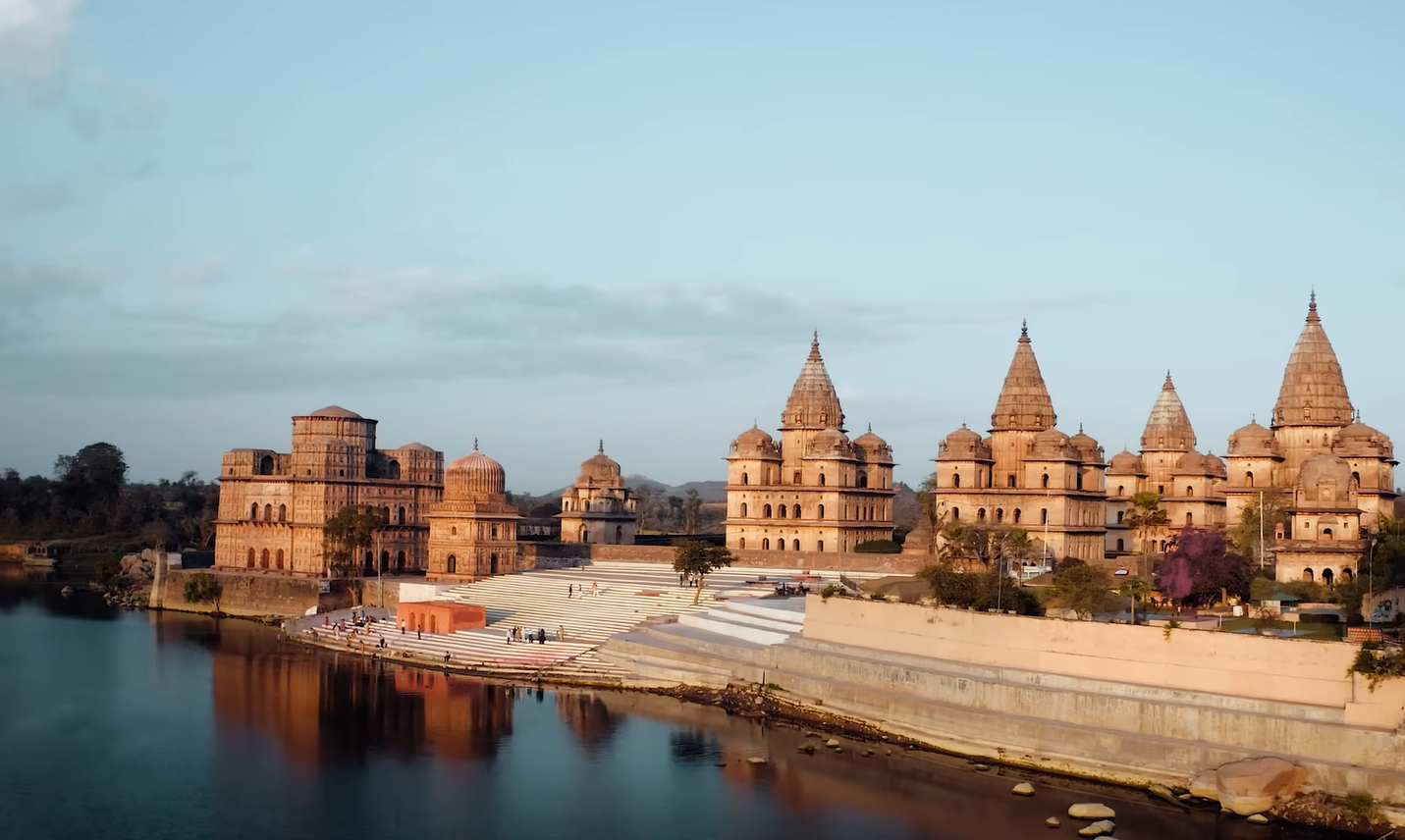
- Orchha: a beautifully preserved Bundela-era town of palaces and cenotaphs, roughly 3–4 hours away and one of central India's most underrated stops.
- Shivpuri: known for its royal Scindia chhatris (cenotaphs) and national park, a shorter detour from Gwalior.
- Jhansi: historically significant as Rani Lakshmibai's seat, and a natural gateway toward Orchha and Khajuraho.
- Khajuraho: the famous temple town, reachable via road or a connecting route through Jhansi/Orchha.
- Agra: just a couple of hours north, making Gwalior an easy add-on to any Taj Mahal itinerary rather than a separate trip.
- Delhi: the natural start or end point for a loop that includes Agra, Gwalior, Orchha, and Khajuraho.
- Ranthambore: for travelers extending westward into Rajasthan for a tiger safari.
For a private, well-paced version of this loop with a driver who actually knows which gate of the fort to use and when the light show sells out this is exactly the kind of itinerary our team at India Custom Tours puts together regularly.
Frequently Asked Questions
Is Gwalior worth visiting? Yes it's genuinely one of the more underrated historical stops in North India. Gwalior Fort alone rivals better-known forts in Rajasthan, and Jai Vilas Palace's Durbar Hall is one of the most striking royal interiors in the country.
How many days do I need in Gwalior? A focused one-day visit covers the essentials (fort, palace, light and sound show). Two days lets you add Tansen's Tomb, the markets, and a more relaxed pace. Three days works well if you're using Gwalior as a base for a nearby day trip.
Can I visit Gwalior in one day? Yes, and many travelers do exactly this as part of a Delhi–Agra–Khajuraho route. Start early to make the most of the fort before the midday heat (outside winter).
Is Gwalior safe for tourists? Gwalior is generally considered a safe city for domestic and international travelers, with standard common-sense precautions applying as anywhere else in India.
What is Gwalior famous for? Gwalior is best known for Gwalior Fort, one of India's most formidable hill forts; the opulent Jai Vilas Palace; its deep classical music heritage centered on Tansen and the Gwalior gharana; and its long association with the Scindia dynasty.
Which railway station serves Gwalior? Gwalior Junction, located centrally in the city and connected directly to the main Delhi–Mumbai and Delhi–Chennai rail lines.
Does Gwalior have an airport? Yes Rajmata Vijaya Raje Scindia Air Terminal, with domestic connections to a handful of major Indian cities, though frequency is lower than at major hub airports.
What's the best month to visit? November through February offers the most comfortable weather and coincides with the Tansen Music Festival.
What's the weather like? Hot and dry from April to June (often exceeding 40°C), a moderate monsoon from July to September, and mild, pleasant winters from October to March.
Travel Tips for Visiting Gwalior
- Carry cash in smaller denominations for market shopping, temple donations, and smaller eateries where card payments aren't always available.
- Wear closed, comfortable shoes for the fort the stone paths are uneven, and there's real distance to cover.
- Photography rules vary by site cameras are generally welcome at the fort, but often restricted or separately charged inside the Jai Vilas Palace museum, so check at the entrance.
- Carry water, especially outside winter months, since the fort has very little shade.
- If you want to attend the light and sound show, confirm the current show times and language schedule locally, as these shift seasonally.
- Modest dress is appropriate at the Gurdwara inside the fort and at Tansen's Tomb; a head covering may be required at the Gurdwara.
- Hiring a local guide at the fort is genuinely worthwhile the layered, multi-dynasty history of the site is hard to fully appreciate without context.
Camel Safari in Jaisalmer : Best Time to Go and How to Plan It Right
Camel Safari in Jaisalmer
Best Time to Go and How to Plan It Right
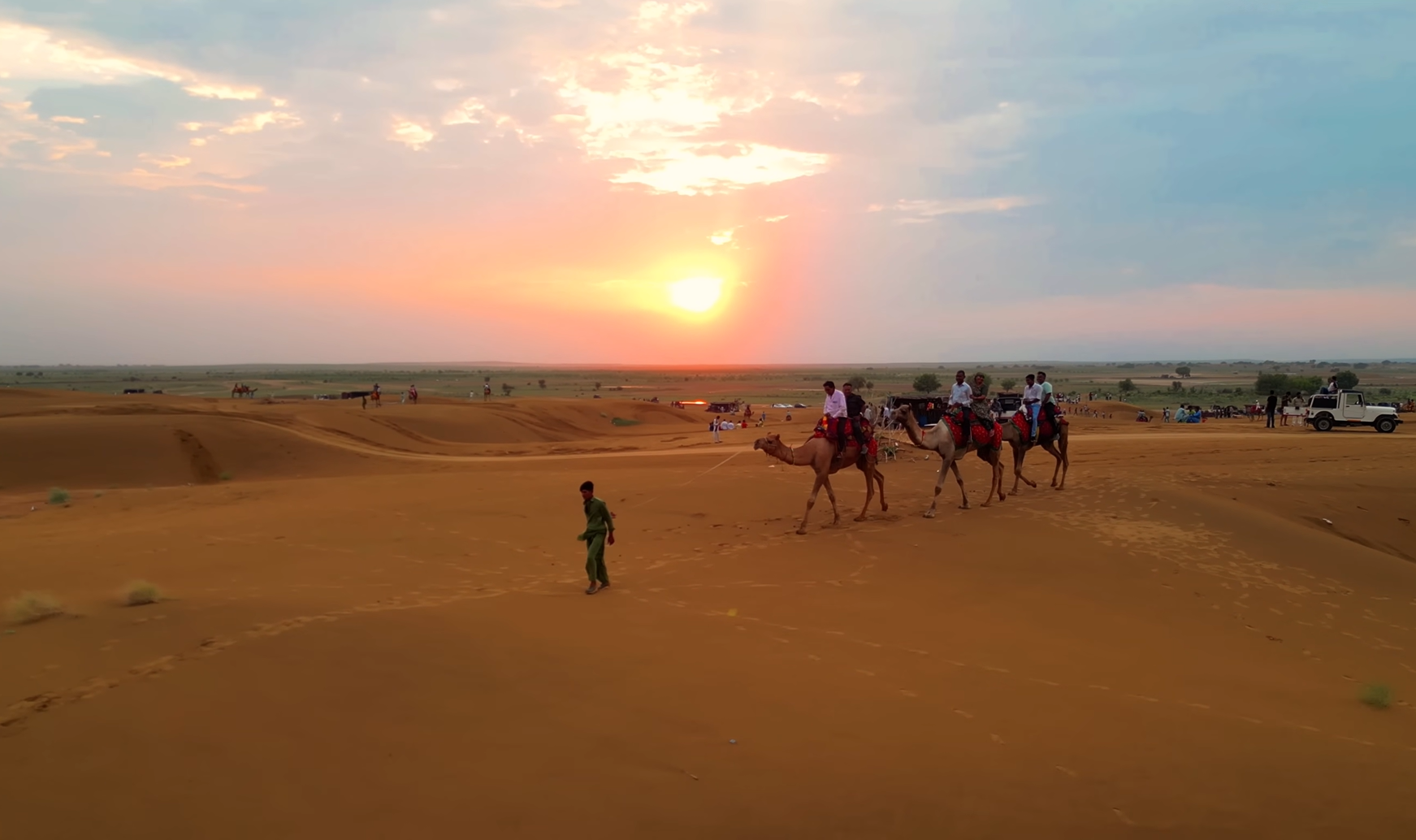
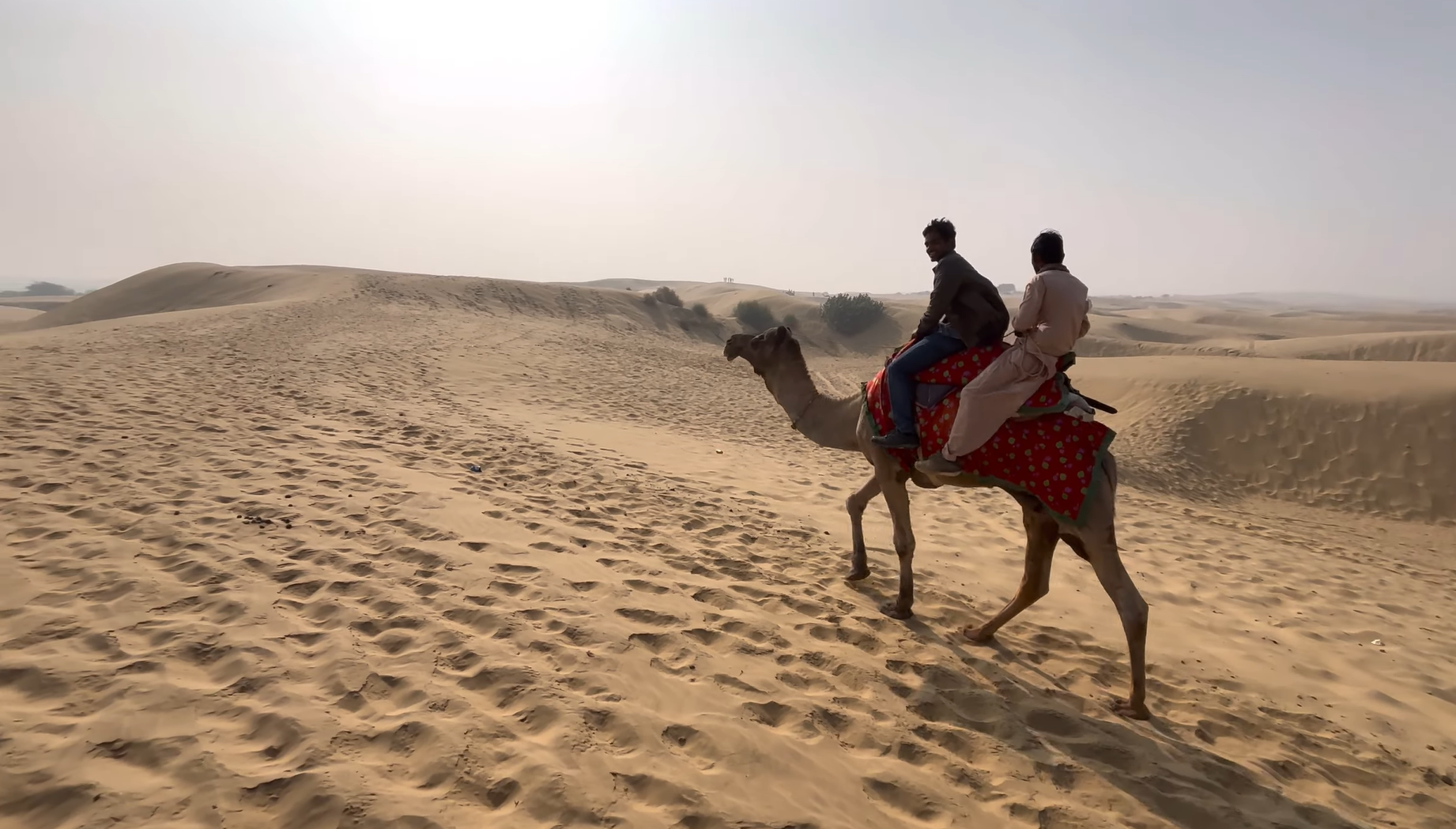
If there's one experience that captures the soul of Rajasthan, it's a camel safari in Jaisalmer. Riding slowly across the golden dunes of the Thar Desert as the sun dips into the horizon is the kind of memory that stays with travellers long after they've left India. But a great camel safari isn't just about showing up knowing when to go, which dunes to pick, and how to get there safely makes all the difference between an average trip and an unforgettable one. This guide walks you through everything you need to know to plan your Jaisalmer desert camel safari the right way.
Why Jaisalmer Is the Best Place in India for a Camel Safari
Jaisalmer sits right at the edge of the Thar Desert, close to the India-Pakistan border, and its golden sandstone forts and havelis give it the nickname "The Golden City." This location makes it the natural gateway to India's desert landscape endless dunes, remote desert villages, and star-filled skies with almost no light pollution. While camel rides are offered in a few other parts of Rajasthan, Jaisalmer remains the most authentic and well-established base for a proper desert safari experience, with generations of local camel handlers who know the dunes better than anyone.
Best Time for a Camel Safari in jaiselmer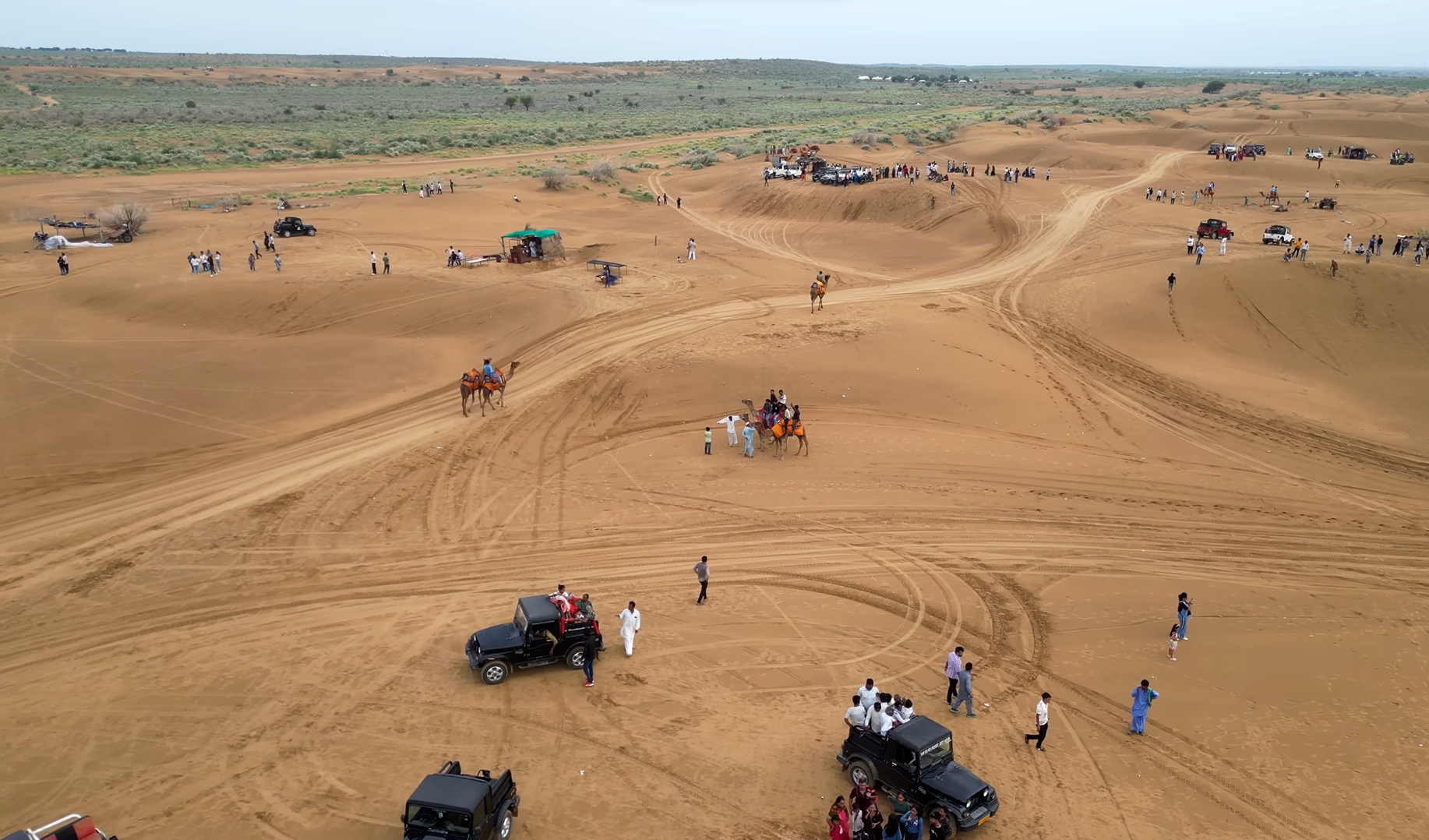
Timing matters more than most travellers realize. The Thar Desert swings between extremes scorching afternoons in summer and surprisingly cold nights in winter.
- October to March is the best time for a camel safari in Jaisalmer. Days are warm and pleasant, nights are cool (perfect for sleeping under the stars), and visibility for sunset and sunrise views is at its best.
- April to June brings intense heat, often crossing 45°C, making long camel rides uncomfortable and even risky for those unused to desert conditions.
- July to September sees the monsoon touch the region lightly. The desert turns a rare shade of green, and it's a quieter, less-crowded time to visit but sudden showers can disrupt overnight camping plans.
If your trip allows flexibility, aim for November to February, especially around a full moon night, when the dunes look almost silver under the moonlight.
Sam Sand Dunes vs Khuri Sand Dunes: Which One Should You Choose?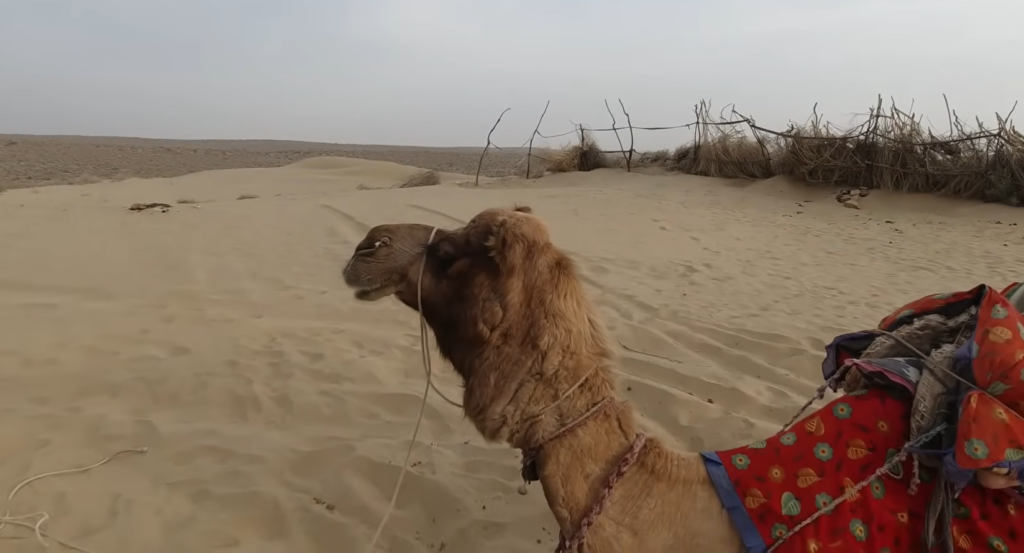
Most Jaisalmer camel safaris happen at one of these two locations, and picking the right one changes the whole experience.
Sam Sand Dunes
- The most famous and easily accessible dunes, about 40 km from Jaisalmer
- Tall, dramatic dunes the ones you've probably seen in photos and Bollywood films
- Livelier atmosphere with cultural shows, bonfires, and desert camps
- Best if you want a classic, crowd-friendly sunset experience
Khuri Sand Dunes
- Quieter and less commercial, about 50 km from Jaisalmer
- Smaller dunes but a far more peaceful, authentic village feel
- Ideal for travellers who want to escape the tourist rush and interact more with local desert life
If this is your first visit to Jaisalmer, Sam Sand Dunes gives you the iconic experience. If you've already explored Rajasthan before or prefer solitude over spectacle, Khuri is the better pick.
What to Expect on a Camel Safari in jaiselmer
A typical camel safari begins with a jeep transfer from Jaisalmer city to the desert starting point, usually taking about an hour. From there, you're introduced to your camel and handler, given a quick safety briefing on how to mount, sit, and hold on, and then the ride begins. You'll move slowly across sandy trails, passing scrub desert before reaching the open dunes usually timed so you arrive right as the sun starts setting. Evenings typically include a traditional Rajasthani dinner cooked over an open fire, folk music, and a chance to sleep either under open skies on a cot or in a desert camp tent. For those doing an overnight safari, the next morning often includes a sunrise view and a short return ride before heading back to Jaisalmer city.
Tips for a Safe and Comfortable Camel Safari in jaiselmer
- Wear light, breathable, full-sleeve clothing : the sun is intense during the day, but desert nights get cold, so carry a light jacket too.
- Cover your head : with a scarf or cap; desert sun and windblown sand can be harsh.
- Choose an ethical operator : ask about how the camels are cared for and rested. A well-treated camel safari is a better experience for you and fairer to the animal.
- Don't overdo the ride time : camel saddles have no stirrups, and long stretches can be tough on your hips and back if you're not used to it. A 1-2 hour ride is usually plenty to enjoy the experience without discomfort.
- Carry water and sunscreen, even in winter, since desert air dries you out faster than you'd expect.
- Avoid last-minute, unplanned bookings at the dunes gate arranging your safari as part of a proper itinerary avoids overcrowding, rushed timings, and unreliable operators.
The Part Most Travellers Get Wrong: Getting There and Back Safely
Here's what a lot of guides won't tell you the camel safari itself is often the easy part. The bigger challenge for most international and first-time Indian travellers is everything around it: navigating Jaisalmer's roads, finding a trustworthy jeep transfer, coordinating pickup and drop timings with the rest of your Rajasthan trip, and having someone who can actually explain what you're seeing along the way. This is exactly where a planned journey with a private vehicle, driver, and licensed guide makes the entire experience stress-free.
At India Custom Tours, we take care of this end-to-end as part of your larger Rajasthan or full-India itinerary:
- A private, air-conditioned vehicle for the entire journey, so you're never dependent on shared transport or unreliable local pickups
- An experienced driver who knows the desert routes well and times your arrival at the dunes perfectly for sunset or sunrise
- A licensed local guide who can walk you through the history of Jaisalmer Fort, the culture of the Thar Desert, and help you choose between Sam and Khuri dunes based on what you actually want from the experience
- Seamless coordination between your camel safari, hotel stays, and the rest of your Rajasthan circuit so nothing feels rushed or disconnected
Instead of piecing together transport, safari bookings, and guides separately (and hoping they all line up), you get one team managing your entire journey which means you can actually relax and enjoy the dunes instead of worrying about logistics.
Combining Your Camel Safari With a Complete Rajasthan Itinerary
A camel safari is unforgettable on its own, but it's even better as part of a well-rounded Rajasthan trip Jaisalmer's fort and havelis, Jodhpur's blue lanes, Bikaner's camel research farm, and Jaipur's palaces all pair naturally with a few days in the desert. With a private driver and guide managing the route, you can move between these cities comfortably without losing a single day to travel confusion.
Frequently Asked Questions
- Is a camel safari in Jaisalmer safe for families and kids? Yes, when arranged through an experienced operator with trained handlers, camel safaris are generally safe and enjoyable for families, including children and older travellers.
- How long does a camel safari usually last? It can range from a short one-hour sunset ride to a full overnight safari with camping in the dunes, depending on how much time you have.
- Do I need to be an experienced rider? Not at all. Camel handlers guide the animal throughout, so no prior riding experience is needed just a bit of comfort with sitting on a moving animal for an hour or two.
- Can a camel safari be added to a larger Rajasthan tour? Yes, and it's one of the best ways to experience it. When paired with a private vehicle, driver, and guide, your safari fits smoothly into a broader Jaisalmer-Jodhpur-Jaipur itinerary without any logistical stress.
Same Day Agra Tour from Delhi: What Actually Works (And What Doesn't)
Same Day Agra Tour from Delhi
What Actually Works (And What Doesn't)
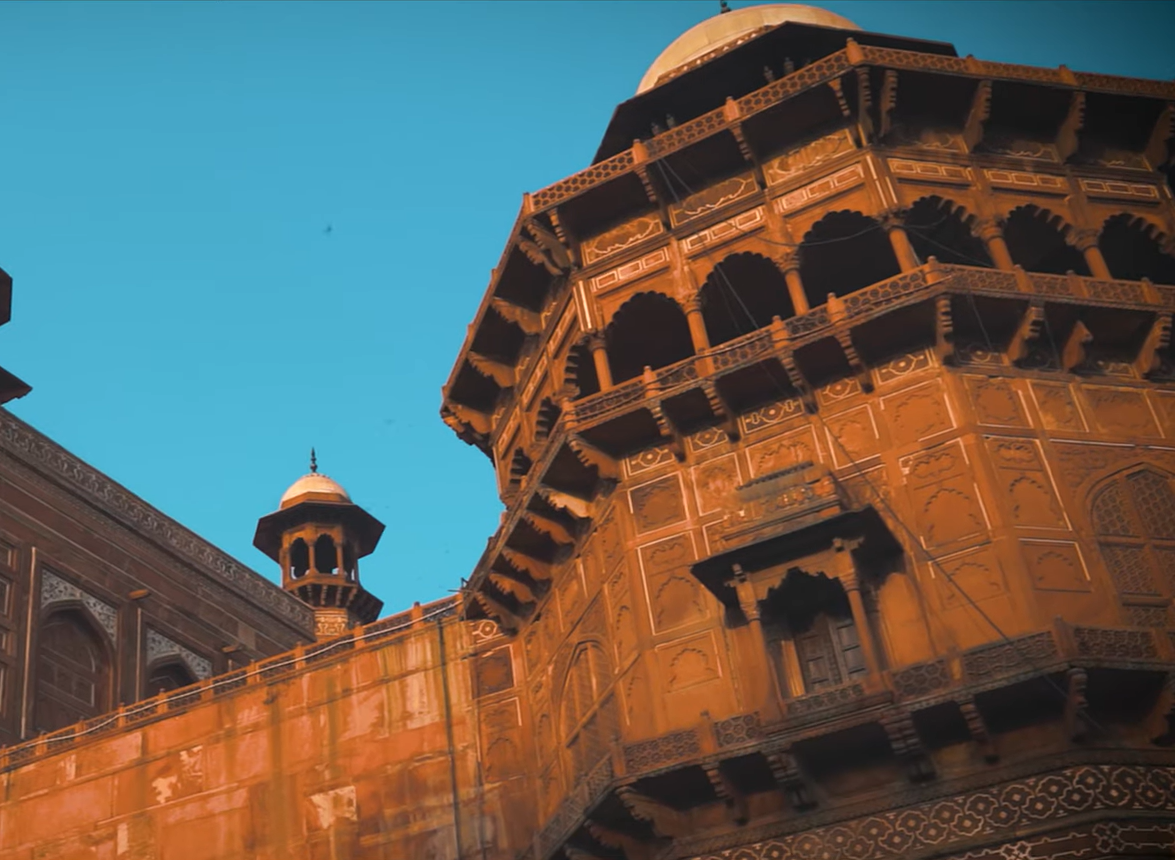
Can you really do Agra in one day from Delhi? The honest answer is yes but only if you plan it right. Most travellers who regret this trip made the same few mistakes. Most travellers who love it followed the same few rules. We've run this trip hundreds of times. Here's everything we know.
Is a same day Agra tour from Delhi actually worth it?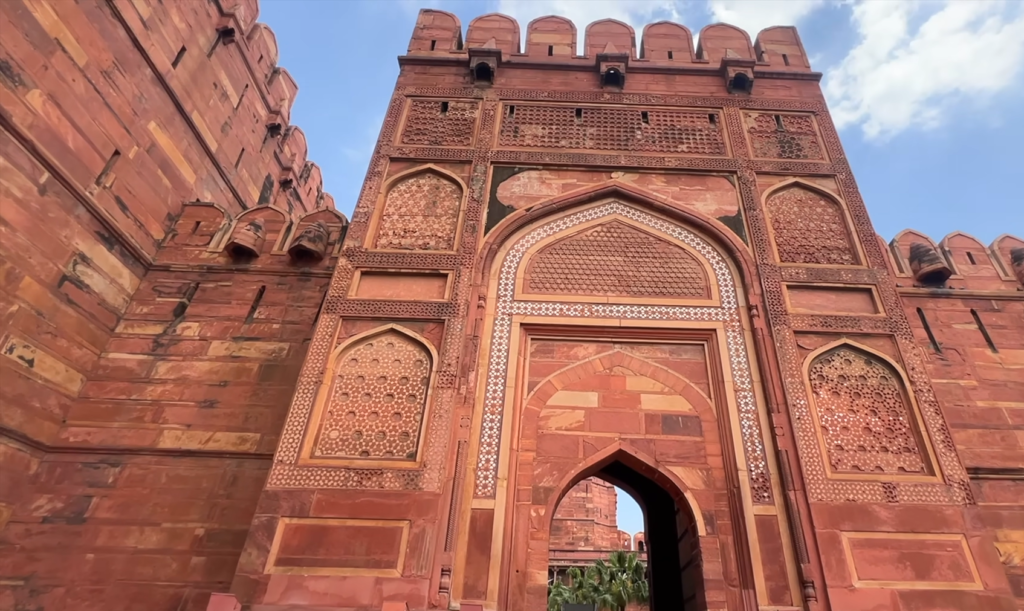
For the majority of international visitors, yes absolutely. Agra is 230 kilometres from Delhi, and the Taj Mahal is not something you want to skip because your itinerary only gives you one day in the region.
The trip works well if you are short on time, don't want the cost and hassle of an extra hotel night, or are passing through Delhi between flights with a long layover. Done right, you can see the Taj Mahal, walk through Agra Fort, have a proper lunch, and be back at your Delhi hotel by 8pm tired but genuinely satisfied.
That said, it is a long day. You are looking at 12 to 14 hours door to door. If you want to experience Agra slowly, explore Fatehpur Sikri, or see the Taj Mahal at both sunrise and sunset, then an overnight stay is the smarter choice. Our Varanasi, Agra & Rajasthan tour gives you Agra at a more relaxed pace if time allows.
But for travellers with one day? A same day Agra tour from Delhi is not a compromise. It is one of the most iconic day trips in the world and we mean that without exaggeration.
Private car vs. train from Delhi to Agra: what works better for a day trip
This is the most common question we get, and the answer depends on what matters most to you.
Private car (via Yamuna Expressway)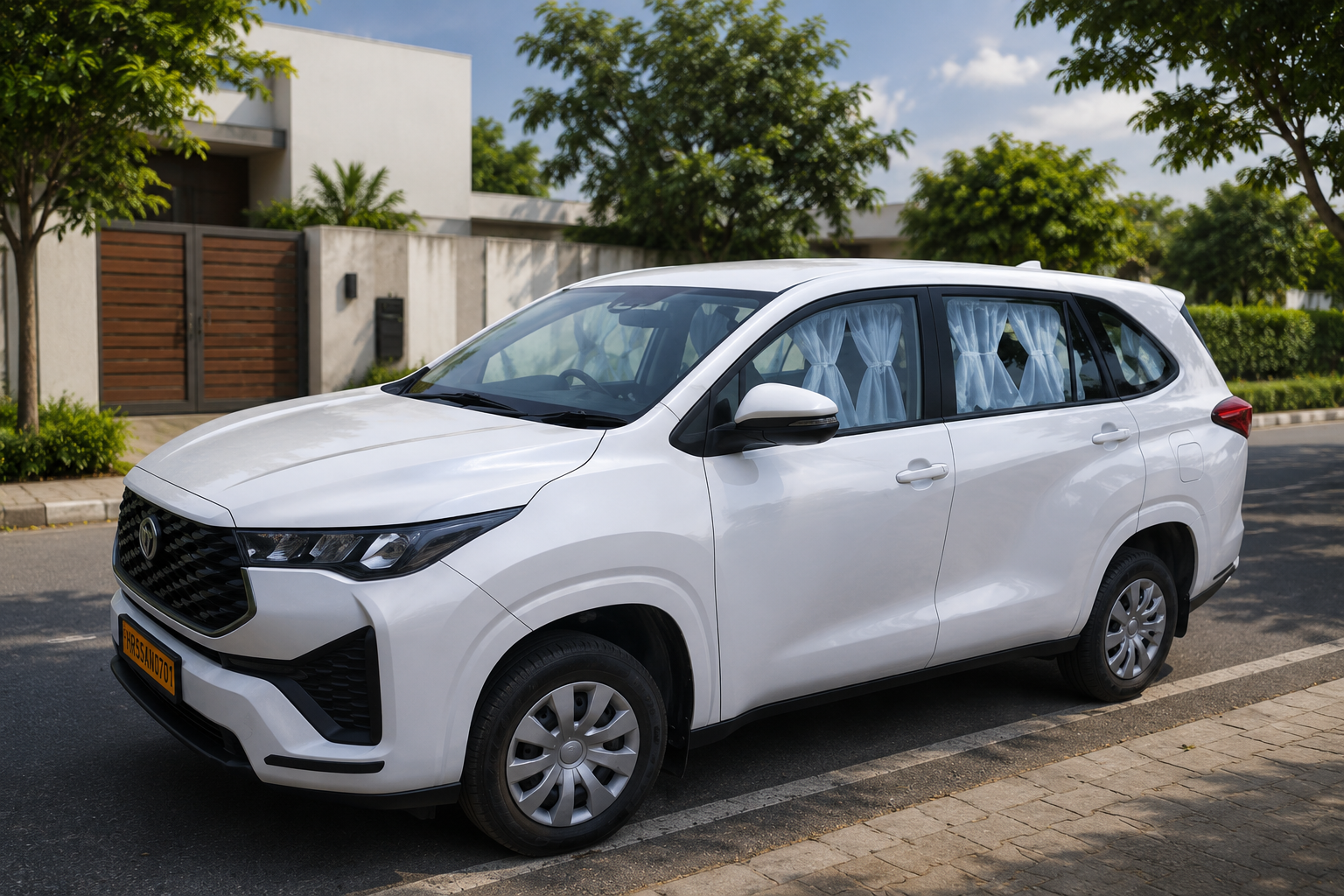
The drive from Delhi to Agra via the Yamuna Expressway takes approximately 3 to 3.5 hours under normal conditions. The expressway is one of India's best maintained highways smooth, well lit, and fast. Your driver picks you up from your hotel door, there are no luggage restrictions, and you can stop whenever you need a break.
The biggest advantage of a private car is flexibility. If you want to stop at Sikandra (Akbar's tomb) on the way in, or pause for photos of the countryside at sunrise, your driver accommodates that. At the end of the day, you leave Agra when you decide not when a train timetable says.
This is the option we recommend for most international tourists, and it is what we offer on our same day Agra tour from Delhi.
Train (Gatimaan Express)
The Gatimaan Express runs from Hazrat Nizamuddin station in Delhi to Agra Cantonment and covers the distance in about 1 hour 40 minutes India's fastest train on this route. If speed is your priority and you don't mind the fixed schedule, it is a genuinely enjoyable experience.
The downsides for foreign tourists: you need to get yourself to Hazrat Nizamuddin station early (typically 6am departure), manage your luggage without a personal driver waiting at either end, and coordinate a separate auto rickshaw or taxi in Agra once you arrive. The train also has fixed return times, which means your day in Agra is dictated by the timetable rather than your energy and interest.
Our recommendation: If you are travelling as a couple or family and want door to door comfort, go with a private car. If you are a seasoned solo traveller comfortable with Indian train logistics and want the fastest journey, the Gatimaan Express is a great option.
Hour by hour itinerary for your same day Agra tour
This is the schedule we use on our tours. Every time is based on real experience, not guesswork.
| Time | Description |
| 5:30am | Depart Delhi. Your driver picks you up from your hotel or airport. The city is quiet and traffic is minimal at this hour this is the single most important factor in having a good day. |
| ~7:00am | Rest stop on the Yamuna Expressway, approximately halfway. Stretch your legs, use clean facilities, grab a coffee or chai. 15 minutes. |
| ~9:00am | Arrive in Agra. Your licensed tour guide meets you at the Taj Mahal's East Gate. |
| 9:15am | Enter the Taj Mahal complex. The morning light at this hour is exceptional the white marble glows and the crowds are still manageable. Spend a minimum of 90 minutes here. Do not rush this. |
| 11:00am | Visit Agra Fort, a 15 minute drive from the Taj Mahal. This UNESCO World Heritage Site offers crucial historical context you can see the Taj Mahal in the distance from inside the fort, from the window where Shah Jahan spent his final years as a prisoner. Allow 60 to 75 minutes. |
| 12:30pm | Lunch at a good restaurant in Agra. Your guide will recommend the right place somewhere clean, comfortable, and away from tourist traps. |
| 1:45pm | Optional: visit Itmad ud Daulah (the Baby Taj). This smaller marble mausoleum is only a 10 minute drive and is often overlooked by day trippers. If you have the energy and interest, it takes about 30 to 40 minutes. |
| 2:30pm – 3:00pm | Depart Agra for Delhi. |
| ~6:30pm – 7:30pm | Arrive back in Delhi, depending on traffic. Drop off at your hotel or airport. |
One rule: do not leave Delhi after 7:00am. Every hour you delay in the morning costs you two hours at the other end both because of traffic building in Delhi and because afternoon crowds at the Taj Mahal are significantly heavier and hotter.
How to book Taj Mahal tickets in advance (step by step for foreign nationals)
Pre booking your Taj Mahal tickets is not optional it is strongly advisable, especially during peak season (October to March). Here is exactly how to do it.
Official ASI ticketing portal: asiagracircle.in and tajmahal.gov.in
Current entry fees for foreign nationals (2025–26):
- Basic entry to Taj Mahal complex: ₹1,100
- Additional ticket to enter the main mausoleum (inner chamber): ₹200
- Total for a complete visit: ₹1,300 per person
- Children under 15: Free
The ₹200 mausoleum ticket is absolutely worth it. Without it, you see the Taj from the gardens beautiful, but incomplete. Inside the mausoleum, you walk through intricately carved marble chambers and see the cenotaphs of Shah Jahan and Mumtaz Mahal. That is the experience.
To book online( Or you can just leave every it to us ) :
- Go to asiagracircle.in
- Select "Taj Mahal, Agra"
- Choose your visit date and time slot
- Enter the number of visitors and select "Foreigner"
- Pay via card or UPI you save ₹50 per ticket by booking online
- Download your e ticket it can be shown on your phone at the gate
- Carry your passport it is required at the gate for foreign national tickets
On our same day Agra tour from delhi, we handle all ticket booking and logistics on your behalf. You simply show up and walk in.
Why a licensed tour guide changes everything at the Taj Mahal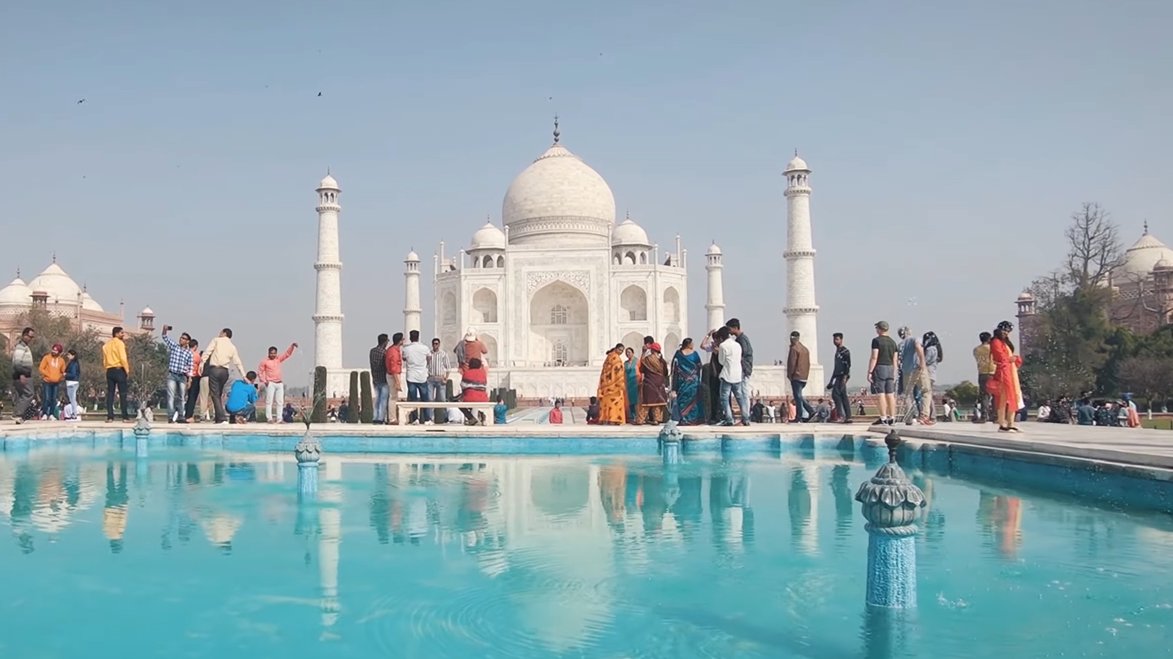
Most tourists walk through the Taj Mahal and see a beautiful building. With a good licensed guide, they walk through it and understand a love story, a geopolitical dynasty, 20,000 craftsmen, and 22 years of construction and they see details in the marble inlay work they would have otherwise walked straight past.
In India, tour guides at protected monuments like the Taj Mahal and Agra Fort are legally required to hold a valid licence issued by the Government of India. This licence is not easy to obtain. It requires passing a competitive entrance examination, completing a rigorous six month programme of theoretical and practical training, and demonstrating verified knowledge of history, culture, and visitor management.
The guides you see standing outside the Taj Mahal gates and approaching tourists are not licensed. They are touts. No matter how confident or fluent they sound, an unlicensed guide cannot legally take you inside the protected monument area, and the information they provide is often fabricated or wildly inaccurate.
All guides we work with hold valid Government of India licences and are university educated. Several have postgraduate degrees in history or art history. The difference in experience is not subtle it is the difference between a tick on a bucket list and a memory that stays with you.
What to expect on the Delhi–Agra road (and how to make the journey comfortable)
The Yamuna Expressway between Delhi and Agra is approximately 165 kilometres of controlled access highway no traffic signals, no level crossings, no cattle. It is genuinely one of India's best roads, and the drive is comfortable in a well maintained air conditioned vehicle.
Here is what to expect on the journey:
- Leaving Delhi (first 30–45 minutes): Some city traffic until you clear the outskirts, especially if you leave after 6:30am. This is one more reason to depart early.
- The expressway itself: Smooth, fast, and relatively quiet in the early morning. You may see farmland, occasional villages, and a dramatic sunrise if you leave at 5:30am.
- Rest stop (around the halfway point): There are clean service areas on the expressway with proper restrooms, chai stalls, and convenience shops. Your driver knows where to stop.
- Arriving in Agra: The city's roads near the Taj Mahal complex are restricted to electric vehicles (e rickshaws and battery buses). Your driver parks at the designated area and arranges your transfer to the East Gate.
Your private car comes with bottled water. Dress in layers Delhi mornings in winter (November to February) can be quite cold, while Agra by afternoon warms up considerably.
What to bring, what to wear, and what not to bring inside the Taj Mahal
Bring:
- Your passport (mandatory for foreign national ticket verification)
- Your printed or downloaded e ticket
- A small bag or day pack (no large backpacks they will be left at the cloak room)
- Water bottle (allowed inside)
- Sunscreen and sunglasses
- Cash in Indian Rupees for the mausoleum entry fee if not pre booked
- Comfortable, breathable clothing
Wear:
- Comfortable walking shoes that are easy to slip off you are required to remove footwear or put on shoe covers before entering the main mausoleum. Shoe covers are provided free of charge with your foreign national ticket.
- Modest clothing shoulders and knees covered is appropriate and respectful. There is no strict enforcement, but it is a place of cultural significance.
Do not bring inside:
- Tripods or monopods (strictly prohibited)
- Drones (strictly prohibited serious penalties apply)
- Food (not permitted inside the complex)
- Tobacco products
- Large luggage or suitcases (leave these with your driver)
- Photography equipment with external flash inside the mausoleum
Photography in the gardens and exterior is entirely free and unrestricted. Inside the mausoleum, photography is not permitted.
How to book your same day Agra tour with us
Our same day Agra tour from Delhi includes everything you need for a genuinely comfortable, unhurried day:
- Private air conditioned car with an experienced, English speaking driver
- Hotel or airport pickup and drop off anywhere in Delhi
- Government of India licensed tour guide at the Taj Mahal and Agra Fort
- Taj Mahal and Agra Fort entrance tickets (can be arranged on request)
- Complete flexibility we adapt the pace and itinerary to you
We do not add shopping stops, commissions, or surprises. Every aspect of the day is arranged before you leave Delhi.
To enquire or book, visit our tour page or contact us directly. We respond to all enquiries within a few hours.
If you have more time in India, this trip pairs naturally with our Golden Triangle tour which takes you from Delhi through Agra and on to Jaipur over six days, with Agra visited at a more relaxed pace and with a sunrise Taj Mahal visit included.
Frequently Asked Questions
- How many hours does an Agra day trip from Delhi take? A same day Agra tour from Delhi is a 12 to 14 hour day in total. You depart Delhi around 5:30am and return by approximately 7:30pm to 8:00pm depending on traffic. Time in Agra itself is typically 5 to 6 hours enough to see the Taj Mahal, Agra Fort, and have lunch.
- Is a same day Agra trip worth it? Yes, for most international tourists it is absolutely worth it. The Taj Mahal is one of the most extraordinary monuments in the world, and a well planned day trip gives you genuine time to appreciate it without rushing. The only travellers who should reconsider are those who want to see Agra at sunrise and sunset, or explore Fatehpur Sikri in which case an overnight stay makes more sense.
- What is the best time to leave Delhi for an Agra day trip? Between 5:00am and 6:00am. This is non negotiable for a good experience. An early departure means you avoid Delhi city traffic, arrive in Agra with cooler morning temperatures, and reach the Taj Mahal before the crowds build. Every hour of delay in the morning has a compounding negative effect on the rest of the day.
- Is the Taj Mahal open for a same day visit? Yes. The Taj Mahal is open every day except Friday, from 30 minutes before sunrise until 30 minutes before sunset. On Fridays it is fully closed to visitors (the mosque within the complex is used for prayers). Plan your trip on any day from Saturday to Thursday.
- Can I do Agra in one day from Delhi by train? Yes. The Gatimaan Express covers the Delhi Agra route in approximately 1 hour 40 minutes and departs from Hazrat Nizamuddin station at around 6:10am. The return train leaves Agra at around 5:50pm. It is a fast and comfortable option, though it requires managing your own logistics at both ends without a dedicated driver. A private car offers more flexibility and door to door convenience.
- How much does a private car cost for a Delhi to Agra day trip? The cost of a private car for a same day Agra tour from Delhi varies depending on the car type, group size, and what is included (guide, tickets, meals). For a comfortable air conditioned sedan for 1 to 4 passengers Our tours include a licensed guide and are priced transparently contact us for a personalised quote based on your dates and group size.
- Is it safe to do a same day Agra tour from Delhi? Yes. The Delhi–Agra route via the Yamuna Expressway is well maintained, the Taj Mahal complex has heavy security and police presence, and foreign tourists visit this route in large numbers every day without incident. The main safety consideration is booking with a reputable operator who uses a verified, experienced driver which eliminates the risk of unlicensed drivers or ad hoc arrangements made at the roadside.
- India Custom Tours is a licensed private tour operator offering custom tours of India with Government of India licensed guides and experienced English speaking drivers. We specialise in bespoke itineraries for international visitors. Visit our website to explore our full range of India tours.
20 Things NOT to Do in India as a Traveller (2026 Guide)
20 Things NOT to Do in India as a Traveller (2026 Guide)
Last Updated: June 2026 | Reading Time: 12 minutes
Planning your first trip to India? Smart move India is one of the most extraordinary travel destinations on the planet. But it's also one of the most complex. From ancient temple rituals to street food etiquette, the cultural rules can be overwhelming for first-timers. I've compiled this guide from extensive research across top-ranking travel blogs, local expat advice, and real traveller experiences. These are the most important things NOT to do in India mistakes that could get you into trouble, offend locals, or simply ruin your trip. Bookmark this before you go.
What are Things NOT to Do in India as a Traveller
| Category | Key Don'ts |
|---|---|
| Health & Hygiene | Don't drink tap water, avoid raw/unpeeled foods |
| Culture & Religion | Don't disrespect temples, don't use your left hand |
| Safety | Don't trust strangers blindly, avoid unlit areas at night |
| Legal | Don't drink in public, don't photograph restricted sites |
| Practical | Don't ignore scams, don't skip travel insurance |
1. Don't Drink Tap Water
This is the #1 rule for every traveller visiting India never drink tap water. Indian tap water can contain bacteria like E. coli and other pathogens that your gut simply isn't used to. Even locals in some cities avoid it. her is what you should do instead:
- Always buy sealed, branded bottled water (Bisleri, Kinley, or Aquafina)
- Check that the plastic seal is intact some vendors refill used bottles with tap water
- Carry a reusable bottle with a built-in filter if you want to reduce plastic waste
- Avoid ice in drinks unless you're certain it was made with purified water
"Delhi Belly" is real, and it can wipe out 2–3 days of your trip. Don't risk it.
2. Don't Eat Raw or Unpeeled Food Carelessly
Follow the traveller mantra: "Cook it, boil it, peel it or forget it." Raw salads, pre-cut fruits, roadside chutneys, and unpeeled fruit from street vendors are common culprits for stomach issues. Fresh fruit juices sold on the street are often made with unfiltered water and unwashed fruit. Safe bets:
- Hot, freshly cooked street food served straight from the pan
- Fruits you peel yourself (bananas, oranges, mangoes)
- Food from busy stalls with high turnover
3. Don't Disrespect Religious Sites
India is home to hundreds of thousands of temples, mosques, gurudwaras, and churches and each has its own rules. Disrespecting a religious site, even unintentionally, can seriously offend locals. The rules:
- Always remove your shoes before entering any place of worship or someone's home
- Dress modestly cover your shoulders and knees at minimum
- At Sikh gurudwaras and mosques, cover your head with a scarf or handkerchief
- Don't touch idols, sacred statues, or ritual items
- Don't point at shrines or sacred objects (pointing is considered rude in general)
- If you're offered prasad (a religious offering), receive it with your right hand or both hands cupped
4. Don't Use Your Left Hand for Eating or Greeting

In Indian culture, the left hand is traditionally considered unclean because it's associated with personal hygiene. Using your left hand to eat, pass food, shake hands, or hand something to someone is considered offensive. People Always use your right hand for:
- Eating and handling food
- Shaking hands or greeting
- Receiving or passing objects
If you're left-handed, be mindful of this a little effort goes a long way in showing respect.
5. Don't Wear Revealing Clothing
India is a conservative country, especially outside major urban centres and beach towns like Goa. Wearing skimpy or revealing clothes in temples, markets, small towns, or rural areas will attract unwanted attention and show disrespect. you can follow these for the dress code tips:
- Keep shoulders and knees covered in religious sites always
- In smaller towns or conservative regions, opt for loose, full-coverage clothing
- Lightweight cotton salwar suits or kurtas work brilliantly and keep you cool
- In beach destinations like Goa, beachwear is fine on the beach : but cover up when you head into town
For women especially, dressing modestly dramatically reduces unwanted staring and harassment.
6. Don't Show Affection in Public (PDA)
Kissing, hugging, and other displays of affection in public are widely frowned upon in India. While attitudes are slowly shifting in major metros like Mumbai and Bangalore, public displays of affection (PDA) are still considered inappropriate in most parts of the country and can occasionally attract police scrutiny. This applies to both opposite-sex and same-sex couples. Keep it private.
7. Don't Eat Beef
Cows are sacred in Hinduism, which is practiced by roughly 80% of India's population. Beef is not widely available and is banned outright in many Indian states. Eating beef or asking for it in the wrong context can cause serious offence. What to know:
- Many menus won't have beef at all
- "Mutton" in India usually refers to goat meat, not lamb
- Buffalo meat is offered in some places as a substitute
- If you really can't live without beef, stick to cities with large non-Hindu populations or high-end international restaurants in Mumbai/Delhi
8. Don't Ignore Common Scams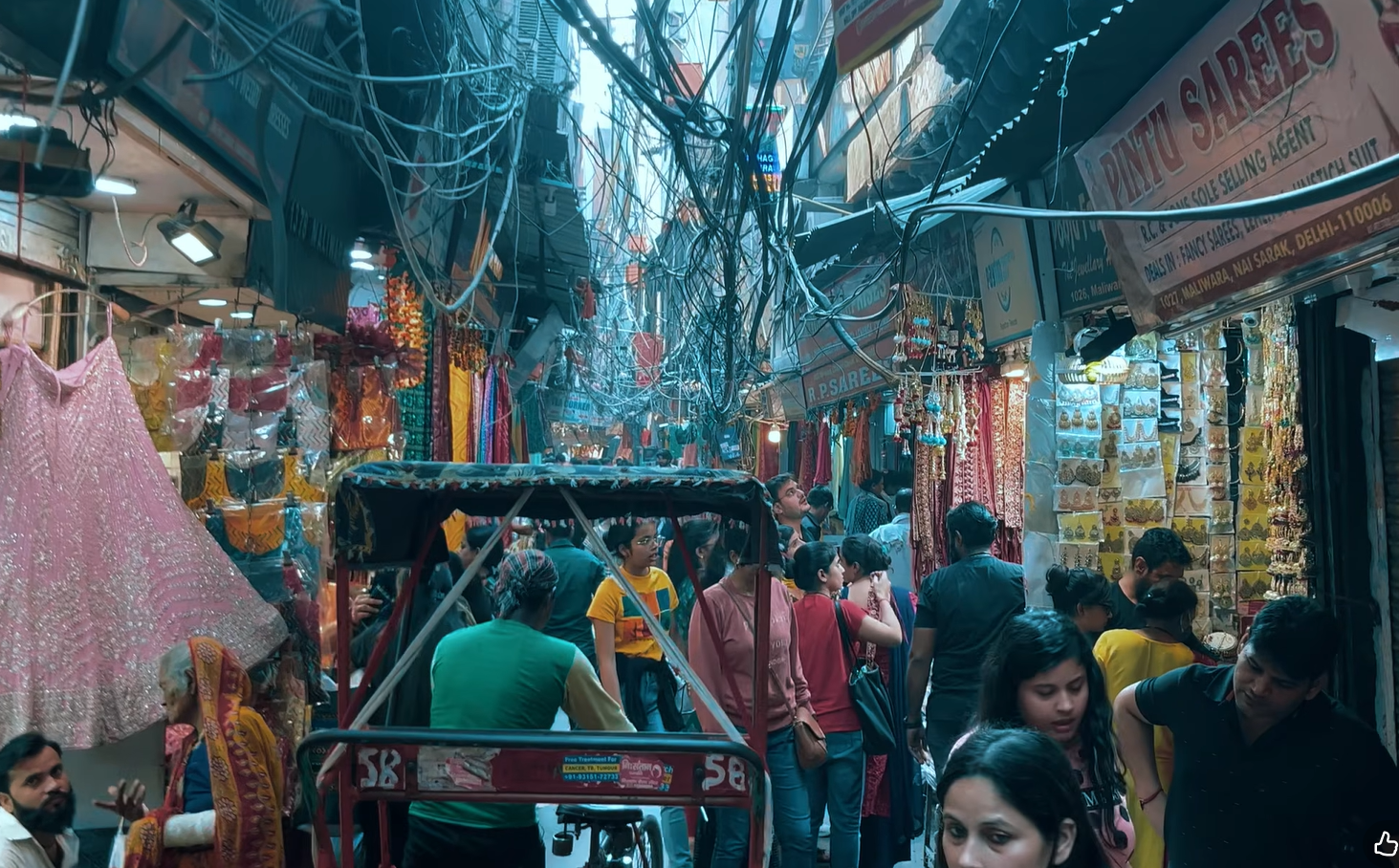
India has a well-documented scam ecosystem targeting tourists, especially around popular monuments like the Taj Mahal, Red Fort, and Jaipur's Amber Fort. In 2025, fake booking websites alone cost tourists an estimated ₹47 crore according to cybercrime units, To stay away from all the scam's you can just just leave everything to us and relax and enjoy the trip.
Common scams to watch out for:
- Fake tour guides who approach you at monuments offering cheap tours
- Gem/export scams : where locals convince you to buy gems to "export" for profit
- Tuk-tuk diversions : drivers taking you to commission-paying shops instead of your destination
- Overpriced bottled water near tourist sites
- "Closed" attractions : someone tells you the site is closed and offers an alternative shop or tour
Rule of thumb: Book tours and transport through your hotel concierge, or use reputable apps like MakeMyTrip or Thrillophilia.
9. Don't Use Unverified Taxis
Transport scams are among the most common in India. Unmetered taxis and rickshaws will often overcharge tourists sometimes by 5–10x the fair price. You can Always Trust us with best and Trusted services in India
Safer options:
- Always follow your your appointed verified guide and driver's advice for the whole travel
- Use Uber or Ola in major cities prices are fixed and you can track your route
- If using auto-rickshaws, always negotiate the fare before you get in or ask them to use the meter
- Avoid accepting rides from strangers who approach you at airports or stations
10. Don't Drink Alcohol in Public Places
Drinking or smoking in public spaces is illegal in India. Rules vary by state some states like Gujarat and Nagaland are completely dry but in general, alcohol consumption should be confined to licensed bars, restaurants, or private spaces like your hotel. Possession or use of narcotic drugs is a serious, heavily punishable offence. Don't risk it.
11. Don't Discuss Religion and Politics Casually
India's religious and political landscape is deeply complex and often emotionally charged. Topics like caste, communal tensions, the India-Pakistan relationship, or specific political parties can quickly escalate into uncomfortable territory. Unless you know the person well and they bring it up, steer clear of religion and politics in casual social settings.
12. Don't Give Money Directly to Beggars
This is a sensitive one, but organised begging rings are a real issue in India particularly around tourist sites. Children and adults are sometimes controlled by operators who take the money.
Better alternatives:
- Donate directly to reputable local NGOs or charities
- Buy food and offer it directly to a beggar instead of cash
- Support social enterprises and fair-trade shops that employ marginalised communities
13. Don't Point Your Feet at People or Sacred Objects
Feet are considered the lowest and most impure part of the body in Indian culture. Pointing your feet toward someone, touching someone accidentally with your feet, or stretching your legs toward a shrine or elder is considered very disrespectful.
- If you accidentally touch someone with your feet, apologise immediately locals will appreciate it
- Sit cross-legged on the floor rather than extending your feet outward
- Don't push books, bags, or objects with your feet
14. Don't Wander Alone Late at Night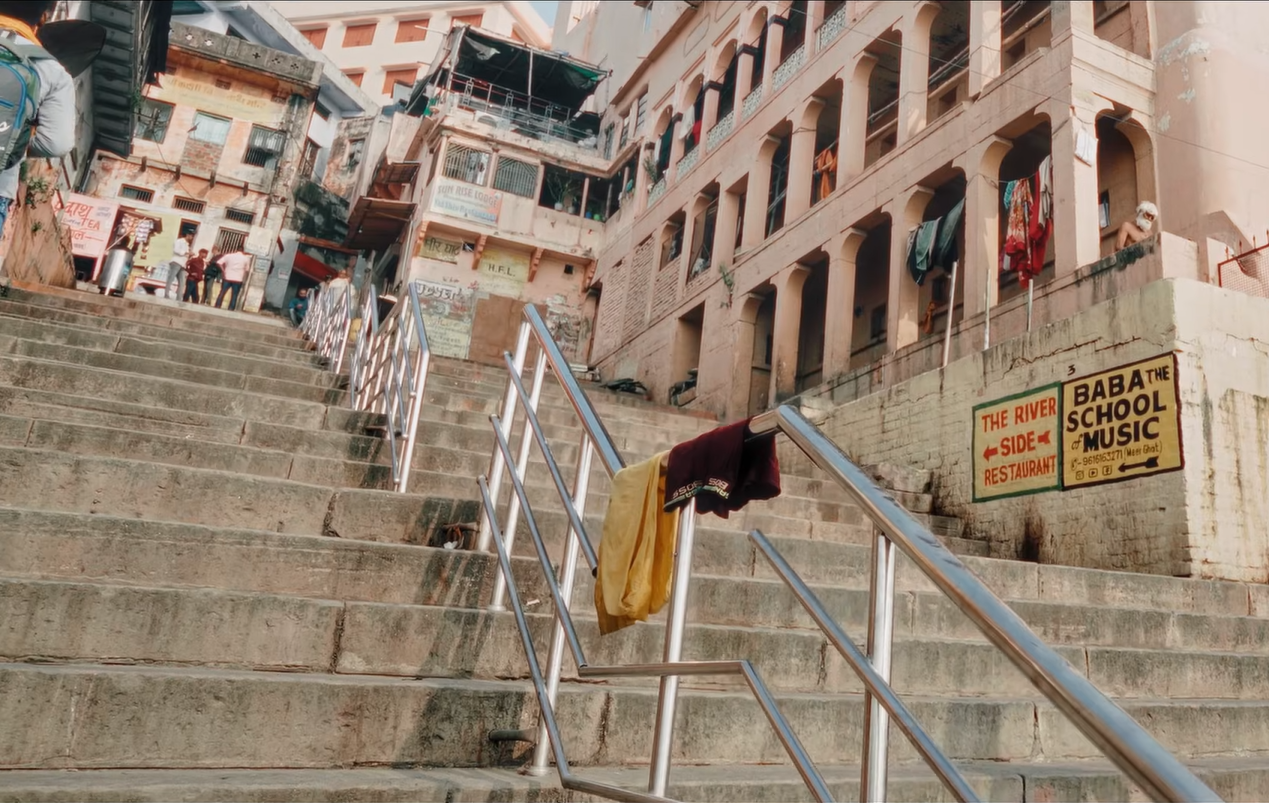
India's safety landscape varies enormously by city, neighbourhood, and time of day. While India is far safer than its reputation suggests for most tourists, wandering alone in unfamiliar, unlit, or isolated areas at night carries real risk especially for solo women travellers.
- Stick to well-lit, populated areas after dark
- Use Uber or Ola rather than walking alone at night
- Share your live location with someone you trust
- Trust your instincts if a situation feels uncomfortable, leave
15. Don't Forget Travel Insurance
This is non-negotiable. Medical care in India can be excellent in private hospitals, but it can also be expensive for foreigners and emergencies like accidents, illness, or theft happen. Make sure your travel insurance covers:
- Medical emergencies and hospitalisation
- Trip cancellation
- Theft and loss of belongings
- Emergency evacuation
Don't travel to India without it.
16. Don't Ignore Air Quality (Especially in Delhi)
Air pollution in Indian cities particularly Delhi in winter (October–February) can reach hazardous levels. The AQI can spike above 400–500 on bad days, which is well beyond "unhealthy" into "hazardous" territory.
Practical tips:
- Download an air quality app like IQAir before you go
- Carry an N95 or KN95 mask if you're visiting Delhi in winter
- Consider staying near parks or in greener neighbourhoods to reduce exposure
- If you have respiratory conditions, plan your Delhi visit for spring or summer
17. Don't Trust Strangers Too Quickly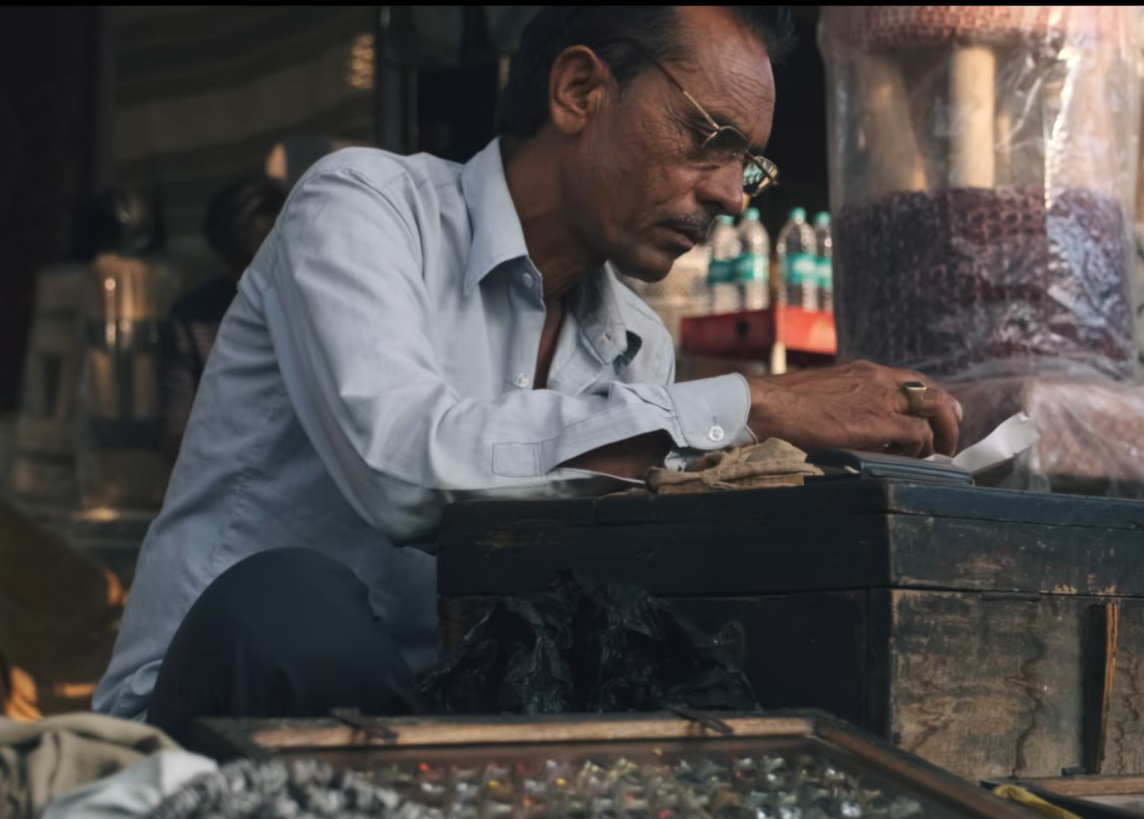
Indians are, by and large, extraordinarily warm and hospitable and most people you meet will be genuinely kind. But tourist areas attract opportunists. Be cautiously friendly rather than naively open.
- Don't share your hotel name, travel plans, or contact info with strangers you just met
- Be sceptical of anyone who volunteers to be your "free guide"
- Don't agree to watch over a stranger's bags
- Don't accompany someone to an unknown location, no matter how compelling the reason sounds
18. Don't Haggle Aggressively or Without Respect
Bargaining is part of Indian market culture in bazaars, with rickshaw drivers, and at tourist shops. But there's a right way and a wrong way to do it.
- Start with asking fair price and start to negotiate from there
- Smile, be friendly, keep it light it's supposed to be fun
- Don't aggressively lowball to the point of insult, especially for handmade crafts
- If you've agreed on a price, don't walk away, it's considered very rude
19. Don't Skip the E-Arrival Form
Since October 2025, all foreign travellers entering India have the option to fill out an electronic arrival form (e-arrival) online up to 72 hours before travel through the Indian Visa Online portal. The paper form is being phased out. Failing to complete the correct documentation can delay your entry or cause issues at immigration. Always double-check current visa and entry requirements before you fly Indian visa rules change frequently.
20. Don't Only Stick to the Tourist Trail
This is the one "mistake" that doesn't involve a cultural faux pas it's just a shame. India is incomprehensibly vast. Many first-timers stick to the Golden Triangle (Delhi–Agra–Jaipur) and miss the south entirely, or never explore Rajasthan beyond Jaipur. Be open to going off-script. Some of India's most memorable experiences happen on slow trains, in small towns, and at temples that don't appear in the guidebooks. India will challenge you, surprise you, exhaust you, and enchant you often in the same afternoon. Respecting its culture and keeping these traveller mistakes in mind won't sanitise your experience. It'll deepen it. Come with an open mind, a full stomach of curiosity, and clean water in your bottle, you're going to love it.
Frequently Asked Questions
- Is India safe to travel to in 2026? Yes, for most travellers. The US State Department gives India a Level 2 ("exercise increased caution") rating, mainly due to petty crime and scams. The Golden Triangle (Delhi–Agra–Jaipur) has enhanced tourist police protection. Avoid border areas near Pakistan/Jammu & Kashmir.
- What should I absolutely not do in India as a woman? Dress conservatively, avoid walking alone at night, use verified taxis, and share your location with someone you trust. Most of the same rules apply as for any traveller, with extra attention to dress and solo movement after dark.
- Can I eat street food in India? Yes! Hot, freshly cooked street food from busy stalls is generally safe. Avoid raw salads, unpeeled fruit, ice, and juices from street vendors. When in doubt, eat where you see crowds of locals eating.
- Is it rude to say no to food in India? In a home setting, refusing food can sometimes be seen as rude. A polite "no thank you" with a smile usually works or you can accept a small amount. Don't feel pressured to eat something you're uncomfortable with.
India Tour Packages from USA and Europe
India Tour Packages from USA and Europe:
Discover India with a Private Driver and Local Guide
Planning a Trip to India from the USA or Europe?
India is one of the most fascinating destinations in the world, offering ancient history, colorful culture, magnificent palaces, spiritual experiences, wildlife adventures, and breathtaking landscapes. Every year, thousands of travelers from the USA, Germany, France, Italy, Spain, the UK, and other European countries visit India to experience its unique blend of tradition and modernity. If you are looking for India tour packages from USA and Europe, choosing a customized private tour is often the best way to explore the country comfortably and safely. At India Custom Tours, we specialize in tailor-made India tours with private drivers, experienced local guides, handpicked hotels, and flexible itineraries designed specifically for international travelers.
Why Choose a Private India Tour Package for India Tour Packages from USA and Europe ?
Unlike fixed group tours, private India tour packages allow you to travel at your own pace and enjoy a more personalized experience. Every itinerary can be customized according to your interests, travel style, and schedule. Private tours typically include a dedicated air-conditioned vehicle, a professional English-speaking driver, experienced local guides at major destinations, flexible sightseeing schedules, comfortable hotel options, airport assistance, and 24/7 travel support throughout your journey. Many travelers from the USA and Europe prefer private tours because India is a vast and diverse country with different cultures, languages, and attractions across each region. Having a dedicated driver and reliable local support makes traveling more convenient, comfortable, and stress-free, allowing visitors to focus on enjoying the experience rather than worrying about logistics.
Most Popular India Tour Packages for American and European Travelers
1. Golden Triangle Tour
The Golden Triangle is India's most popular tourist circuit.
| Destinations | Highlights |
|---|---|
| Delhi | Qutub Minar, Humayun's Tomb |
| Agra | Taj Mahal |
| Jaipur | Amber Fort, City Palace |
Duration:
5 to 7 days, Perfect for first-time visitors to India.
2. Rajasthan Heritage Tour
Rajasthan showcases India's royal history.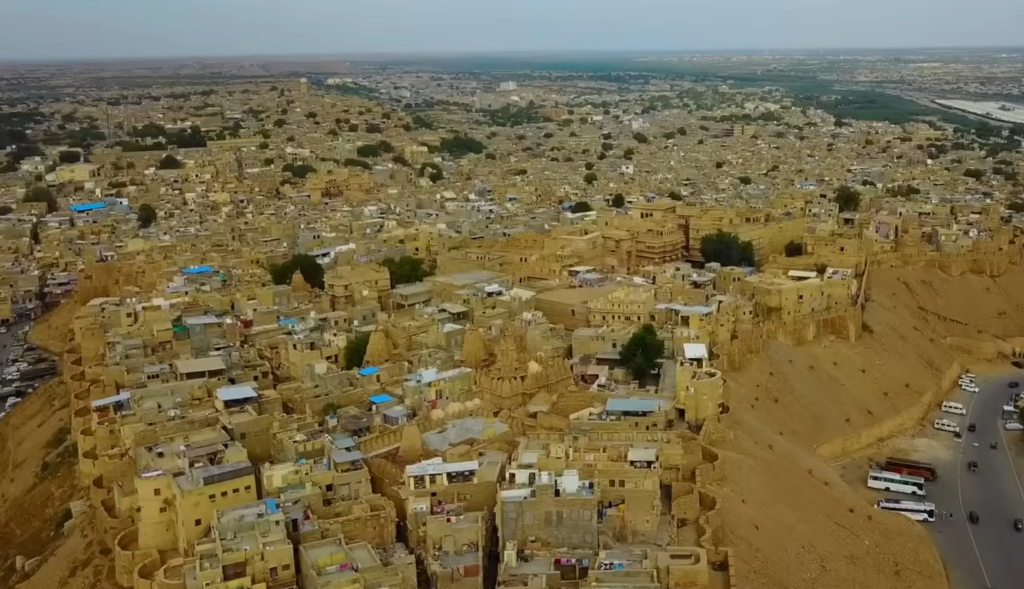
| Destinations | Highlights |
|---|---|
| Jaipur | Magnificent forts |
| Jodhpur | Palace hotels |
| Udaipur | Traditional villages |
| Jaisalmer | Desert safaris |
| Pushkar | Cultural performances |
Duration:
10 to 14 days, very Ideal for travelers seeking culture, history, and photography opportunities.
3. Golden Triangle with Varanasi
A popular choice among travelers interested in India's spiritual heritage.
Highlights:
- Taj Mahal
- Ganges River
- Evening Ganga Aarti
- Ancient temples
- Sacred rituals
Duration:
8 to 12 days
4. Luxury India Tour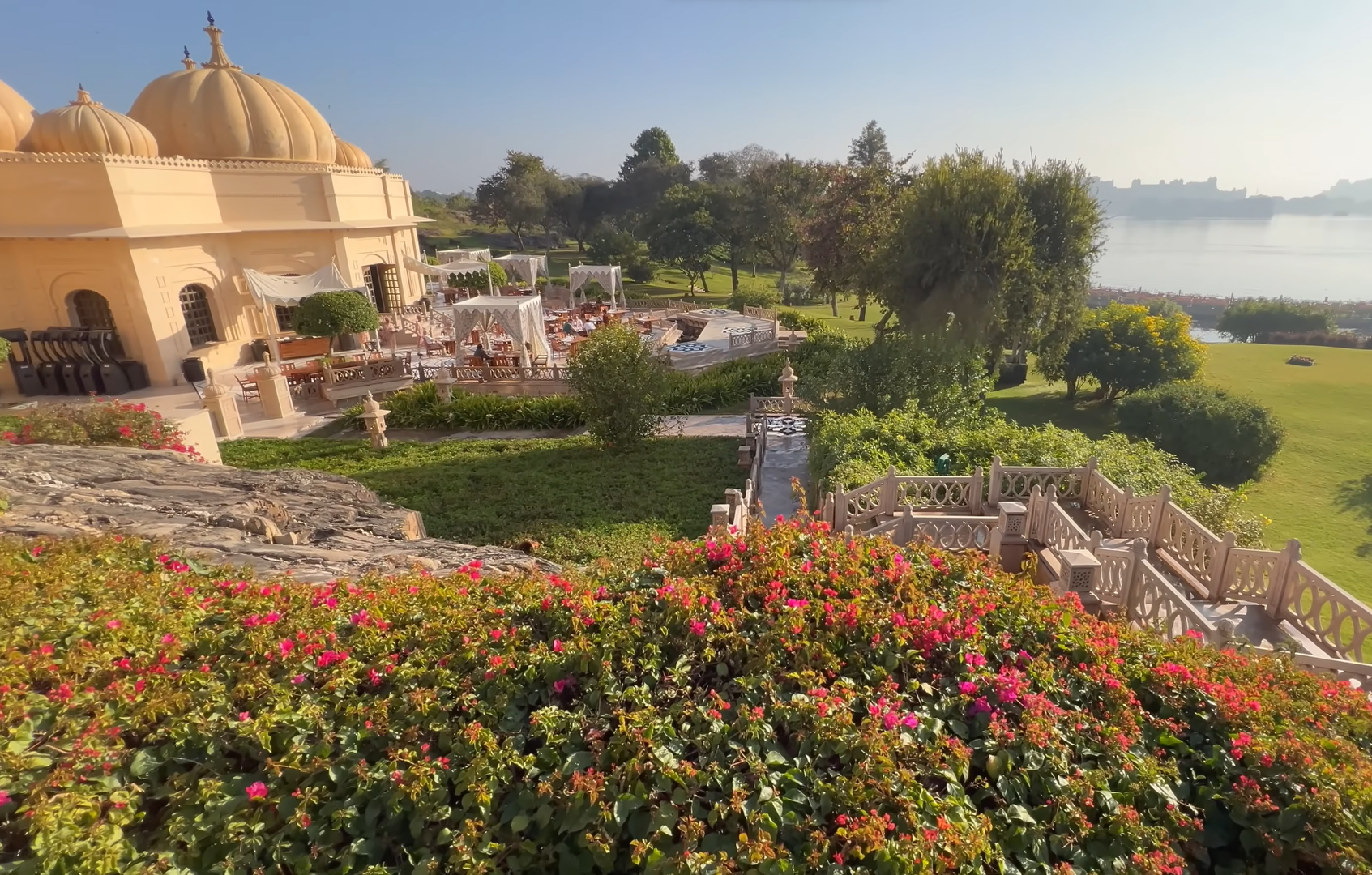
Experience India's finest hospitality.
| Popular Destinations | Includes |
|---|---|
| Delhi | Luxury hotels |
| Agra | Heritage palaces |
| Jaipur | Private guides |
| Udaipur | Premium transportation |
| Varanasi | Exclusive experiences |
| Kerala | Exclusive experiences |
5. South India and Kerala Tour
Perfect for travelers looking for nature and relaxation.
Highlights:
- Backwaters
- Tea plantations
- Beaches
- Ayurveda
- Wildlife
Duration:
10 to 15 days
Best Time to Visit India from USA and Europe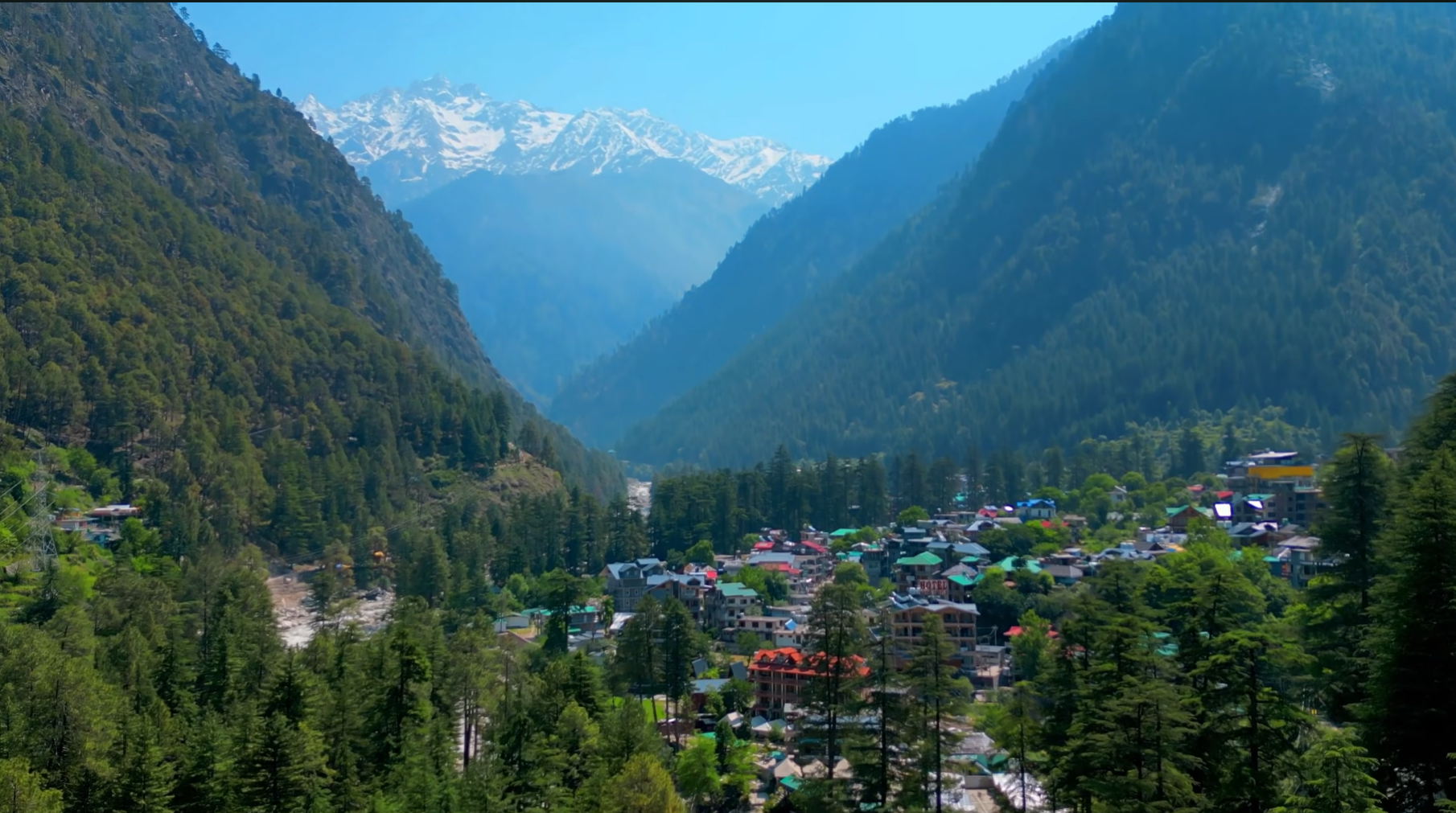
| Travel Period | Recommended Destinations / Experiences |
|---|---|
| October to March | Rajasthan, Delhi, Agra, Varanasi, Khajuraho |
| April to June | Himalayan destinations, Hill stations |
| July to September | Kerala, Monsoon experiences, Green landscapes |
India Tour Cost from USA and Europe?
The cost Depends on factors and tour category:
| Factor / Tour Category | Details |
|---|---|
| Travel Season | Affects overall tour pricing and availability |
| Hotel Category | Budget, Mid-Range, or Luxury accommodations |
| Duration | Longer tours generally cost more |
| Number of Travelers | Per-person cost may decrease for larger groups |
| Destinations Included | More destinations can increase overall cost |
| Budget Tours | Suitable for travelers seeking value and comfort |
| Mid-Range Tours | The most popular option among international travelers |
| Luxury Tours | Premium accommodations, private experiences, and exclusive services |
| Customized Tours | Better value as you only pay for experiences that matter to you |
Why American and European Travelers Choose India
India offers incredible diversity in a single trip, making it one of the most rewarding destinations for travelers from the USA and Europe. Visitors can explore ancient monuments, admire magnificent royal palaces, experience exciting wildlife safaris, and discover deeply rooted spiritual traditions. The country also offers breathtaking mountain landscapes, thrilling desert adventures, world-famous cuisine, and vibrant cultural festivals celebrated throughout the year. From historic landmarks and colorful cities to peaceful villages and natural wonders, India provides an unmatched variety of experiences. Few countries in the world offer such a rich blend of history, culture, nature, adventure, and spirituality within a single destination.
Travel Tips for First-Time Visitors
- Apply for your e-Visa before departure.
- Carry a universal power adapter.
- Dress modestly when visiting religious sites.
- Drink bottled or filtered water.
- Travel with a trusted local operator like.
- Allow extra travel time between destinations.
Customize Your India Tour Packages from USA and Europe
Every traveler is different. Some prefer luxury palace stays in Rajasthan, while others seek spiritual experiences in Varanasi or relaxing backwater cruises in Kerala. Our custom India tour packages for travelers from the USA and Europe are designed around your interests, travel dates, budget, and preferred pace. Whether you are planning a honeymoon, family vacation, photography tour, cultural journey, or luxury holiday, we can create a personalized itinerary that matches your expectations.
Frequently Asked Questions
Is India safe for American and European tourists?
Yes. Millions of international travelers visit India every year. Traveling with a professional driver and experienced local guides enhances comfort and convenience.
How many days are recommended for a first India trip?
Most first-time visitors choose between 10 and 14 days.
Which destinations are best for first-time travelers?
Delhi, Agra, Jaipur, Udaipur, Varanasi, and Kerala are among the most popular choices.
Can I customize my itinerary?
Yes. Private tours can be fully customized according to your interests, schedule, and budget.
Plan Your Dream India Journey
India is a destination that leaves a lasting impression. From the iconic Taj Mahal and royal palaces of Rajasthan to the spiritual atmosphere of Varanasi and the tranquil backwaters of Kerala, every journey offers unforgettable memories.
If you are searching for India tour packages from USA or Europe, a customized private tour with local expertise can help you experience the best of India comfortably, safely, and authentically.
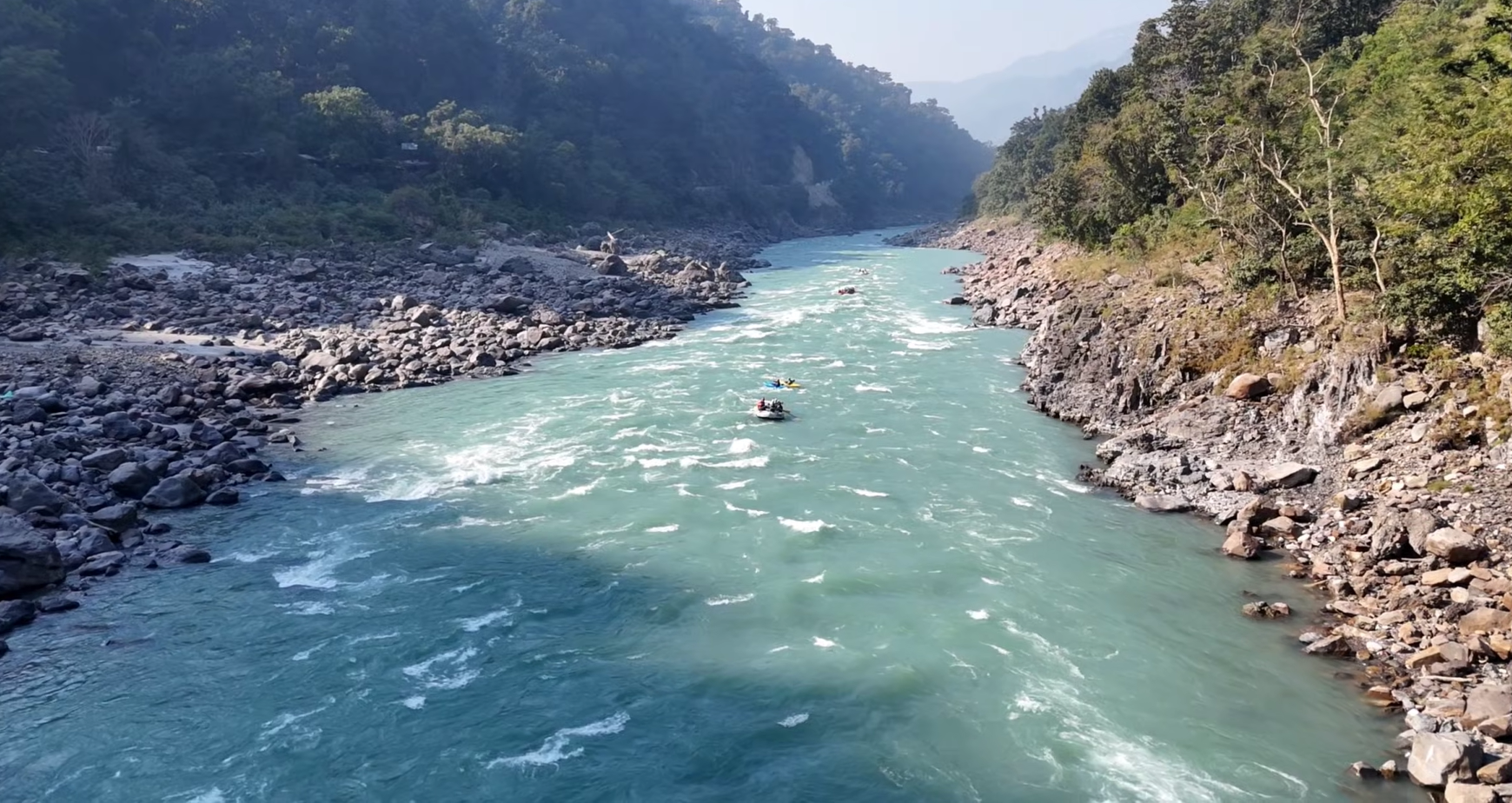
Best Honeymoon Places in India : Complete Travel Guide (2025)
Best Honeymoon Places in India
Complete Travel Guide (2025)
India is one of the most diverse and romantic countries in the world. From misty hill stations and golden deserts to serene backwaters and pristine beaches India has a perfect honeymoon destination for every couple. Whether you are looking for adventure, luxury, culture, or pure relaxation, this complete guide covers the best honeymoon places in India that you can explore in 2025.
Planning a honeymoon can feel overwhelming. That is why at India Custom Tours, we specialize in building personalized honeymoon tour packages tailored to your budget, interests, and travel style so you can focus on each other while we handle everything else.
Why India is Perfect for a Honeymoon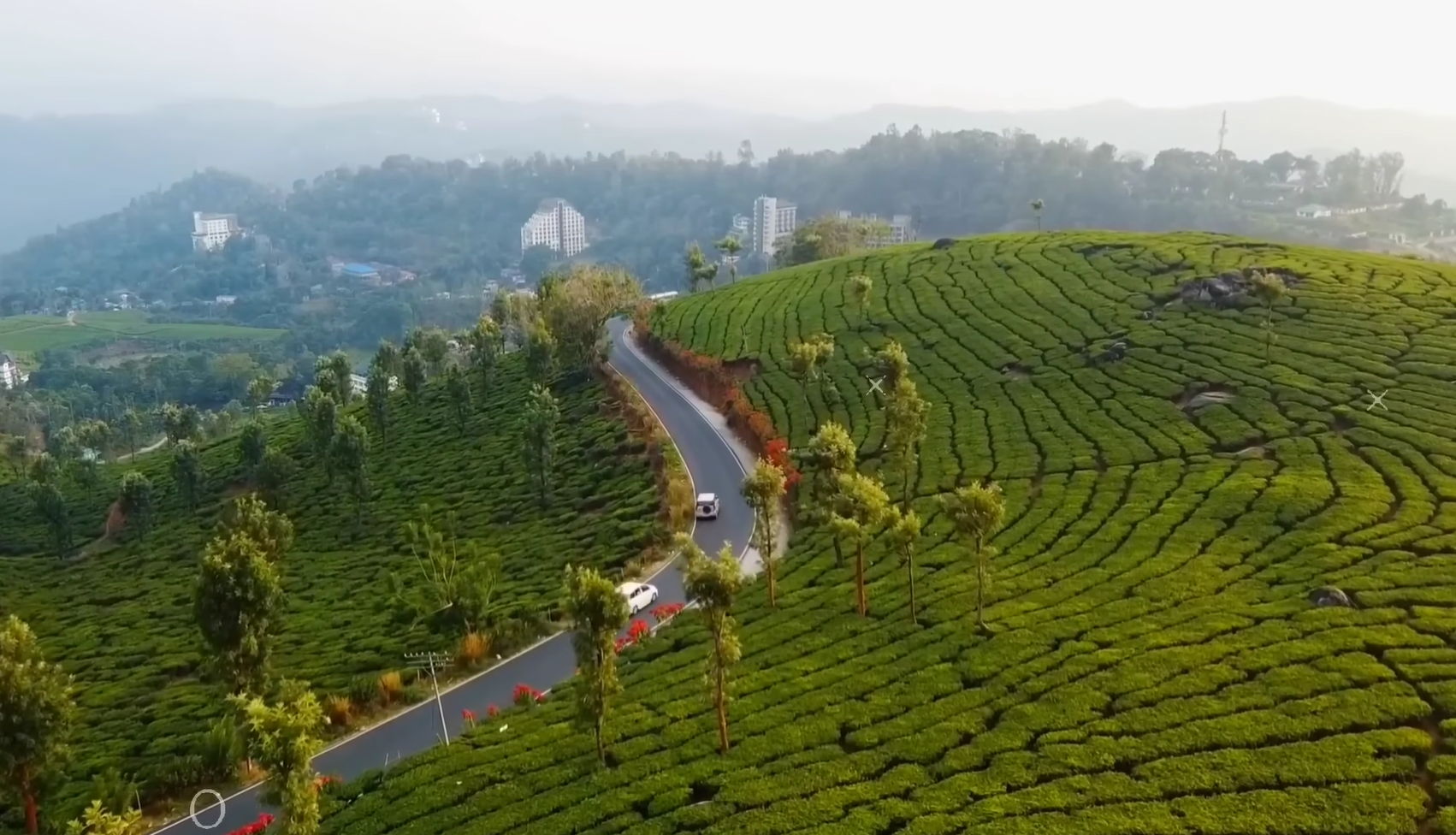
India offers unmatched variety for honeymooners. You can wake up in a heritage palace in Rajasthan, cruise through the backwaters of Kerala, watch the sunrise over the Himalayas in Shimla, or relax on a quiet beach in the Andaman Islands all within one country. Here is why couples love honeymooning in India:
- Incredible variety mountains, beaches, deserts, forests, and cities
- Luxury at affordable prices world-class resorts and experiences at a fraction of international costs
- Rich culture and cuisine every destination has its own food, architecture, and traditions
- Year-round travel different regions are perfect in different seasons
- Kerala The Most Romantic Honeymoon Destination in India
Kerala tops almost every list of best honeymoon places in India and for good reason. Known as "God's Own Country," Kerala offers a unique combination of lush green landscapes, tranquil backwaters, Ayurvedic spas, and luxury houseboat stays. Why couples love Kerala:
- Romantic houseboat cruises on Alleppey backwaters
- Misty hill stations like Munnar, covered in tea gardens
- Private beach resorts in Kovalam and Varkala
- Rejuvenating Ayurvedic couples spa treatments
Best time to visit: September to March
Ideal duration: 5–7 days, Kerala is perfect if you want a peaceful, nature-filled honeymoon with a touch of luxury. Explore our Kerala honeymoon packages for curated itineraries.
Rajasthan Honeymoon Like Royalty
If you want to feel like a king and queen on your honeymoon, Rajasthan is the answer. This royal state is home to magnificent palaces, golden deserts, and some of India's most luxurious heritage hotels.
Top romantic spots in Rajasthan: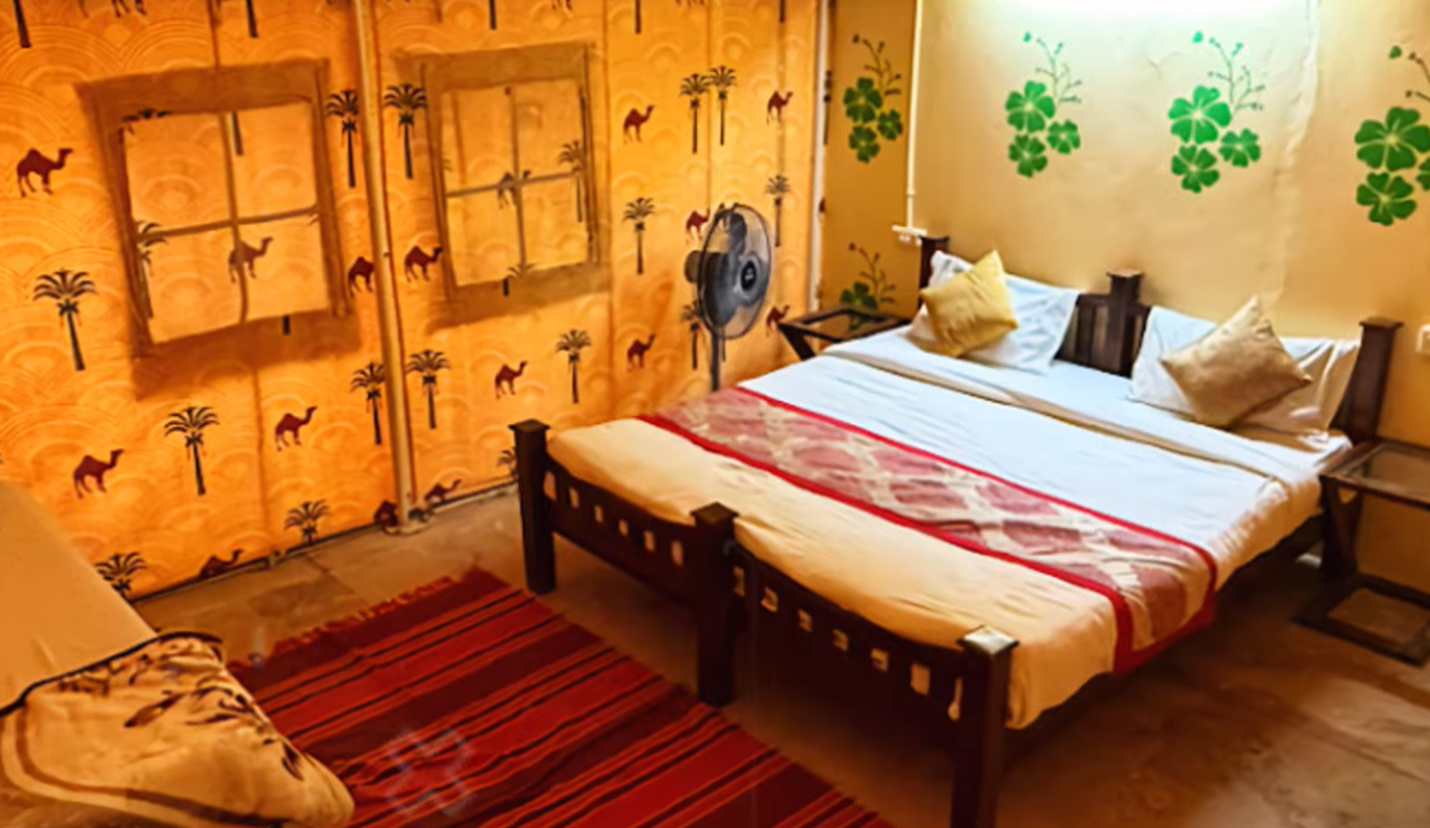
- Udaipur called the "City of Lakes," with stunning lake-view palaces. Stay at a hotel on Lake Pichola for an unforgettable experience
- Jaisalmer spend a night under the stars in a luxury desert camp in the Thar Desert
- Jodhpur explore the Blue City and stay in a converted Haveli
- Jaipur the Pink City, with the iconic Hawa Mahal and Amber Fort
Best time to visit: October to February
Ideal duration: 6 – 8 days, Rajasthan is ideal for couples who love history, culture, and grand experiences. Check out our Rajasthan tour packages for customized royal honeymoon itineraries.
Goa Beach Honeymoon Capital of India
Goa is India's most popular beach destination and a classic honeymoon choice. With its golden beaches, vibrant nightlife, Portuguese architecture, and fresh seafood, Goa offers a fun, relaxed, and romantic getaway. Best spots in Goa for honeymooners :
- North Goa lively beaches like Baga and Calangute, beach shacks, and nightlife
- South Goa quieter, more private beaches like Palolem and Agonda, ideal for relaxation
- Old Goa explore centuries-old Portuguese churches like the Basilica of Bom Jesus
Best time to visit: November to February
Ideal duration: 4–5 days, Goa suits couples who want a mix of beach relaxation, sightseeing, and evening fun. View our Goa honeymoon itineraries for tailored options.
Shimla & Manali Honeymoon in the Mountains
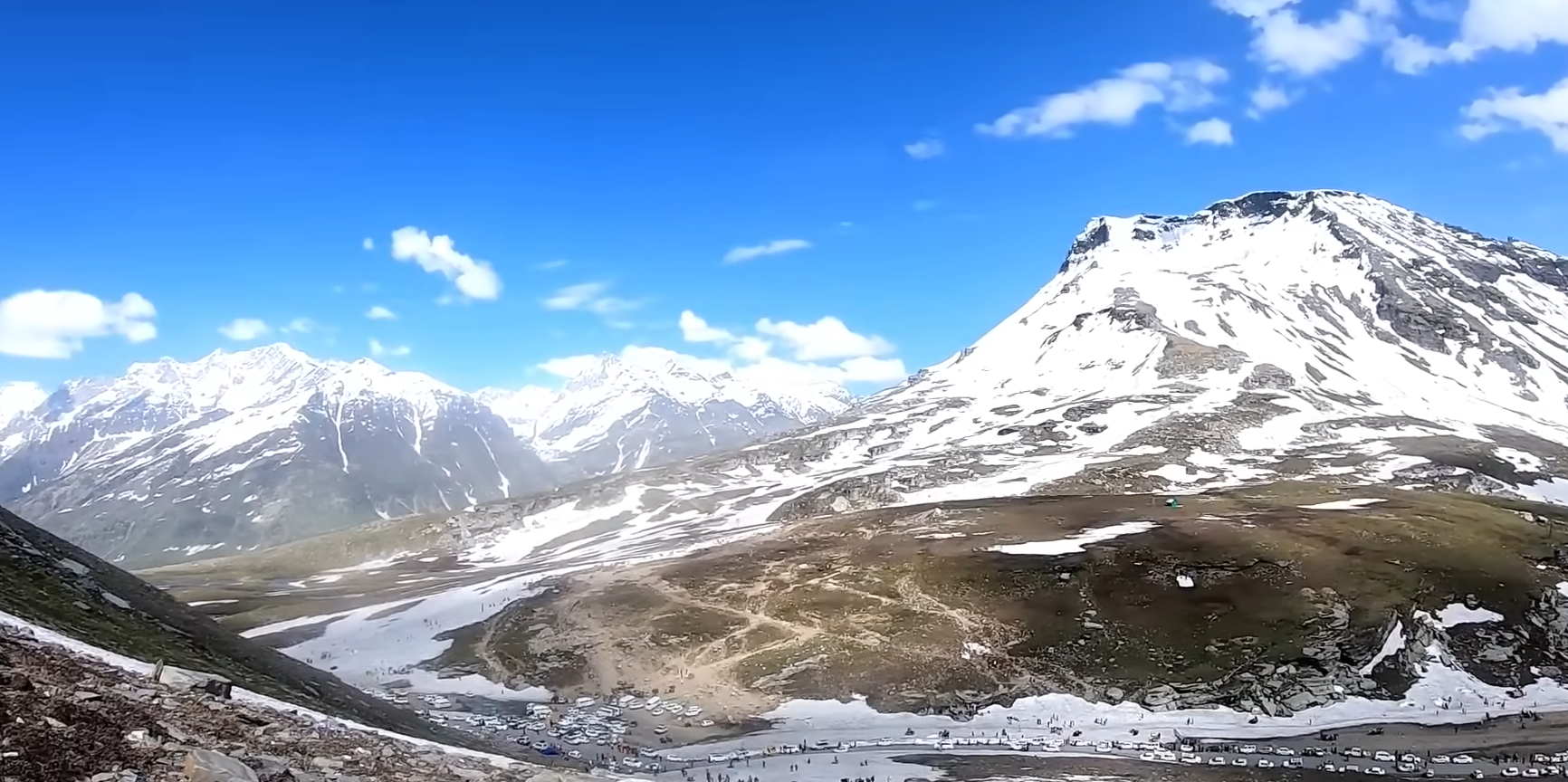
For couples who dream of a honeymoon in the snow, Shimla and Manali in Himachal Pradesh are among the most romantic hill stations in India. Picture snowcapped peaks, cozy wooden cottages, and scenic mountain drives together. What to do:
- Walk along the famous Mall Road in Shimla hand in hand
- Visit Rohtang Pass for a snow experience near Manali
- Stay in a cozy riverside cottage in Old Manali
- Take a scenic drive through apple orchards and pine forests
Best time to visit: December to February (for snow), March to June (for pleasant weather)
Ideal duration: 5–7 days, This is perfect for couples who love nature, adventure, and cool mountain air.
- Andaman & Nicobar Islands India's Tropical Paradise
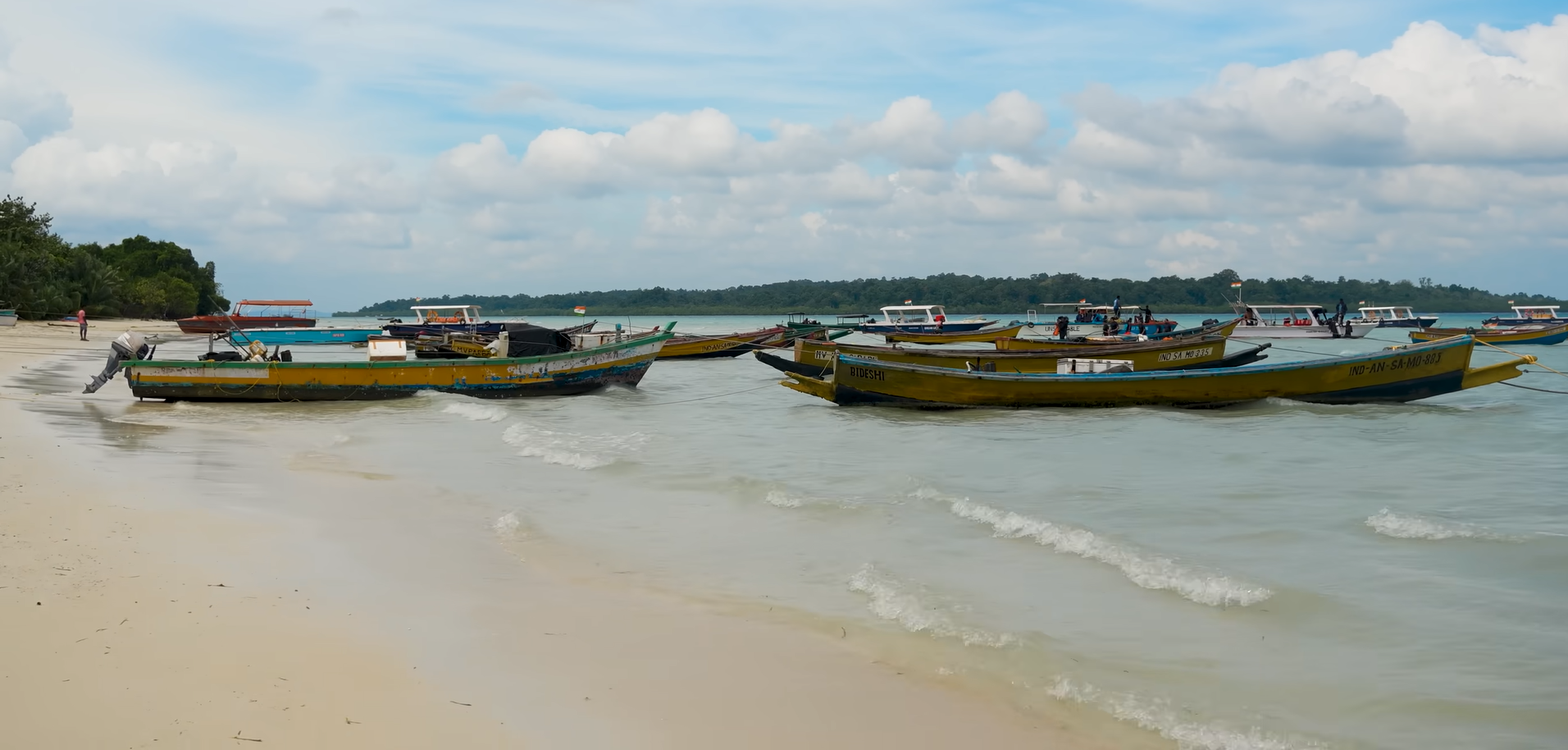
If you want a honeymoon that feels like an international beach destination without leaving India, the Andaman Islands are your answer. Crystal-clear turquoise water, white sand beaches, coral reefs, and absolute privacy this is India's hidden gem for honeymooners. Must-do experiences:
- Scuba diving and snorkelling at Havelock Island
- Relaxing at Radhanagar Beach voted one of Asia's best beaches
- Watching the sunset at Neil Island
- Staying at a luxury beachfront resort
Best time to visit: October to May :Ideal duration: 5–6 days, The Andamans are ideal for couples who want seclusion, beaches, and underwater adventures. Explore our Andaman honeymoon packages.
- Darjeeling & Sikkim Tea Gardens and Mountain Views
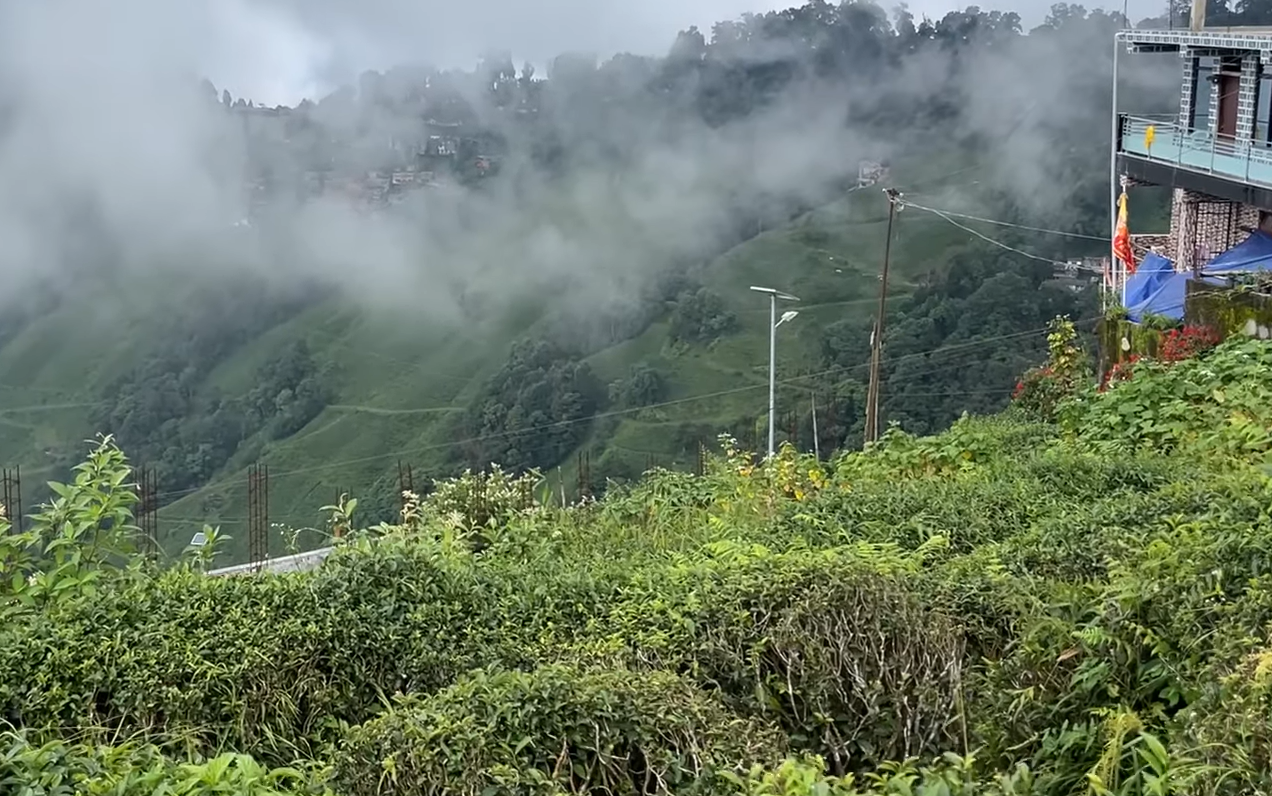
For a unique and offbeat honeymoon, Darjeeling and Sikkim in Northeast India offer breathtaking views of the Kanchenjunga range, charming tea gardens, Buddhist monasteries, and a peaceful, unhurried pace of life. Romantic highlights:
- Watch the sunrise over Kanchenjunga from Tiger Hill, Darjeeling
- Ride the famous Darjeeling Toy Train a UNESCO World Heritage Site
- Explore the peaceful Tsomgo Lake and Nathula Pass in Sikkim
- Visit ancient monasteries like Rumtek and Pemayangtse
Best time to visit: March to May, October to December
Ideal duration: 6–8 days
- Rishikesh & Uttarakhand Spiritual and Adventure Honeymoon
Rishikesh is not just for spiritual seekers it has become a top honeymoon destination for adventure-loving couples. Set along the banks of the Ganges River in the foothills of the Himalayas, it offers a unique mix of peace, spirituality, and outdoor adventure. What couples love here:
- White-water rafting on the Ganges together
- Yoga and meditation retreats for couples
- Luxury glamping and jungle camps
- The iconic Laxman Jhula suspension bridge
- Nearby hill station escapes to Mussoorie and Nainital
Best time to visit: September to June
Ideal duration: 4–5 days, Best Time to Plan Your Honeymoon in India, India's climate varies significantly by region:
- October to March Best overall season. Most destinations are pleasant and accessible
- April to June Ideal for hill stations (Shimla, Manali, Darjeeling) as the plains get hot
- July to September Monsoon season. Kerala and Goa are lush and beautiful, though rainy
- December to January Perfect for Rajasthan and Andaman Islands
Plan Your Perfect Honeymoon with India Custom Tours, Every couple is different. That is why a custom honeymoon package always delivers a better experience than a generic group tour. At India Custom Tours, we build honeymoon itineraries around:
- Your budget from budget-friendly to ultra-luxury
- Your interests beaches, mountains, culture, adventure
- Your travel dates and duration
- Special touches surprise dinners, flower-decorated rooms, private experiences
We handle all bookings hotels, transport, guides, and activities so your honeymoon is completely stress-free.
Contact us today to start planning your dream honeymoon in India.
Frequently Asked Questions
Q: Which is the best honeymoon place in India for couples on a budget?
A: Goa and Himachal Pradesh (Shimla/Manali) offer excellent honeymoon experiences at affordable prices. Kerala is slightly more expensive but worth the splurge.Q: Which is the most romantic city in India for a honeymoon?
A: Udaipur in Rajasthan is widely considered the most romantic city in India, thanks to its lake palaces, rooftop restaurants, and royal heritage hotels.Q: How much does a honeymoon in India cost?
A: A budget honeymoon in India can start from ₹30,000 – ₹50,000 per couple for 5 days. Luxury honeymoons in Rajasthan or Kerala can range from ₹1,50,000 to ₹5,00,000+ depending on hotels and experiences.Q: Is Kerala or Goa better for a honeymoon?
A: Both are excellent but different. Kerala is more peaceful, nature-focused, and intimate. Goa is more lively, beach-focused, and fun. Choose based on the vibe you want.Q: Can I plan a honeymoon in India in December?
A: December is one of the best months for a honeymoon in India. Rajasthan, Goa, Kerala, and the Andaman Islands are all at their best during this time.Planning a honeymoon in India? Get in touch with India Custom Tours for a free personalised itinerary based on your preferences and budget.
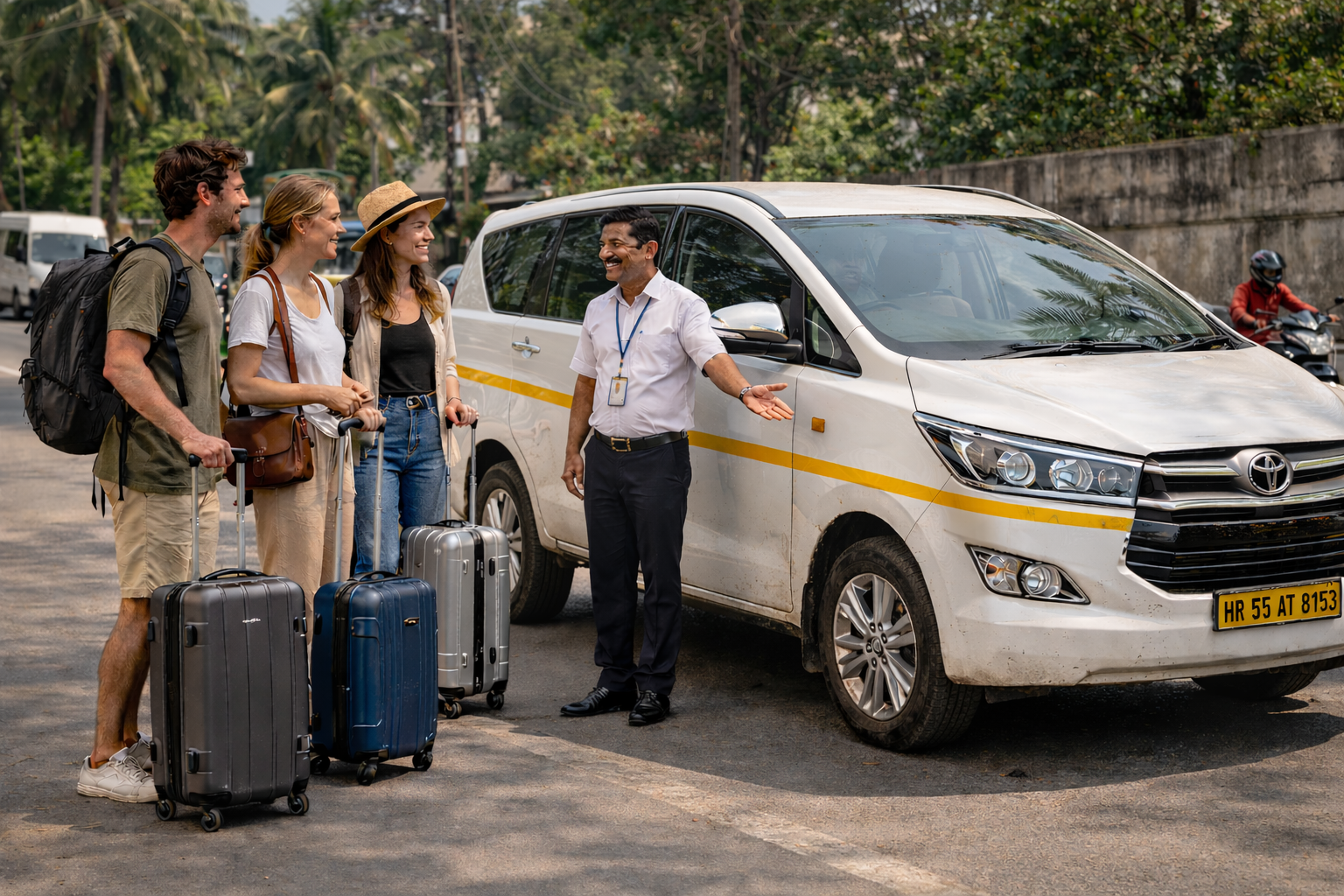
Why Travelers Fall in Love with India (2026 Guide + Real Experiences)
Why Travelers Fall in Love with India (2026 Guide + Real Experiences)

Travelers Fall in Love with India ?,
A World of Colors Like Nowhere Else
Rich History and Majestic Architecture
India’s history spans thousands of years, and this rich heritage is beautifully reflected in its incredible architecture. The iconic Taj Mahal is one of the most visited monuments in the world, but it is only the beginning of what the country has to offer. Across India, you’ll discover grand forts and royal palaces in Rajasthan, ancient temples with detailed carvings, and a fascinating blend of Mughal and colonial architecture each telling a unique story from the past.

Deep Spiritual Energy
India is one of the most spiritual countries in the world, offering experiences that go far beyond sightseeing. In Varanasi, travelers witness the powerful Ganga Aarti ceremony a deeply moving ritual performed on the banks of the sacred Ganges River. Beyond Varanasi, you can explore yoga and meditation in Rishikesh, visit ancient temples and important pilgrimage sites, and enjoy peaceful sunrise moments by holy rivers. These experiences often leave a lasting impact and become the most meaningful part of the journey for many travelers.
Incredible Food Experiences

Indian food is as diverse as its culture, with every region offering something unique and memorable. In North India, you’ll find rich curries, freshly baked naan, and famous dishes like butter chicken, while South India is known for its dosas, coconut-based flavors, and lighter, aromatic meals. The street food scene adds another layer of excitement, with bold, flavorful dishes that are both delicious and adventurous. Every meal in India feels different, making food an unforgettable part of the journey.
Warm Hospitality and Human Connection
Travelers often say the same thing after visiting India “the people made my trip unforgettable.” Across the country, you’ll meet locals who are welcoming, helpful, and genuinely kind. Even the simplest interactions, like sharing a smile, a conversation, or a cup of chai, can turn into lasting memories. This deep human connection is what truly sets India apart and makes the journey feel personal and meaningful.
Freedom to Explore with a Private Driver
Traveling in India can feel overwhelming, especially for first-time visitors, due to its vast distances, busy cities, and cultural differences. That’s why many international travelers choose to explore the country with a private driver in India, making the journey much more comfortable and stress-free. With a private driver, you can travel easily between cities, avoid confusion, and follow a flexible itinerary that suits your pace. It also gives you the chance to discover hidden places and local experiences that you might otherwise miss. If you’re planning your trip, this is one of the best ways to explore India smoothly and enjoy every moment of your journey.
The Perfect First-Time Route: Golden Triangle
Most travelers begin their journey in India with the famous Golden Triangle tour, which connects the three iconic cities of Delhi, Agra, and Jaipur. This route offers a perfect mix of history, culture, and architecture, making it ideal for first-time visitors. In Delhi, you’ll explore a blend of ancient heritage and modern life. Agra is home to the world-famous Taj Mahal, one of the most beautiful monuments ever built. Jaipur, known as the Pink City, welcomes you with royal palaces, forts, and vibrant streets full of color and life.
A Spiritual Extension: Varanasi & Royal Experiences in Rajasthan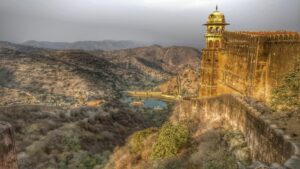
If you want to go beyond sightseeing and experience the deeper side of India, adding Varanasi to your itinerary is a powerful choice. With a guided tour, you can truly understand the spiritual significance of this ancient city. Here, you’ll witness the sacred Ganges River, attend the mesmerizing evening Ganga Aarti ceremonies, and feel a unique spiritual atmosphere that surrounds the ghats and temples.
For a truly royal and colorful journey, explore Rajasthan with a Rajasthan private tour that takes you through some of India’s most iconic destinations. Cities like Jaipur, Jodhpur, and Jaisalmer offer a perfect mix of heritage, culture, and stunning landscapes. From exciting desert safaris to grand forts and magnificent palaces, every moment feels like stepping into a royal era. and you want to experience India comfortably and without stress, choosing the right travel setup makes all the difference. With a private driver, local expert guides, and a fully customized itinerary, you can explore the country at your own pace while enjoying a smooth and hassle-free journey.
Start your journey with a custom India tour designed just for you
Contact us today or message us on WhatsApp to begin planning your trip
Frequently Asked Questions
Is India safe for tourists?
Yes, especially when traveling with a planned itinerary and private driver.
What is the best way to travel in India?
The best way is with a private car and driver for comfort, flexibility, and safety.
How many days are enough for India?
7–10 days is ideal for first-time travelers.
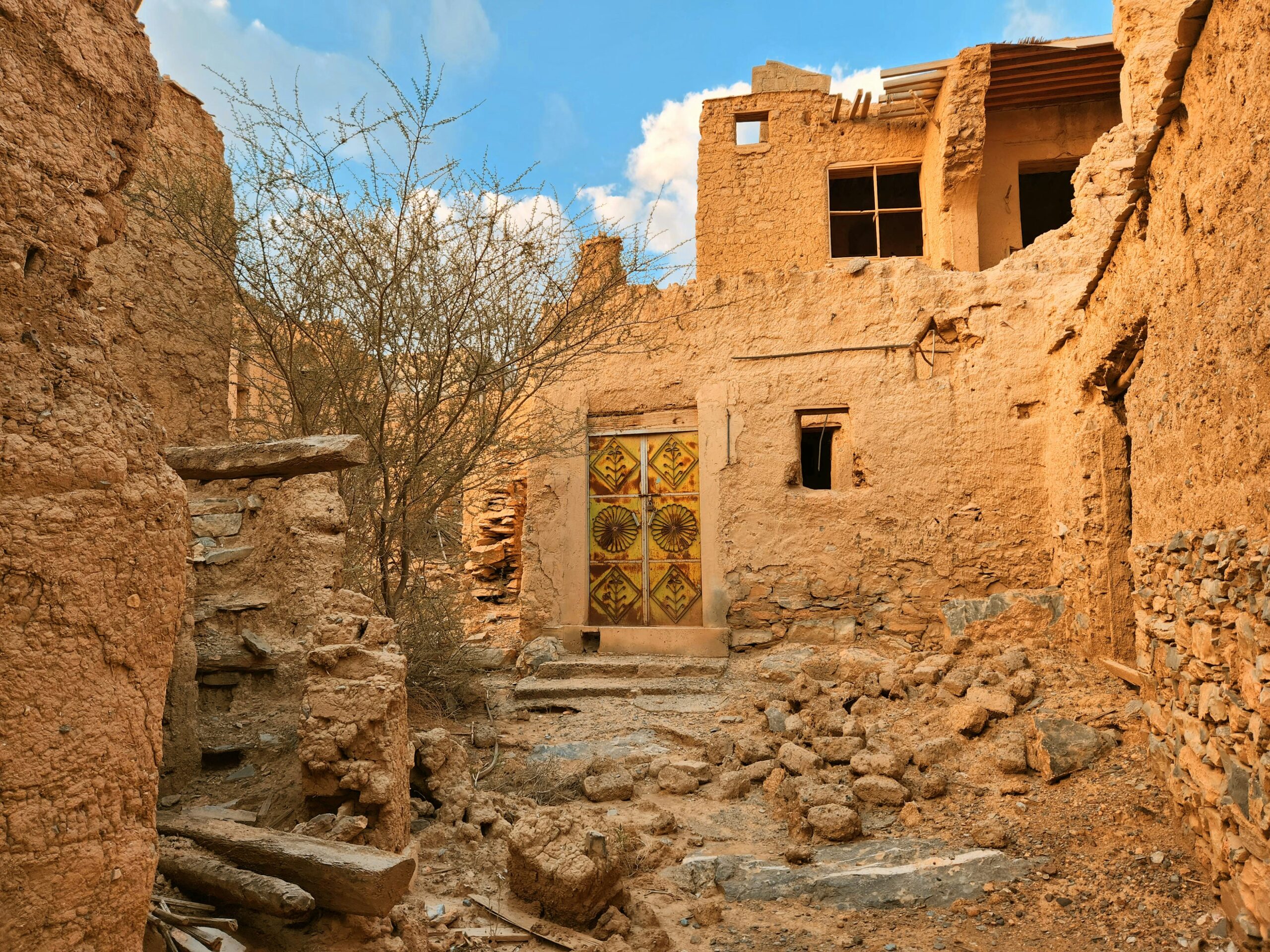
Kuldhara Haunted Village: The Real Story, Curse & Complete Travel Guide (2026)
Kuldhara Haunted Village:
The Real Story, Curse & Complete Travel Guide (2026)
By a traveler who walked those empty streets at dusk and still wonders what walked back.
Imagine waking up one morning to find your entire neighborhood gone. No people. No animals. No sound. Just empty homes doors still ajar, cooking pots left behind, and an eerie silence so thick it feels like a presence. That is Kuldhara. Over 200 years ago, in the heart of Rajasthan's golden desert, 1,500 people vanished in a single night. No war. No plague. No famine. They simply left. And before they did, they cursed the land swearing that no one would ever live here again. Imagine waking up one morning to find your entire neighborhood gone. No people. No animals. No sound. Just empty homes doors still ajar, cooking pots left behind, and an eerie silence so thick it feels like a presence.
That is Kuldhara. Over 200 years ago, in the heart of Rajasthan's golden desert, 1,500 people vanished in a single night. No war. No plague. No famine. They simply left. And before they did, they cursed the land swearing that no one would ever live here again.
The curse held. Kuldhara haunted village is one of India's most mysterious abandoned settlements and today, it draws thousands of travelers, paranormal investigators, and history lovers from across the world. Whether you're a skeptic or a true believer, this place will give you chills.
This is the complete guide to Kuldhara the legend, the real history, how to visit, and what you'll actually experience when you walk its ghosttown streets.
The Legend: A Curse That Still Echoes
Every haunted place has a story. Kuldhara's story is equal parts heartbreak and horror.
The Paliwal Brahmins and the Wicked Minister
For nearly 500 years, Kuldhara haunted village was a thriving, prosperous village. The Paliwal Brahmin community had built it from the desert dust skilled farmers who had somehow mastered the art of growing crops in one of the harshest climates on Earth. Their underground water conservation systems were centuries ahead of their time.
They were wealthy, respected, and deeply rooted in this land.
Then came Salim Singh the powerful and feared Diwan (Prime Minister) of the Jaisalmer kingdom in the early 19th century. He was a man of enormous ego and no conscience.
The story goes like this: One day, Salim Singh noticed a young Paliwal girl of extraordinary beauty. He demanded her hand in marriage not as a request, but as a command. He threatened the entire village: comply, or face brutal taxation and punishment.The Palliwals were proud people. They held a secret council that night all 84 villages in the clan gathered their elders. The decision was unanimous. They would never surrender their daughter, But staying meant suffering Salim Singh's wrath. Leaving meant abandoning everything they had built over generations, They chose dignity over land.
The Night of the Great Exodus
On a dark, moonless night the story says it was a single night every Paliwal family packed what little they could carry and disappeared into the desert. Over 85 villages were abandoned simultaneously.
Before they left, the village elders performed a ritual. They cursed the land. They declared that anyone who tried to settle in Kuldhara haunted village after them would face ruin, madness, and death.
They were never seen again.
No record was ever found of where they went. No descendant community has ever claimed Kuldhara as their ancestral home. It is as if 15,000 people simply dissolved into the desert air.
The Real History: What Actually Happened to Kuldhara Haunted Village?
The legend is compelling. But history, as always, is more layered.
FactChecking the Curse
Historians and archaeologists have studied Kuldhara haunted village for decades. Here's what the evidence actually suggests:
The Paliwal Brahmins were real. Their engineering genius was documented they built kunds (underground water tanks) and used topographical knowledge to farm in Rajasthan's brutal heat. Archaeological surveys have confirmed their sophisticated water management systems still partially survive today.
The mass exodus was real. Multiple historical records confirm that the Paliwal community did, in fact, abandon their villages around 1825 CE though the exact timeline remains debated.
The reason? Possibly more complex. Some historians argue the departure was driven by:
- Extreme taxation by Salim Singh historically documented as a corrupt and oppressive ruler
- Declining rainfall and desertification over decades, making agriculture nearly impossible
- A combination of political persecution and environmental collapse
The "single night" exodus is likely romanticized. The actual abandonment may have happened over weeks or months. But the scale over 80 villages simultaneously emptying remains staggering and largely unexplained.
The Salim Singh story has historical legs. Salim Singh Mehta was indeed the Prime Minister of Jaisalmer during this period and is recorded in historical accounts as a notoriously cruel tax collector. His haveli (mansion) still stands in Jaisalmer city an architectural marvel that also serves as a monument to his infamy.
The Kuldhara Haunted Village Claims
Beginning in the 20th century, Kuldhara haunted vilalge started gaining a reputation beyond historical curiosity. Stories began circulating:
- Families who tried to settle here fled after a few nights, reporting strange sounds, shadows, and unexplained phenomena
- The Archaeological Survey of India (ASI) declared it a protected monument, officially preventing settlement though locals whisper the protection came partly because no one wanted to stay
- Paranormal investigators from across India and internationally have conducted overnight vigils, reporting temperature drops, EVP (electronic voice phenomenon) recordings, and equipment malfunctions
The Indian TV channel Zee News conducted an investigation here in 2013. Their reporters claimed to have captured unusual activity on thermal cameras. Whether you believe it or not, the footage went viral.
My Experience: Walking Through Kuldhara at Dusk
I arrived at Kuldhara haunted village in October the absolute best time, when the desert has cooled but still holds its golden warmth. The approach itself sets the mood. As you drive down the road from Jaisalmer, the landscape empties. Scrubby desert, the occasional camel, and then nothing. Just a stone gateway rising from the sand.
The First Step Inside
There's a ticket booth. There's a small museum with historical boards. It all feels very manageable, very ordinary. Then you walk through the main gate. The silence hits you first. Not the silence of a forest or a library this is a hollow silence. The kind that suggests something is present but not making noise. The ruins of homes stretch in rows on either side of a central lane. Doorways that once held families. Courtyards where children played. Walls carved with faded designs. What unsettled me most wasn't any strange sound or shadow. It was the completeness of the abandonment. Cooking niches built into walls. Stone beds. A well. A small temple, its idol long removed.
This was not a village destroyed. It was a village left.
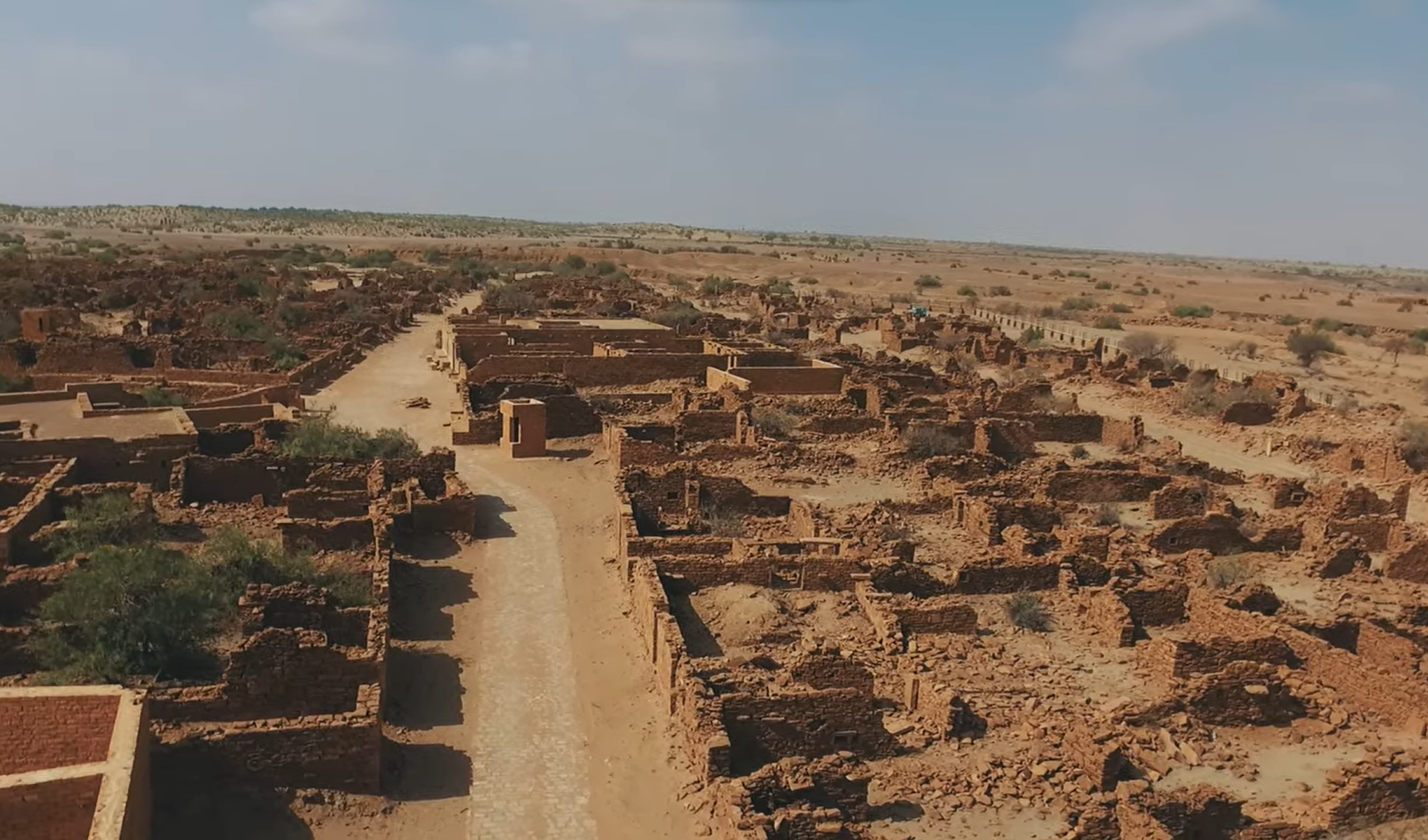
The Temple at the Center At the heart of Kuldhara stands the Shiva temple still intact, still watched over by the ASI. It's the most wellpreserved structure on site. Locals say the temple was never cursed, only the homes. Standing inside at dusk, with the fading orange light cutting through the stone archway, I felt something hard to describe. Not fear, exactly. More like... being watched by history. Like the walls remembered.
After Sunset When It Gets Interesting The site officially closes at 6:00 PM. You are not permitted to stay after dark, and guards do enforce this. But here's what I noticed in the 20 minutes before closing: the quality of light changes completely. Shadows pool in the doorways. The desert wind picks up. And every sound a bird, a piece of rubble shifting seems amplified tenfold. I do not claim to have seen anything supernatural. I do claim that Kuldhara, even in full daylight, carries a weight that rational explanation doesn't fully lift.
Tips for Visiting Kuldhara Haunted Village
- Wear comfortable shoes. The ground is uneven with rubble and loose stones throughout.
- Bring water. There are no refreshment stalls inside the site.
- Get a local guide. A knowledgeable guide brings the history to life dramatically.
- Go on a weekday. Weekends and Indian holidays can get crowded, especially near Jaisalmer's peak tourist season.
- Combine with nearby sites. Kuldhara haunted village pairs well with the Akal Wood Fossil Park (just 16 km away) and the Sam Sand Dunes for a full desert day.
- Respect the site. Do not remove any stones, artifacts, or debris. The site is protected by the ASI.
- Photography is encouraged but be mindful of other visitors' experience during quiet moments.
Things to See and Do at Kuldhara
- Explore the ruins of residential homes walk through the lanes and imagine the life that once filled these walls
- Visit the central Shiva temple the most intact structure on site, and architecturally beautiful
- The village museum small but informative, with historical boards, maps, and ASI documentation
- Spot traditional Paliwal architecture notice the unique stone carving techniques and ventilation designs in the walls
- Photography every angle offers a frameworthy shot, especially in golden hour light
- Speak to your guide about the underground water systems many are still visible and represent remarkable ancient engineering
- Observe desert wildlife nilgai (blue bull antelope), desert foxes, and a variety of birds are common in and around the ruins
- Contemplate the silence seriously. Just sit in a doorway for five minutes and let the place speak to you
Nearby Attractions to Combine With Your Visit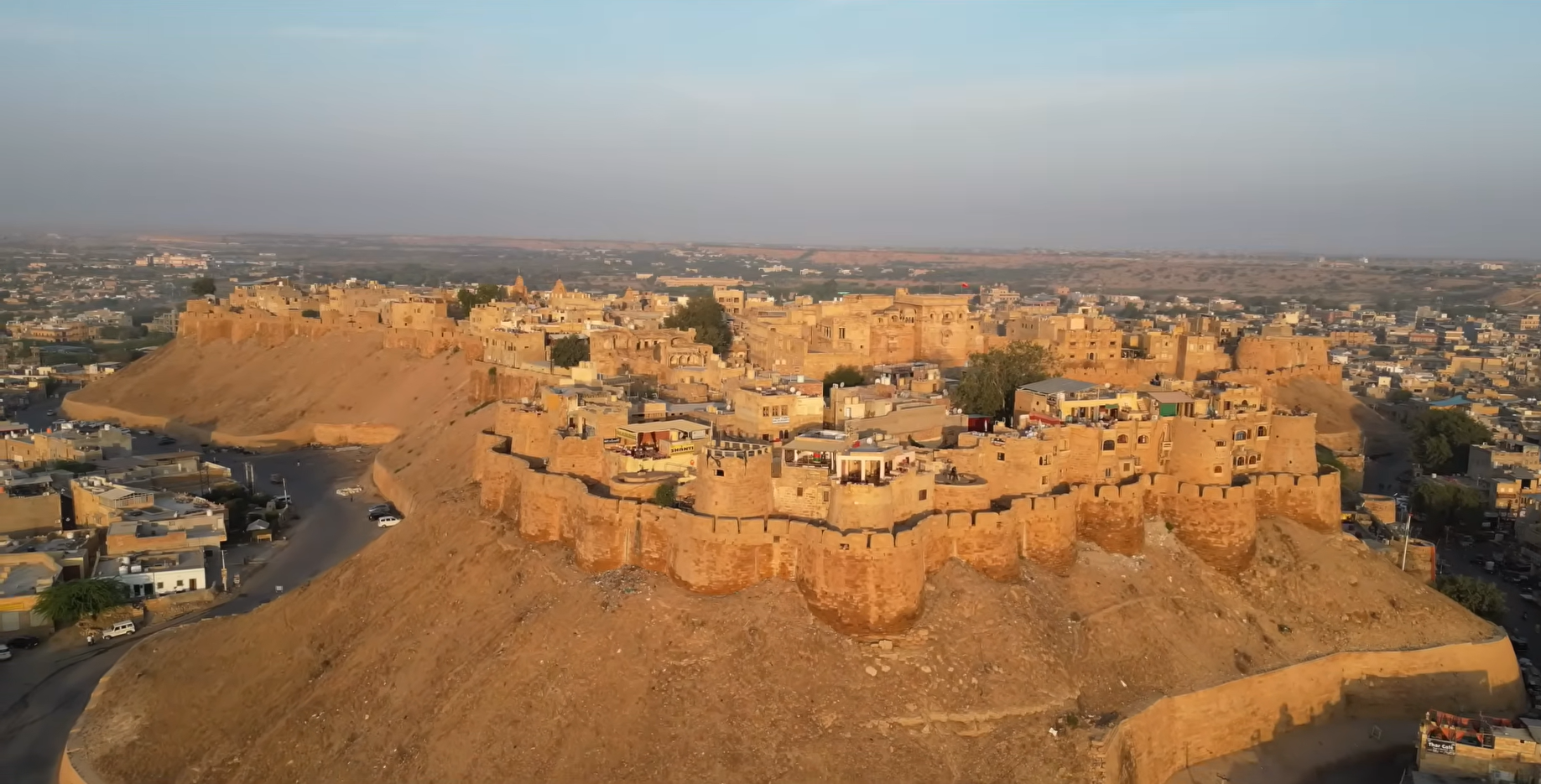
- Jaisalmer Fort (Sonar Quila): A UNESCO World Heritage Site one of the largest living forts in the world
- Patwon Ki Haveli: Stunning 19thcentury merchant mansions with intricate carvings
- Sam Sand Dunes: The classic Thar Desert sunset experience, with camel rides and folk performances
- Gadisar Lake: A peaceful medieval reservoir with temples and migratory birds
- Tanot Mata Temple: A remarkable border temple near Longewala, deeply tied to India's 1971 war history
Frequently Asked Questions About Kuldhara
Is Kuldhara Haunted Village actually haunted?
There is no scientific evidence of paranormal activity at Kuldhara haunted village. However, dozens of visitors including journalists and investigators have reported unusual experiences: sudden temperature drops, unexplained sounds, and feelings of being watched. The "haunting" is unverified, but the atmosphere is undeniably unsettling. Whether the cause is supernatural or psychological is for you to decide when you're standing there alone at dusk.
- Can you stay overnight in Kuldhara Haunted Village?
No. The site officially closes at 6:00 PM and overnight stays are strictly prohibited. Security guards enforce closing time. Several groups have been removed from the site after dark over the years.
- Why did the people of Kuldhara leave?
The most widely accepted story involves oppression by Salim Singh, the Diwan of Jaisalmer, who reportedly demanded a Paliwal girl for marriage and threatened the village. Historical evidence also points to severe taxation and possible desertification. The true reason remains officially unresolved which is part of what makes Kuldhara haunted village so fascinating.
- Is Kuldhara haunted village safe to visit during the day?
Yes, absolutely. Kuldhara is a wellmaintained ASI protected site with clear pathways, a ticket booth, and guards on duty. It is very safe for families, solo travelers, and groups during opening hours.
- How long does it take to explore Kuldhara?
Most visitors spend 1 to 2 hours at Kuldhara. If you have a guide and want to explore thoughtfully reading the historical boards, walking all the lanes, and spending time at the temple allow up to 2.5 hours.
- Where did the Paliwal Brahmins go after leaving Kuldhara?
This is genuinely one of history's mysteries. Despite extensive research, no community has been conclusively identified as the descendants of the Kuldhara Palliwals. Some theories suggest they migrated south toward Gujarat or scattered across Rajasthan and assimilated into other communities. Their disappearance as a cohesive community remains unexplained.
- Is Kuldhara haunted village worth visiting if you're already in Jaisalmer?
Without question, yes. It's only 18 km from Jaisalmer, costs very little, and offers a completely different kind of travel experience not a monument to glory, but a monument to loss. No other site in Rajasthan (perhaps in India) gives you this specific feeling of walking through a story that was never finished.