



Best Time to Visit India: Month-by-Month Travel Guide
The best time to visit India is October to March, when most of the country has dry, sunny and comfortable weather. But India is huge. While Rajasthan bakes in June, Ladakh is just opening up. While Kerala is drenched in July, the high Himalayas are at their best. So the real answer to “when to visit India” depends on where you’re going. This guide breaks down India weather by month, showing which regions shine, what festivals to expect, and what to avoid. Whether you want palaces, backwaters, mountain passes or the Ganges, you’ll find the best month to travel to India for your route.
Quick Answer: When Is the Best Time to Visit India?
- Best overall: October to March (cool, dry, ideal for most routes)
- Best for the Golden Triangle (Delhi-Agra-Jaipur): October to March, with February the sweet spot
- Best for Rajasthan: November to March
- Best for Kerala: October to March for beaches and backwaters; June to September for monsoon Ayurveda retreats
- Best for Himachal Pradesh: March to June and September to November (snow season December to February)
- Best for Ladakh: June to September
- Cheapest time: June to September (monsoon low season)
- Most crowded and expensive: Mid-December to early January
India Travel Season at a Glance
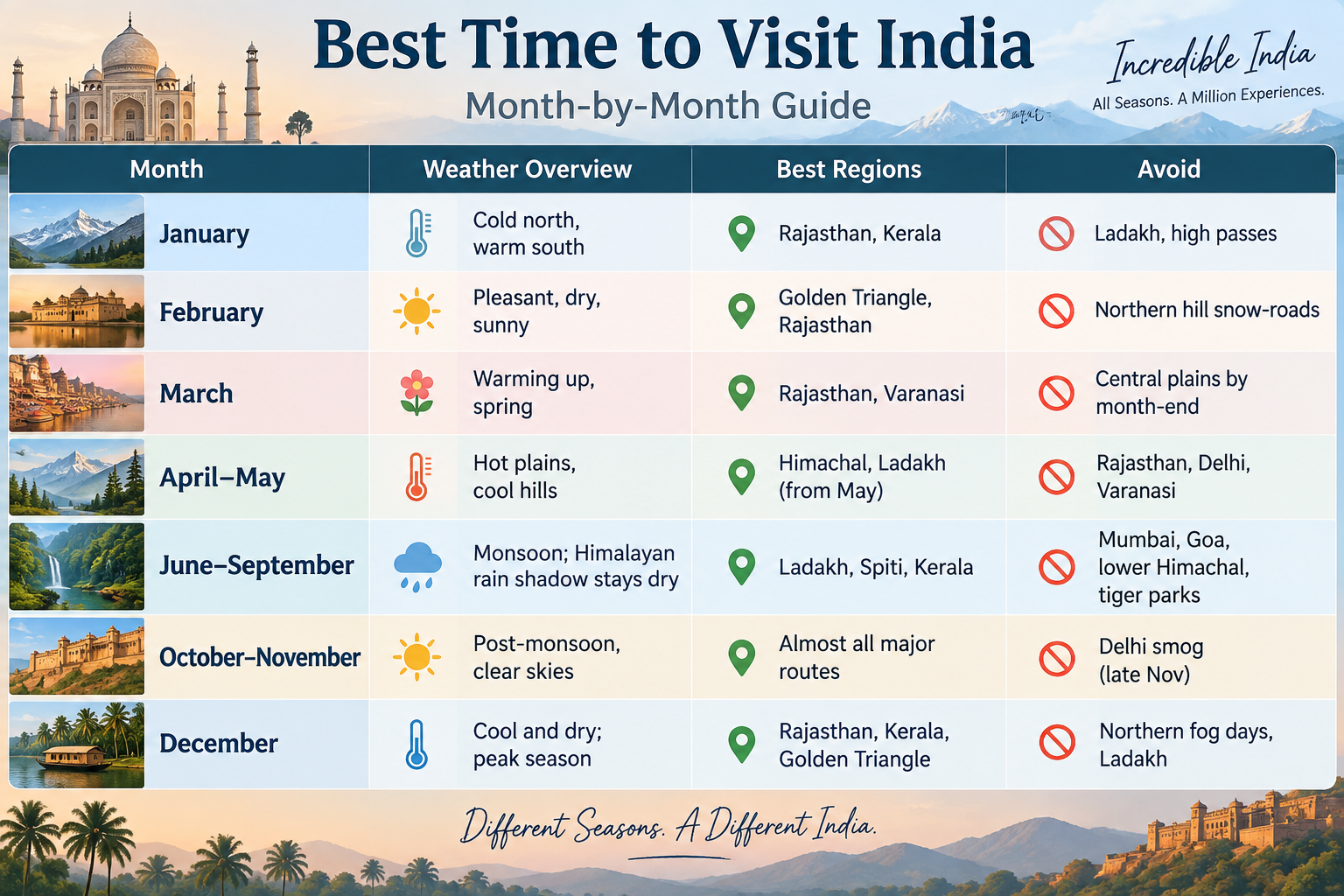
Temperatures below are typical ranges and vary year to year and by altitude.
Understanding India’s Travel Seasons
Before the month-by-month breakdown, it helps to know the four broad seasons:
- Winter (November-February): Cool to cold in the north, warm and dry in the south. This is peak tourist season.
- Summer (March-June): Very hot in the plains, with temperatures of 35-45°C. Hill stations and high-altitude regions become the place to be.
- Monsoon (June-September): Heavy rain arrives in Kerala around early June and moves north. It’s lush, green and cheaper, but rain can disrupt travel in many regions.
- Post-monsoon (October-November): Clear skies, green landscapes, cooler air and major festivals like Dussehra and Diwali.
Best Time to Visit India Month by Month
January: Rajasthan and Kerala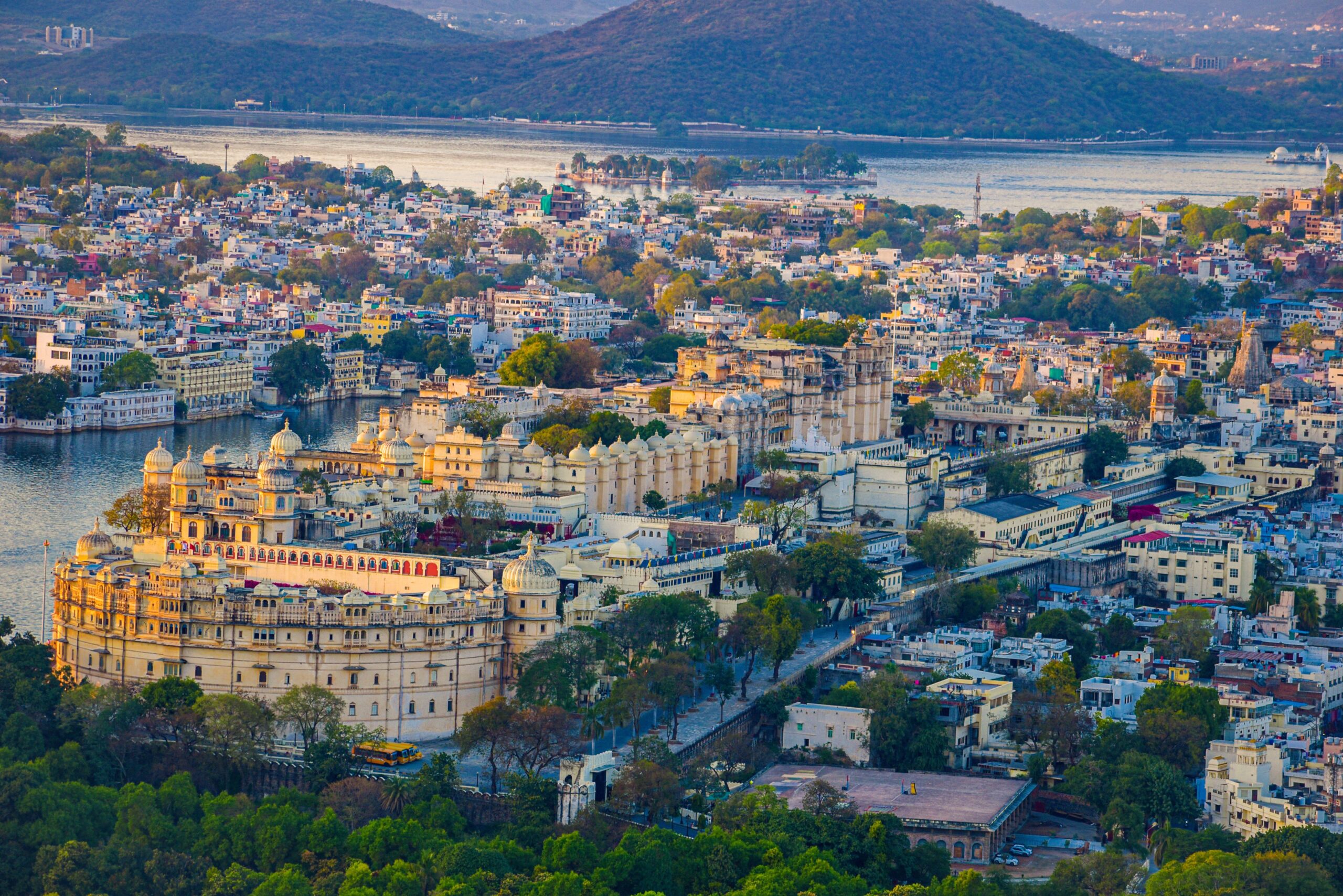
Weather: Delhi and Rajasthan see cool days of around 18-24°C and cold nights that can drop to 4-8°C. Kerala is warm and dry at around 23-32°C. Northern India can have morning fog.
January is the best time to visit India, with pleasant weather across many popular destinations. Rajasthan’s Jaipur, Udaipur, Jodhpur and Jaisalmer are ideal for sightseeing, while camel safaris in the Thar Desert are especially enjoyable. In Kerala, explore the peaceful backwaters of Alleppey, tea plantations in Munnar and beaches in Kovalam.
January also brings colorful celebrations, including Makar Sankranti, when the skies fill with kites in Jaipur and Gujarat. The Jaipur Literature Festival is usually held later in the month. Northern India can experience fog and travel delays, while desert nights can be very cold, so pack warm layers. Ladakh remains extremely cold and largely inaccessible by road, though the Chadar Trek offers a unique winter adventure.
February: Golden Triangle and Rajasthan
February is one of the most comfortable months and best time to visit India to travel in India, with sunny days and temperatures around 20–26°C in Delhi, Agra and Jaipur as the winter fog begins to fade. The Golden Triangle is particularly appealing at this time, offering ideal conditions for visiting the Taj Mahal, Amber Fort and Old Delhi. Rajasthan is also worth exploring, with opportunities for tiger safaris in Ranthambore and visits to Jodhpur, Udaipur and Jaisalmer. February also brings cultural events such as the Jaisalmer Desert Festival, known for folk music, camel events and traditional celebrations, while the Khajuraho Dance Festival is usually held during the month. With pleasant weather, fewer crowds than December and often better prices, February is an excellent time to visit India.
March: Rajasthan and Varanasi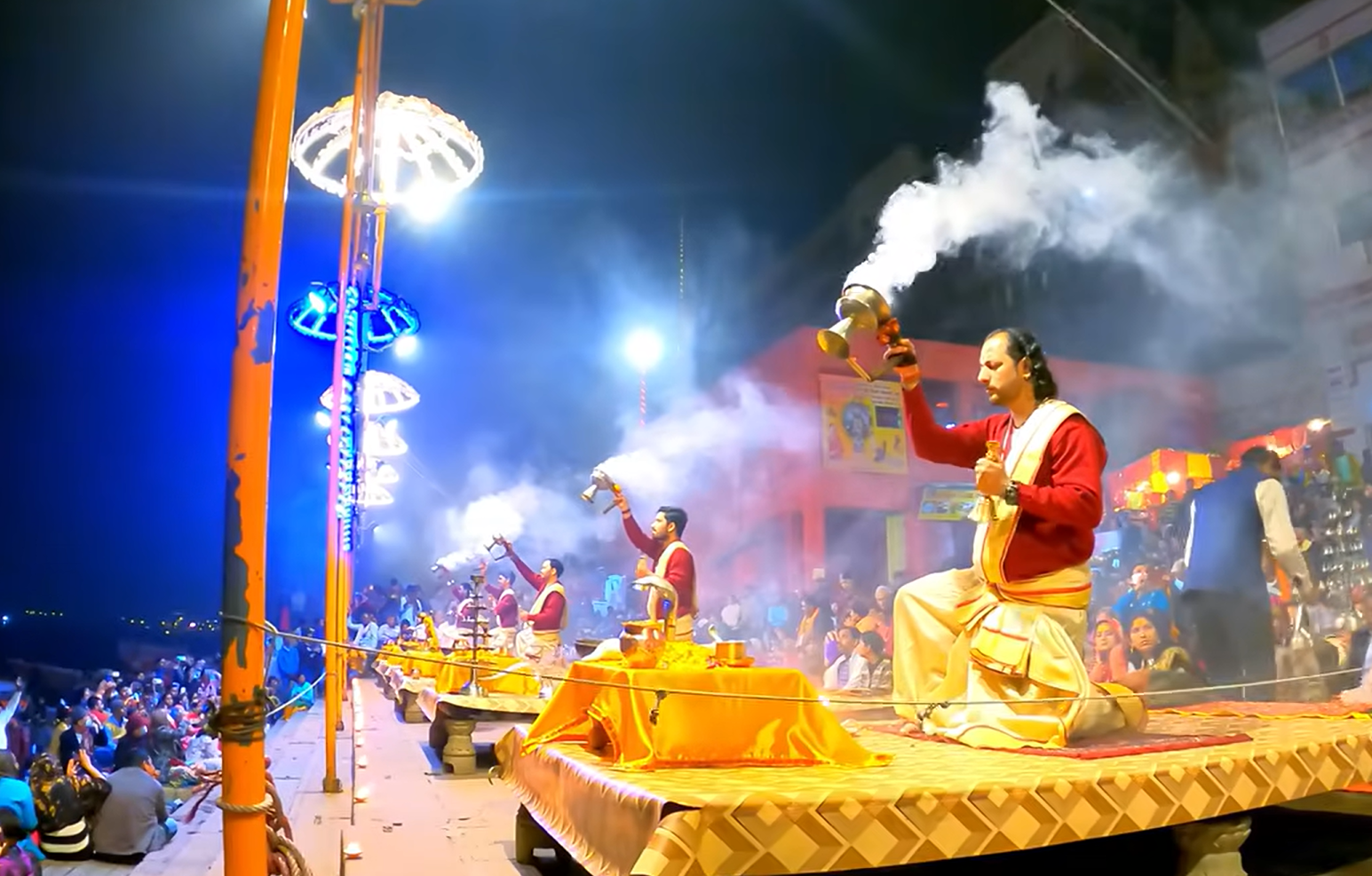
Weather: Temperatures climb. Rajasthan sees around 15-33°C and Varanasi is warm at 17-33°C. Evenings are still pleasant early in the month.
March is a great time to explore northern India, especially during the first half of the month before temperatures begin to rise. Rajasthan is ideal for sightseeing, while Varanasi offers a comfortable experience of its ghats, Ganga Aarti and historic old lanes. March also brings Holi, the famous festival of colors, which can be celebrated in Jaipur, Mathura-Vrindavan or Varanasi. Expect lively crowds, bright colors and plenty of water during the celebrations. As the weather gets hotter, consider traveling north first and then heading south or toward the hill regions. Kerala can become increasingly hot and humid by late March.
April-May: Himachal and Ladakh
Weather: The plains are extremely hot at 38-45°C, so skip Delhi, Rajasthan and Varanasi unless you love heat. The mountains are in their prime.
April is a great month to escape the rising heat, with Himachal Pradesh offering pleasant temperatures of around 10–25°C in Shimla, Manali, Dharamshala and Kasol. Ladakh also begins to open up from late April, with flights to Leh operating year-round and road routes typically reopening from May onward. Early-season visits offer snowy landscapes and fewer tourists, but allow at least two days to acclimatize after arriving in Leh. In Kashmir, Srinagar’s famous tulip gardens usually bloom in April, adding a colorful highlight to the season. Spring festivals in Kullu and Manali and the blooming rhododendrons across the Himalayas bring extra charm to the month. Popular Himachal destinations can get busy from May, so booking accommodation early is recommended.
June-September: Ladakh, Himachal and Kerala
The monsoon changes everything. Much of India gets heavy rain, but some regions actually peak now.
Ladakh and Spiti (June-September): These high-altitude deserts sit in the Himalayan “rain shadow,” so they stay largely dry. Daytime temperatures are around 15-28°C, roads are open and monasteries, lakes like Pangong Tso and Nubra Valley are at their best. This is the best time to visit Ladakh.
Himachal Pradesh: Upper Himachal, including Lahaul and Spiti, is a great choice. Lower Himachal (Shimla, Manali) can see landslides and road closures, especially in July and August. Check conditions before you go.
Kerala: The monsoon brings lush green landscapes, misty hills in Munnar and reduced prices. It’s peak season for Ayurvedic treatments, since the cooler, humid weather is considered ideal. Expect heavy rain spells, but many travelers love the atmosphere. The Nehru Trophy Boat Race takes place around August, and Onam falls in late August or September.
Valley of Flowers National Park in Uttarakhand (July-September) and Rajasthan for green, uncrowded lakes in Udaipur. Mumbai and Goa in peak rain, Kaziranga and most tiger reserves (core zones are generally closed from July to September) and Meghalaya’s heavy-rain zones if you have limited flexibility, and June to September is India’s cheapest travel season.
October-November: Almost All Major Routes
This is the best month to travel to India if you want flexibility. The rains retreat, skies are clear and temperatures drop. Days of roughly 25-32°C in the north, cooling through November. Kerala and the south can get some retreating-monsoon showers, especially in October.
Where to go:
- Golden Triangle and Rajasthan: Perfect from late October. Tiger reserves like Ranthambore reopen around October 1.
- Kerala, Tamil Nadu and Goa: Comfortable and greener; Goa’s season begins around November.
- Varanasi: Ideal weather and Dev Deepawali (around November) is unforgettable.
- Himalayas: Autumn colors in Kashmir, crisp views in Sikkim and Darjeeling. Ladakh becomes cold and roads begin closing from mid-October.
- Northeast India: Kaziranga opens in November.
Events: Dussehra, Diwali, Pushkar Camel Fair (Kartik Purnima, usually November) and Kullu Dussehra, Delhi’s air quality worsens from late October through winter. Consider spending less time there or bringing a good mask. Diwali weeks are busy, so book early.
December: Rajasthan, Kerala and the Golden Triangle
Weather: Cool and dry across most of India. Delhi and Rajasthan see roughly 8-22°C with cold mornings. Kerala and Goa are warm and sunny at 24-32°C.
Where to go:
- Rajasthan: Comfortable days and starry desert nights. Camp in Jaisalmer or Pushkar.
- Kerala: Ideal for backwaters, beaches and spice plantations.
- Golden Triangle: Good, but expect fog and lower air quality in Delhi.
- Goa: Christmas and New Year parties.
- Kutch, Gujarat: The Rann Utsav white-desert festival usually runs from November to February.
Events: Christmas in Goa, Kochi and Mumbai, and New Year celebrations across the country, This is peak season. Flights and hotels are most expensive between about December 20 and January 5, so book 2-3 months ahead.
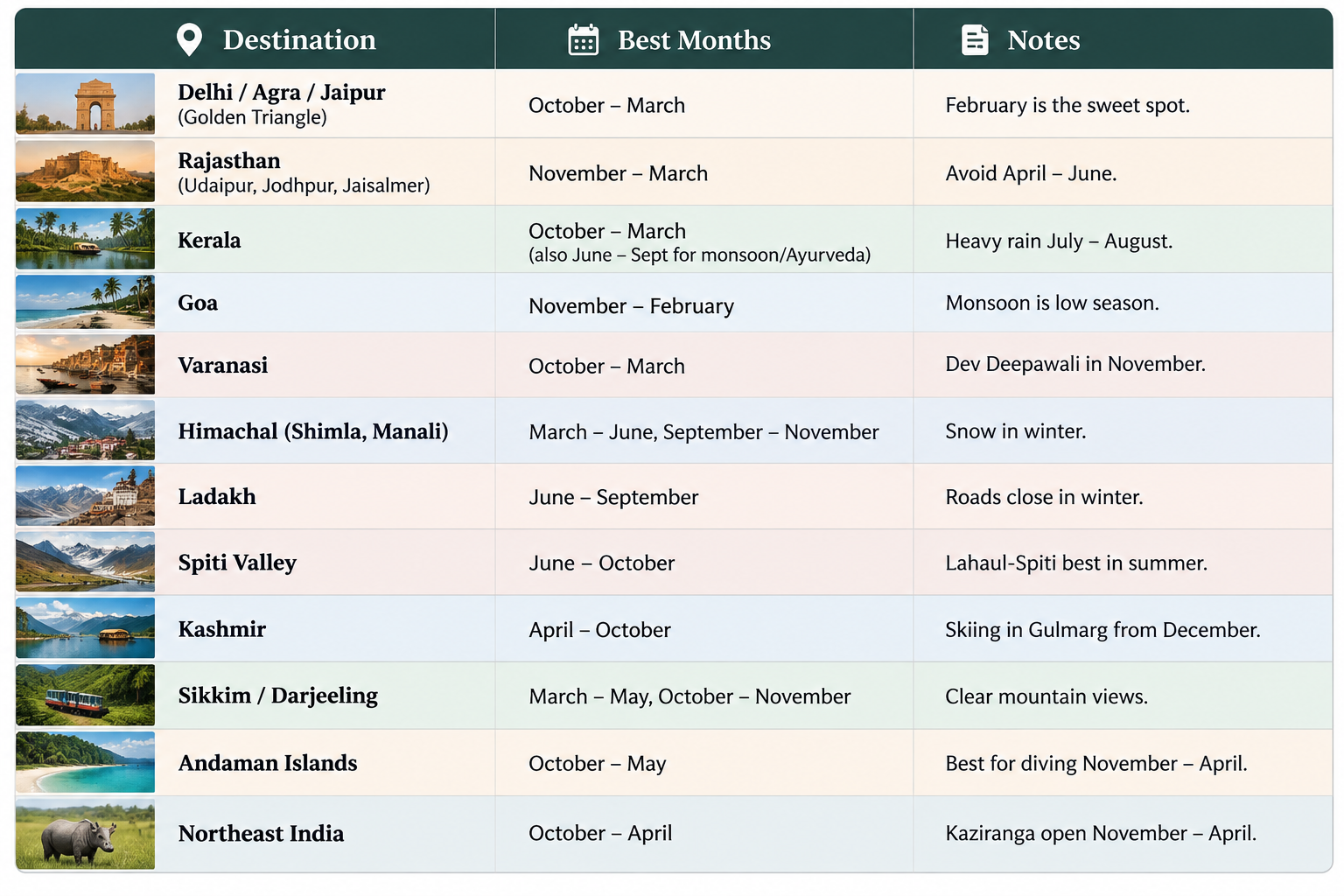
Best Time to Visit India by Region
The Worst Time to Visit India
If you’re looking for the least comfortable time, it’s late April to June for the northern and central plains (Delhi, Rajasthan, Varanasi, Agra), when temperatures often exceed 40°C. Also difficult is July-August for coastal areas and flood-prone regions, though these months are ideal for Ladakh and monsoon Kerala. Every “bad” month in one part of India is a good month somewhere else.
Tips for Planning Your India Trip by Season
- Plan by region, not by country. Pick your route first, then the month.
- Book early for peak season. Trains, domestic flights and boutique hotels sell out for December-January and Diwali.
- Acclimatize in the mountains. Spend at least 48 hours in Leh before doing anything strenuous.
- Pack for the season. Layers for northern winters, breathable cotton for summer, and rain gear for the monsoon.
- Check road and pass status. Himalayan routes can change quickly with weather.
- Build in flexibility. A spare day helps with fog delays or monsoon disruptions.
Frequently Asked Questions
What is the best month to visit India?
October, November and February are widely considered the best months, offering pleasant weather, clear skies and access to most regions. If you can choose only one, February is excellent for the Golden Triangle and Rajasthan.
What is the best time to visit India for first-time travelers?
October to March, and especially November to February, because you can combine Delhi, Agra, Jaipur, Varanasi and Kerala in comfortable weather.
When should I avoid visiting India?
Avoid the northern and central plains during April-June because of extreme heat, and avoid landslide-prone hill areas and coastal cities during peak monsoon (July-August). Also avoid Ladakh in winter unless you’re on a specialist trek.
Is India worth visiting in monsoon season?
Yes, if you choose your destinations wisely. Ladakh, Spiti and Kerala are excellent in the monsoon months, and you’ll enjoy lower prices and fewer crowds.
When is the cheapest time to travel to India?
June to September offers the lowest prices for flights and hotels. Peak prices happen in mid-December to early January.
What is the best time to visit the Taj Mahal?
October to March, especially from late October to February. Visit at sunrise to avoid crowds and haze, and note that it’s closed on Fridays.
What is the best time to visit Kerala?
October to March is best for beaches and backwater cruises. June to September is the monsoon Ayurveda season, with lush landscapes and lower prices.
What is the best time to visit Ladakh?
June to September, when the roads are open and temperatures are moderate. For fewer crowds and dramatic landscapes, try late May or September.
Plan Your Perfect India Trip
Now that you know when to visit India, the next step is to design a route that fits your dates. At india custom tours, our local travel experts build customized itineraries for every season, from Rajasthan palace tours and Kerala backwater escapes to Ladakh road trips.