



Kumbhalgarh Fort Rajasthan: Complete Travel Guide to the Great Wall of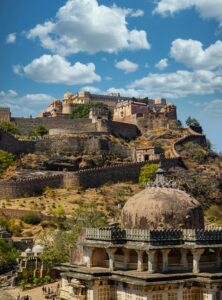 India
India
While most foreign travelers to Rajasthan gravitate toward Jaipur, Jodhpur, and Udaipur, there lies a hidden gem tucked away in the Aravalli Hills the legendary Kumbhalgarh Fort. Built in the 15th century by the mighty ruler Rana Kumbha, this colossal stronghold is famed for its 36-kilometer-long defensive wall, often called the Great Wall of India and recognized as the second-longest continuous wall in the world after China’s Great Wall. Today, this UNESCO World Heritage Site stands as a testament to Rajput valor and architectural genius, offering travelers breathtaking views, raw history, and a glimpse of authentic Rajasthan culture. For foreign tourists seeking an experience beyond the crowded trails, Kumbhalgarh is truly one of the most rewarding destinations in India.
The History & Legends of Kumbhalgarh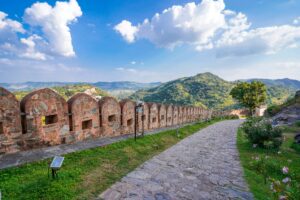
Kumbhalgarh Fort, built in 1458 AD by Rana Kumbha of Mewar, stands as one of Rajasthan’s most fascinating historical landmarks. Often called the “Great Wall of India”, its massive ramparts are wide enough for eight horses to march abreast, showcasing the grandeur of Rajput engineering. The fort is also celebrated as the birthplace of Maharana Pratap, Rajasthan’s legendary warrior king whose courage shaped the history of Mewar. Local folklore adds to its mystique, claiming that Kumbhalgarh was virtually unconquerable, falling only once when enemies poisoned its water supply. Unlike the more crowded Amber Fort in Jaipur, Kumbhalgarh offers an untouched, almost mysterious atmosphere, giving travelers the rare feeling of stepping back into medieval Rajasthan.
Why Visit Kumbhalgarh Fort?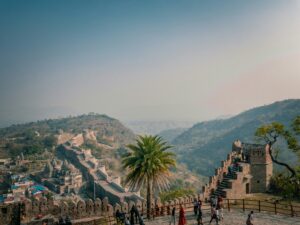
Often described as the Great Wall of India, Kumbhalgarh Fort invites travelers to walk along its massive stone ramparts, which stretch across the Aravalli hills for over 36 kilometers. Within its mighty walls lies a treasure of royal heritage, including the very rooms where the legendary Maharana Pratap was born. The fort is also home to an astonishing 360 temples, a mix of intricately carved Hindu and Jain shrines that reflect the spiritual diversity of Rajasthan. At its highest point stands the enchanting Badal Mahal, or Palace of Clouds, with pastel-colored interiors and sweeping views of the rugged landscape. Surrounding the fort, the Kumbhalgarh Wildlife Sanctuary offers adventurous treks through forests where leopards, wolves, sloth bears, and exotic birds still roam, making the visit a rare blend of history, architecture, and nature.
Architecture & Design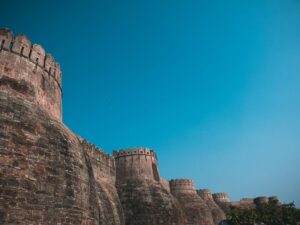
The architecture of Kumbhalgarh Fort is a masterpiece of Rajput defense engineering. Its defensive walls, some 15 feet thick, snake across the hills and stand as an unbroken shield around the citadel. The fort is protected by seven massive gateways, each strategically designed to delay and confuse enemy advances. Using the natural terrain to their advantage, the Rajputs incorporated steep cliffs, hidden passages, and watchtowers, making the fort almost impossible to penetrate. Inside, the complex is adorned with a remarkable collection of Hindu and Jain temples, each decorated with stone carvings unique to the Mewar dynasty, blending spirituality with military ingenuity. For travelers, every turn of the fort offers a mix of raw strength and artistic elegance.
Best Time to Visit Kumbhalgarh
The best time to visit Kumbhalgarh Fort is during the cooler months of October to March, when the weather is pleasant and ideal for sightseeing. The monsoon season from July to September paints the Aravalli hills in lush greenery, creating breathtaking backdrops for photography. However, the summer months from April to June can be extremely hot, making it less comfortable for walking around the massive fort walls. Travel Tip: Plan your visit in the late afternoon explore the fort at leisure, catch the magical sunset from Badal Mahal, and then stay for the famous light and sound show at 6:45 PM, which brings the history of the fort alive under the night sky.
Things to Do at Kumbhalgarh Fort
A trip to Kumbhalgarh Fort is more than just sightseeing it’s an experience that blends history, architecture, and adventure. Start by climbing the ramparts, where panoramic views of the rugged Aravalli hills stretch endlessly across the horizon. Inside the fort, don’t miss Badal Mahal (Palace of Clouds), with its colorful pastel interiors that once hosted the royals of Mewar. As evening falls, stay for the light and sound show, where the fort’s dramatic history is narrated with dazzling visuals against the night sky. For nature lovers, the Kumbhalgarh Wildlife Sanctuary offers treks and jeep safaris, giving you the chance to spot leopards, antelopes, wolves, and exotic birds. To round off your journey, take a short drive to the world-renowned Ranakpur Jain Temples, just 50 km away, where intricate marble carvings will leave you spellbound.